Everyday Probability and Risk Assessment
Introduction to Probability
What Are the Chances?
Probability is the language we use to talk about uncertainty. It helps us measure how likely something is to happen. To speak this language, we need to know a few key words.
Outcome
noun
A single possible result of a random process or experiment.
If we flip a coin, the two possible outcomes are heads or tails. If we roll a standard six-sided die, the possible outcomes are 1, 2, 3, 4, 5, or 6.
Sample Space
noun
The set of all possible outcomes of an experiment.
The sample space lists every single thing that could happen. For a coin flip, the sample space is simply {Heads, Tails}.
Event
noun
A specific outcome or a set of outcomes that we are interested in.
An event can be simple, like rolling a 5. Or it can be more complex, like rolling a number greater than 2, which includes the outcomes {3, 4, 5, 6}. These three concepts are the basic building blocks for understanding probability.
Calculating Probabilities
Once we have our sample space and event, we can calculate the probability. The formula is straightforward:
A probability is always a number between 0 and 1. A probability of 0 means the event is impossible, while a probability of 1 means the event is certain.
Let's use our die-rolling example. What's the probability of the event "rolling a 4"? There's only one favorable outcome (rolling a 4) and six total possible outcomes. So, the probability is $1/6$.
What about the event "rolling an odd number"? The favorable outcomes are {1, 3, 5}. That's three outcomes. The total number of outcomes is still six. So, the probability is $3/6$, which simplifies to $1/2$.
The probability of an event not happening is 1 minus the probability that it does happen. This is called the complement rule: .
So, the probability of not rolling a 4 is $1 - 1/6 = 5/6$.
Combining Events
Sometimes we're interested in the probability of one event or another event happening. This is where the addition rule comes in.
If two events can't happen at the same time (they are mutually exclusive), we can just add their probabilities. For example, you can't roll a 2 and a 5 on a single die roll. The probability of rolling a 2 or a 5 is:
What if the events can happen at the same time? Let's say we draw one card from a standard 52-card deck. What is the probability of drawing a king or a heart? There are 4 kings and 13 hearts. But one of those cards, the King of Hearts, is both a king and a heart. If we just add $4/52 + 13/52$, we double-count it.
The general addition rule accounts for this overlap:
For our card example:
Now, what about the probability of two events both happening? This requires the multiplication rule. If the events are independent (one doesn't affect the other), we multiply their probabilities. Flipping a coin twice is a classic example. The result of the first flip doesn't change the probability of the second.
The probability of getting heads twice in a row is: .
Theory vs. Reality
So far, we've been discussing theoretical probability. This is what we expect to happen based on perfect conditions. In theory, if you flip a fair coin 100 times, you should get 50 heads. But what happens if you actually do it?
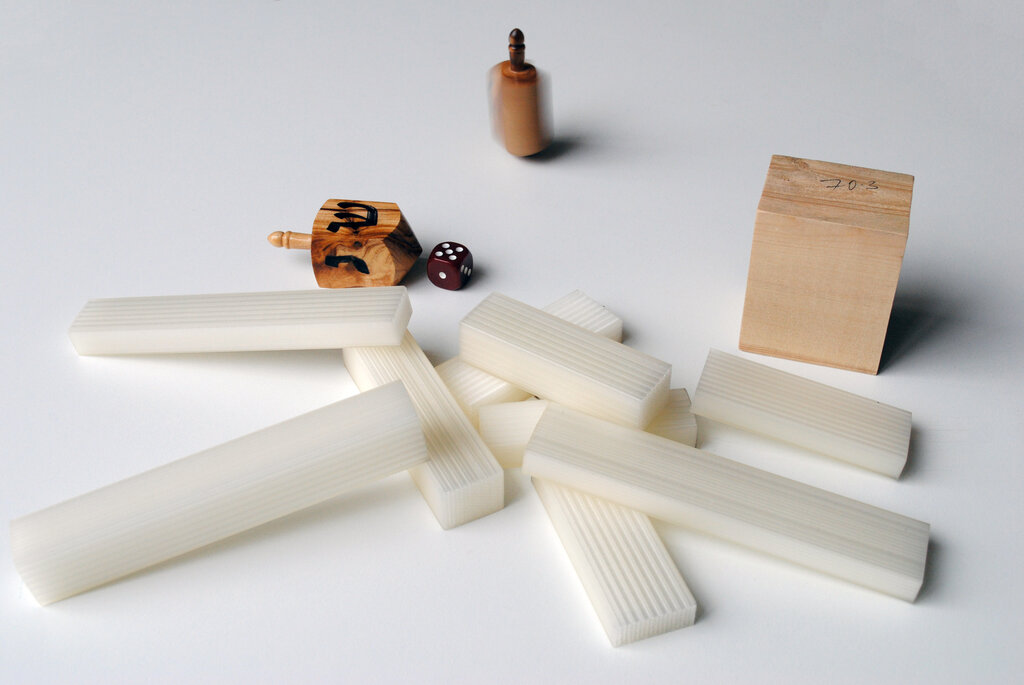
You might get 48 heads, or 53, or some other number close to 50. The probability calculated from the results of an actual experiment is called empirical probability.
Theoretical Probability: Based on reasoning and calculation. The probability of rolling a 6 is $1/6$.
Empirical Probability: Based on observations from experiments. If you roll a die 60 times and get ten 6s, the empirical probability is $10/60 = 1/6$.
The more times you run an experiment, the closer your empirical probability will get to the theoretical probability. This is a fundamental idea called the Law of Large Numbers. Flipping a coin 10 times might give you 7 heads, but flipping it 10,000 times is very likely to give you a result extremely close to 5,000 heads.
Time to test your understanding of these core concepts.
In probability, what does the "sample space" represent?
A standard six-sided die is rolled. What is the probability of rolling a number greater than 4?
These foundational ideas are the first step into the world of probability, a tool that helps us navigate and make sense of a world full of uncertainty.