Everyday Object Functions
Introduction to Tools
Extending Our Reach
At its core, a tool is any object used to achieve a goal. It helps us perform tasks that would otherwise be difficult or impossible. Think of a hammer. It allows us to drive a nail with a force our bare hands could never produce. A screwdriver lets us turn screws with precision we can't achieve with our fingers. Tools are extensions of our bodies and minds, amplifying our natural abilities.
Tool
noun
An instrument or device used to carry out a particular function.
The purpose of any tool is to make a job easier, faster, or more accurate. From a simple shovel for digging to a complex computer for processing information, tools solve problems. They bridge the gap between what we want to do and what we can physically accomplish.
From the earliest stone tools to the most sophisticated artificial intelligence systems, humans have consistently expanded their cognitive abilities through external implements.
A Journey Through Time
The story of humanity is inseparable from the story of its tools. The earliest humans used simple objects they found, like sharp rocks for cutting and heavy stones for crushing. This marked the beginning of the Stone Age, a period defined by the technology of its time. These first tools were revolutionary, allowing our ancestors to hunt more effectively, prepare food, and create shelter.
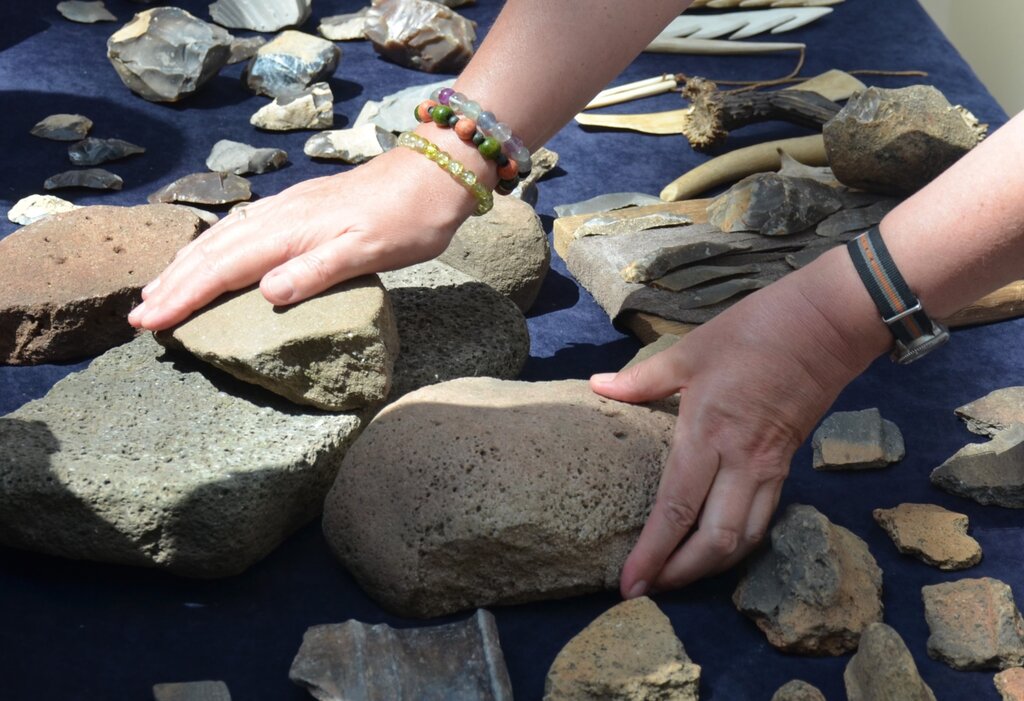
As human knowledge grew, so did the sophistication of our tools. The discovery of metals like bronze and then iron led to stronger, more durable implements. Plows transformed agriculture, allowing for the growth of civilizations. Swords and armor changed warfare. The invention of the wheel and axle opened up new possibilities for transportation and machinery.
Centuries later, the Industrial Revolution brought an explosion of new technology. Steam engines, power looms, and factory machines changed society on a massive scale. For the first time, the power of machines began to replace the physical labor of humans and animals, leading to mass production and the modern world we know today.
Putting Tools in Categories
We can sort tools into different groups based on what they do. While there are countless specialized tools, most fall into a few broad categories.
| Category | Function | Examples |
|---|---|---|
| Cutting & Shaping | To sever, slice, or alter the form of an object. | Knife, saw, chisel, scissors, axe |
| Fastening | To join two or more objects together. | Hammer, screwdriver, wrench, staple gun |
| Measuring | To determine the size, amount, or degree of something. | Ruler, measuring tape, scale, protractor |
| Guiding | To position or direct other tools. | Jig, fence, T-square |
| Machines | Complex tools with moving parts, often powered. | Drill, lathe, printing press, computer |
Many tools are hybrids that fit into multiple categories. A power saw, for example, is both a cutting tool and a machine. This classification simply helps us understand the primary purpose of a tool and how it helps us work.
The right tool for the right job isn't just a cliché; it's the foundation of effective work. Using a wrench to hammer a nail is possible, but it's inefficient and likely to produce a poor result.
The impact of tools on our lives is immense. They build our homes, grow our food, create our clothes, and power our communication. Every object in the modern world is a product of tools. By inventing them, we have fundamentally reshaped our environment and our potential.
Let's check your understanding of these fundamental concepts.
What is the primary purpose of any tool?
The use of sharpened rocks and heavy stones by early humans marked the beginning of which period?
Our ability to create and use tools is a defining characteristic of our species, enabling every step of human progress.