Everyday AI for Beginners
Introduction to AI
What Is AI Anyway?
Artificial intelligence, or AI, is about creating machines that can think, learn, and solve problems like humans do. It's not about robots taking over the world; it's about building tools that can recognize patterns, understand language, and make decisions to help us with specific tasks.
The idea isn't new. Philosophers and scientists have dreamed of intelligent machines for centuries. But the modern field of AI really began in the 1950s. A key moment was the Dartmouth Workshop in 1956, where the term "artificial intelligence" was officially coined. Early researchers were optimistic, believing they could create human-level intelligence within a few decades.
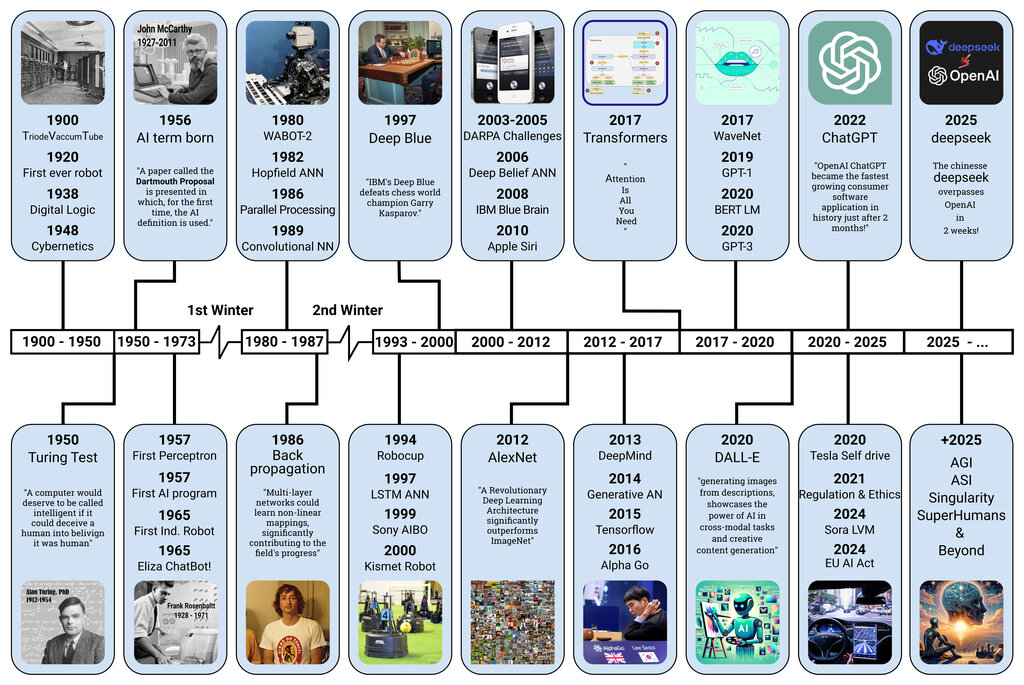
Progress came in waves. There were periods of excitement and funding, followed by "AI winters" when progress stalled and interest waned. But breakthroughs in computing power and data availability eventually led to the AI boom we're experiencing now. From chess-playing computers in the 90s to the powerful language models of today, AI has evolved from a theoretical concept into a practical, world-changing technology.
Two Main Flavors of AI
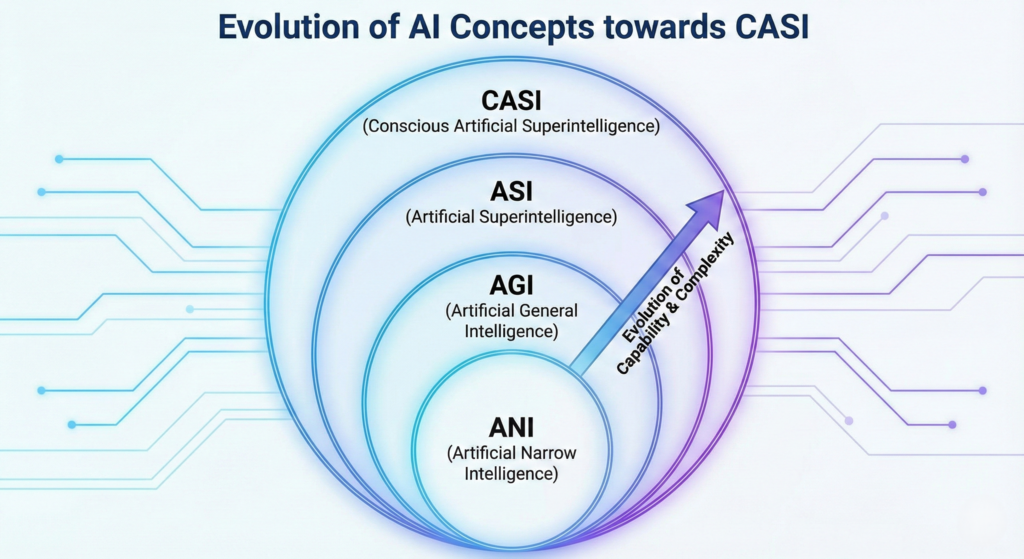
When people talk about AI, they're usually referring to one of two types: Narrow AI or General AI. Understanding the difference is key to understanding where the technology is today and where it might go.
Artificial Narrow Intelligence (ANI)
noun
AI that is designed and trained for one specific task. It operates within a limited, pre-defined range and cannot perform tasks beyond its specialty.
Think of ANI as a specialist. It might be a grandmaster at chess, but it can't play checkers. It can recommend your next favorite song but has no idea how to drive a car. This is the only type of AI we have successfully created so far.
Every AI you interact with today, from your phone's voice assistant to sophisticated medical diagnostic tools, is a form of Narrow AI.
The other type is Artificial General Intelligence (AGI). This is the more sci-fi version of AI. AGI would possess the ability to understand, learn, and apply its intelligence to solve any problem, much like a human being. It wouldn't be limited to a single task. An AGI could write a symphony, discover a new scientific principle, and have a meaningful conversation with you about it afterward. It's the ultimate goal for many AI researchers, but it remains a theoretical concept for now.
AI in Your Everyday Life
You probably use AI more than you realize. It's quietly working in the background of many digital tools, making them smarter, faster, and more personalized. These systems learn from vast amounts of data to perform their tasks more effectively over time.
Here are just a few examples of how AI shows up in your daily routine.
| Application | How it uses AI | What it does for you |
|---|---|---|
| Navigation Apps | Analyzes traffic data in real-time. | Finds the fastest route and predicts your arrival time. |
| Streaming Services | Learns from your viewing habits. | Recommends movies and shows you're likely to enjoy. |
| Email Filters | Identifies patterns in junk mail. | Keeps your inbox clean by filtering out spam. |
| Voice Assistants | Uses natural language processing. | Understands your spoken commands to set reminders or play music. |
| Online Shopping | Tracks your browsing and purchase history. | Suggests products you might want to buy. |
A Game Changer for Industries
Beyond personal convenience, AI is transforming entire industries. By processing data at a scale and speed humans can't match, AI is creating new efficiencies and possibilities.
In healthcare, AI helps doctors diagnose diseases earlier and more accurately. It can analyze medical scans like X-rays and MRIs to spot signs of cancer or other conditions that might be missed by the human eye.
In finance, AI systems monitor millions of transactions every second to detect fraudulent activity, protecting consumers and financial institutions from theft.
Agriculture uses AI to optimize crop yields. Drones and sensors collect data on soil health and plant growth, allowing farmers to apply water and fertilizer more precisely, saving resources and increasing food production.
And in retail, AI manages complex supply chains, predicts what products will be popular, and powers personalized shopping experiences, ensuring that the items you want are in stock and easy to find.
This is just a glimpse of AI's impact. As the technology continues to develop, it will likely reshape how we work, solve problems, and interact with the world in countless other ways.
Let's check your understanding of these core AI concepts.
What is the primary goal of Artificial Intelligence (AI) as described in the text?
The type of AI that can outperform humans at one specific task but cannot generalize its intelligence to other areas is known as:
By understanding these fundamentals, you have a solid base for exploring the practical ways AI can be applied.