Evaporation Transpiration and Evapotranspiration
Introduction to Evaporation
Water's Great Escape
Have you ever wondered where a puddle goes after it rains? It doesn't just soak into the ground. A lot of it vanishes right into the air. This disappearing act is called evaporation, and it's happening all the time, all over the planet.
Evaporation is the process where liquid water turns into a gas, called water vapor. It’s the first major step in the water cycle, lifting water from oceans, lakes, and rivers into the atmosphere.
Evaporation is the process where water changes from a liquid state to a gas (water vapor) and rises into the atmosphere.
How It Works
So how does liquid water make the jump to a gas? It all comes down to energy. Water molecules are always in motion, bumping and jostling each other. When a molecule near the surface gets enough energy, it can break free from the pull of the other molecules and escape into the air as water vapor.
The main source of this energy is the sun. Sunlight warms the surface of the water, giving those molecules the boost they need to evaporate.
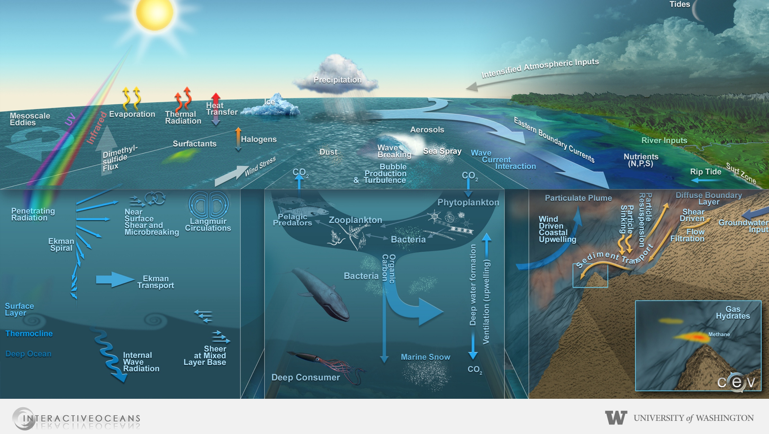
This process takes heat away from the surface. When water evaporates from your skin, it absorbs heat from your body, which is why sweating cools you down. The same principle applies to lakes and oceans, making evaporation a crucial part of how Earth regulates its temperature.
Factors That Speed It Up
Evaporation doesn't always happen at the same speed. Several factors can either crank up the speed or slow it down. Let's look at the four main ones:
| Factor | Effect on Evaporation |
|---|---|
| Temperature | Higher temperatures mean more energy, so evaporation is faster. |
| Surface Area | A wide, shallow puddle evaporates faster than a deep, narrow one. |
| Humidity | Dry air can hold more water vapor, so evaporation is faster in low humidity. |
| Wind Speed | Wind blows away moist air near the surface, making room for more evaporation. |
Imagine spilling a glass of water on a hot, windy day versus a cool, still one. On the hot day, the puddle has more energy from the sun, and the wind clears the air above it. It will disappear much faster. That's these factors at work.
Understanding these factors helps explain why deserts are so dry and why clothes dry faster on a breezy day. It’s all about creating the right conditions for water to make its escape.
A Global Impact
Evaporation is more than just a disappearing act for puddles. It’s a critical engine for the entire planet’s climate system. By moving vast amounts of water from the surface to the atmosphere, evaporation fuels the formation of clouds and, eventually, precipitation like rain and snow.
Without evaporation, the water cycle would grind to a halt. Water that fell as rain would be stuck on the surface, unable to return to the sky. This would drastically alter weather patterns, fresh water distribution, and life as we know it. Evaporation is the invisible force that keeps water moving, sustaining ecosystems around the globe.
Let's test what you've learned about this fundamental process.
What is evaporation?
What is the main source of energy that powers evaporation on Earth?
Evaporation is the starting point for understanding how water moves around our world, setting the stage for everything from gentle rain to powerful storms.