Evaluating Quant Trading Backtests
Understanding Quantitative Trading Strategies
Strategy Meets Science
Quantitative trading strategies are sets of rules that use mathematical models and data to make investment decisions. Instead of relying on gut feelings or intuition, quantitative traders, or "quants," look for statistical patterns and anomalies in financial markets. The goal is to create a systematic, repeatable process for buying and selling assets.
Think of it as the scientific method applied to trading. You form a hypothesis based on data, create rules to test it, and execute trades automatically when your conditions are met. This removes emotion and human error from the equation.
Algorithmic Trading
noun
A method of executing orders using automated, pre-programmed trading instructions accounting for variables such as time, price, and volume.
At its core, this approach is about letting the data guide the decisions. A well-defined strategy can be coded into a computer program that monitors markets and executes trades faster and more efficiently than any human ever could.
Common Strategy Types
While there are countless strategies, many fall into a few broad categories. Two of the most fundamental are mean reversion and momentum.
Mean Reversion is built on the idea that asset prices tend to return to their historical average over time. Imagine a rubber band. When you stretch it, it wants to snap back to its original shape. A mean reversion strategy identifies assets that have strayed far from their average and bets on them returning to normal.
For example, if a stock suddenly drops 20% on no significant news, a mean reversion model might flag it as oversold and predict a bounce back toward its average price.
Momentum strategies work on the opposite principle: that trends in motion are likely to stay in motion. A stock that has been consistently rising is expected to continue rising, and one that's falling is expected to keep falling. It’s like a snowball rolling downhill—it picks up more snow and gets bigger and faster.
A momentum strategy might buy the top-performing stocks in a sector and sell the worst-performing ones, betting that the winners will keep winning and the losers will keep losing, at least for a while.
The Role of Data
Quantitative strategies are born from data. Developing a strategy starts with analyzing vast amounts of historical information to find predictable patterns, also known as "signals." These signals can be simple, like a price crossing a moving average, or incredibly complex, involving multiple variables from different data sources.
Historical data is the foundation of quantitative trading.
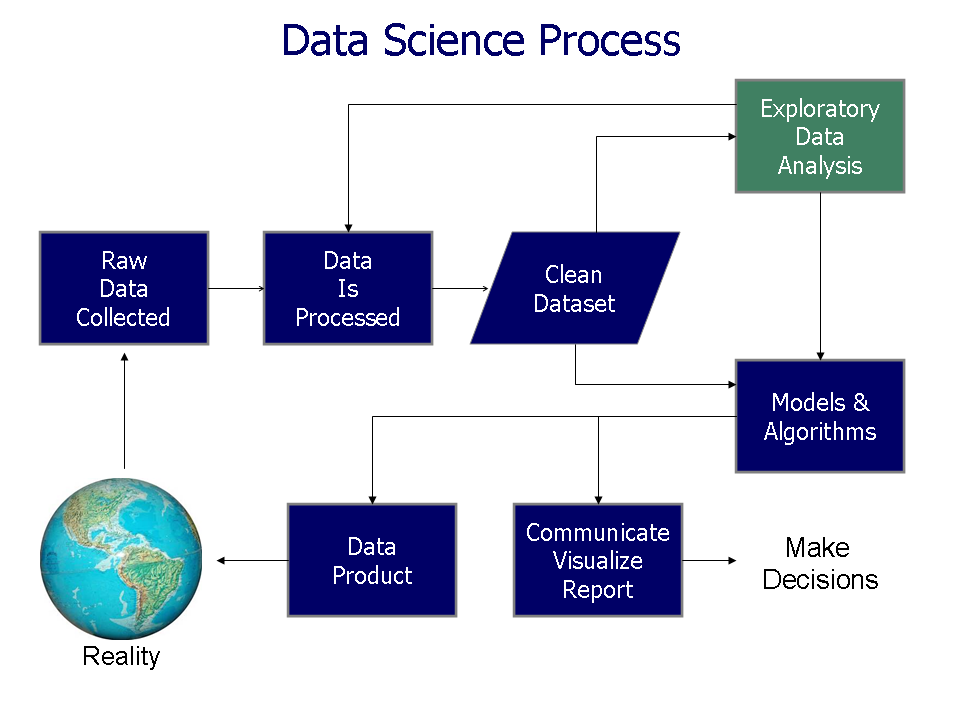
The data analysis process is rigorous. Quants clean and process raw data, explore it for potential signals, and then build mathematical models to define the exact rules for entering and exiting trades. This entire workflow turns a rough idea into a precise, testable strategy.
Testing Before Trading
Having an idea for a strategy is one thing. Knowing if it actually works is another. That's where backtesting comes in.
Backtesting
noun
The process of applying a trading strategy to historical data to determine how it would have performed in the past.
Backtesting simulates how your strategy would have fared using past market data. It helps you see potential profits, losses, and risks before you put any real money on the line. If a strategy didn't work in the past, it's unlikely to work in the future. This step is crucial for weeding out bad ideas and refining promising ones.
Backtesting is an essential part of developing a profitable trading strategy.
A successful backtest gives you the confidence to move forward, but it's not a guarantee of future success. Markets change, and what worked yesterday might not work tomorrow. Still, it's an indispensable tool for risk management and strategy validation.
What is the primary basis for decision-making in quantitative trading?
A stock that has been consistently outperforming the market for the past six months continues to rise. A strategy that buys this stock, betting on its continued upward trend, is best described as:
In short, quantitative strategies provide a disciplined, data-driven framework for navigating the financial markets.