Evaluating Large Language Models
Introduction to LLMs
What Are Large Language Models?
A Large Language Model, or LLM, is a type of artificial intelligence designed to understand and generate human-like text. Think of it as a highly advanced version of the autocomplete on your phone, but instead of just suggesting the next word, it can write entire paragraphs, answer complex questions, and even create computer code.
At their core, these are predictive models. After processing enormous amounts of text, they learn the patterns, grammar, context, and nuances of human language. This allows them to predict the most probable next word in a sequence, and by repeating this process, they can generate coherent and relevant sentences.
Large language models (LLMs) are AI systems that understand and create human language, doing tasks like summarizing articles, answering questions, writing code, and more.
The "large" in their name refers to two things: the immense size of the dataset they are trained on (think a significant portion of the internet) and the massive number of parameters the model contains. Parameters are like the internal knobs and dials the model tunes during training to make its predictions more accurate. Modern LLMs can have hundreds of billions of them.
How They're Built
LLMs are built on a type of neural network architecture called the Transformer, which was introduced in 2017. Before Transformers, AI models processed text sequentially, word by word, which made it difficult to keep track of context in long sentences.
The Transformer's key innovation is the self-attention mechanism. This allows the model to weigh the importance of different words in the input text simultaneously, no matter how far apart they are. When processing the sentence "The dog, which was chasing a squirrel, barked loudly," the attention mechanism helps the model understand that "dog" is the one that "barked," not the squirrel.
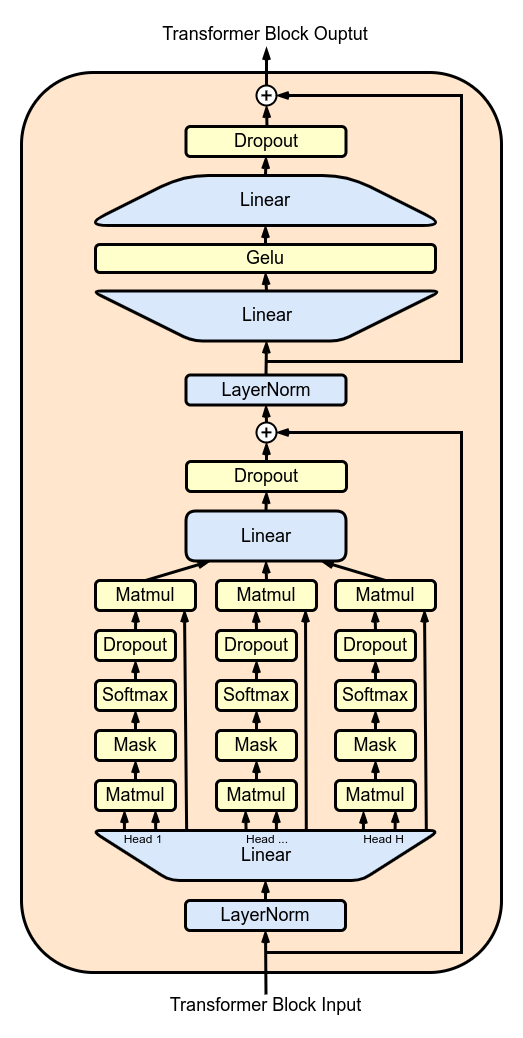
This ability to see the relationships between all words at once gives LLMs a much deeper understanding of context and meaning, making their outputs more sophisticated and human-like than previous models.
The Training Process
Training an LLM is a multi-stage process that requires immense computational power and vast amounts of data.
Step 1: Pre-training
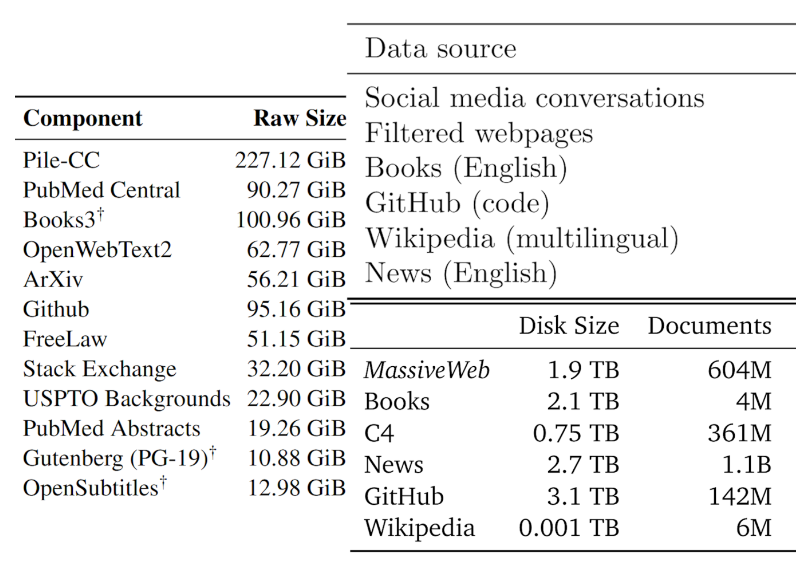
First, the model undergoes pre-training on a massive, unstructured dataset. This dataset is a diverse collection of text and code from public sources like books, articles, websites, and code repositories. During this phase, the model's primary goal is simple: predict the next word in a sentence. It's given a piece of text with a word missing or masked, and it has to guess what that word is. By doing this billions of times, the model learns grammar, facts, reasoning abilities, and language patterns.
Step 2: Fine-Tuning
After pre-training, the general model is adapted for specific tasks through a process called fine-tuning. This involves training the model on a smaller, curated dataset of high-quality examples. For a conversational AI, this dataset might consist of thousands of question-and-answer pairs created by humans.
This step helps steer the model's behavior to be more useful, follow instructions, and align with desired conversational styles. It refines the raw knowledge from the pre-training phase into a more focused and helpful tool.
Common Applications
The powerful language capabilities of LLMs have led to their use in a wide array of applications. They act as the engine behind many tools we use daily.
| Application | Description |
|---|---|
| Content Creation | Generating articles, marketing copy, emails, and even creative writing like poems or scripts. |
| Summarization | Condensing long documents, articles, or conversations into concise summaries. |
| Question Answering | Acting as sophisticated search engines that provide direct answers instead of just links. |
| Code Generation | Writing code snippets or entire functions in various programming languages based on natural language descriptions. |
| Translation | Translating text between different languages with a high degree of nuance and accuracy. |
| Chatbots | Powering advanced conversational agents for customer service, tutoring, or personal assistance. |
This versatility is a direct result of their deep understanding of language, learned through the extensive training process. As the models and training techniques continue to evolve, the range of possible applications will only expand.
Let's check your understanding of these foundational concepts.
What is the fundamental task a Large Language Model (LLM) is trained to perform during its initial pre-training phase?
The "large" in Large Language Model refers to two main aspects. What are they?
This introduction covers the basics of what LLMs are, how they are constructed, and what they can do. With this foundation, you're ready to explore how we can measure and evaluate their performance.