Evaluating AI Performance
Introduction to AI Evaluation
Why Bother Evaluating AI?
Building an AI model is just the beginning. Once it's built, the most important question is: does it actually work? And just as crucial, how well does it work? This is where evaluation comes in. It's the process of rigorously testing an AI system to measure its performance, reliability, and effectiveness.
Think of it like building a car. You wouldn't assemble all the parts and immediately start selling it. You'd run crash tests, measure fuel efficiency, and check the top speed. AI evaluation is the same idea. It ensures that an AI tool isn't just a fancy piece of code, but a dependable system that achieves its intended goal. Without proper evaluation, a medical diagnostic AI could give dangerously wrong advice, or a financial AI could make costly errors.
Evaluation turns a promising AI prototype into a trustworthy tool. It's the bridge between a good idea and a real-world solution.
Common Ways to Measure AI
To evaluate an AI, we need specific yardsticks called metrics. These are standards used to measure performance. While there are many complex metrics, most are based on a few straightforward ideas.
The most common metric is accuracy. It answers the simple question: How often is the AI correct? If a model designed to identify pictures of cats and dogs gets 95 out of 100 images right, its accuracy is 95%. It's a great starting point, but it doesn't always tell the whole story.
For more nuanced tasks, we often use precision and recall. Imagine an AI that flags potentially fraudulent credit card transactions.
- Precision measures how many of the flagged transactions were actually fraudulent. High precision means the AI doesn't create many false alarms.
- Recall measures what percentage of all fraudulent transactions the AI successfully caught. High recall means the AI doesn't miss many real threats.
| Metric | Question It Answers |
|---|---|
| Accuracy | Overall, how often is the model correct? |
| Precision | When the model makes a positive prediction, how often is it right? |
| Recall | Of all the actual positive cases, how many did the model find? |
Sometimes, the best evaluation comes from people. For generative AI like chatbots, metrics like clarity, helpfulness, and tone are subjective. In these cases, developers rely on human feedback to score the AI's responses and guide improvements.
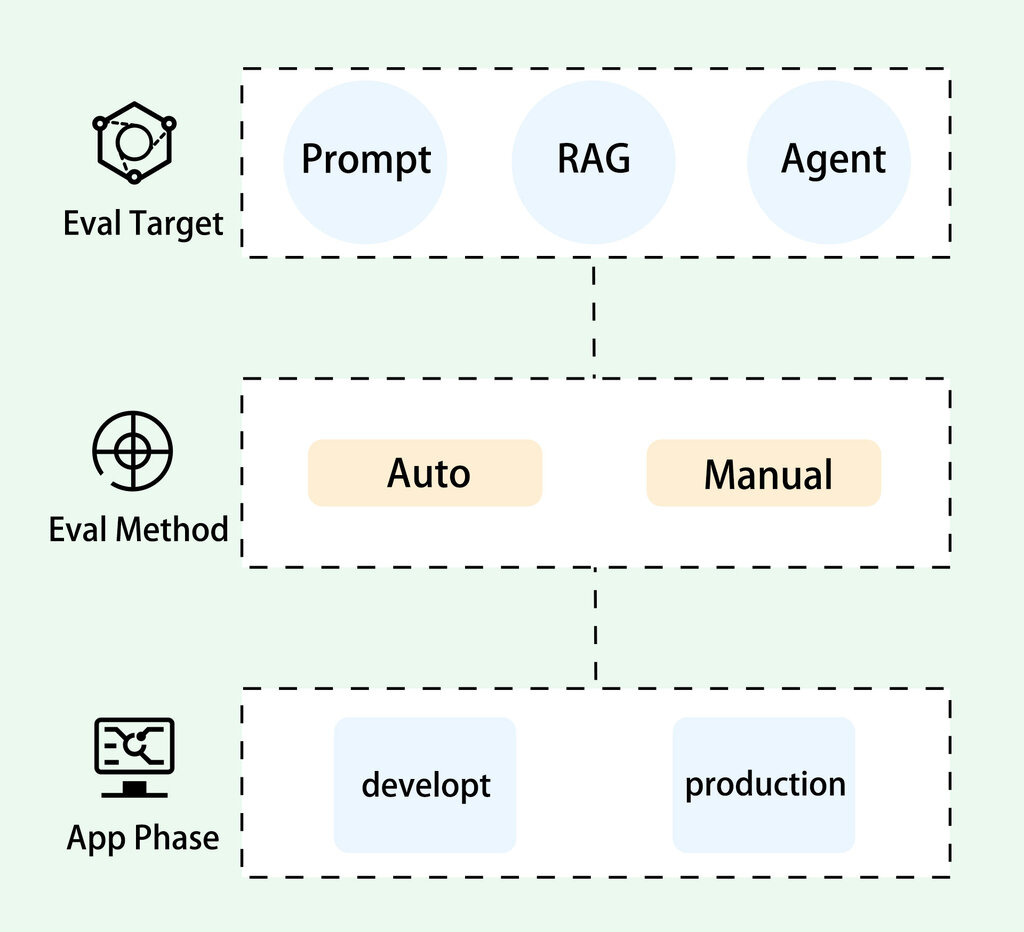
The Hurdles of Evaluation
Evaluating AI isn't always straightforward. Several challenges can complicate the process and lead to misleading results.
One of the biggest issues is data quality. AI systems are tested on data, and if that data is biased, incomplete, or just plain wrong, the evaluation is meaningless. This is the classic "garbage in, garbage out" problem. For example, if a voice recognition system is only tested on adult male voices, its evaluation will say nothing about how well it performs for women or children.
An AI is only as good as the data used to train and test it. Flawed data leads to a flawed understanding of its performance.
Another challenge is the lack of standardized frameworks. Different teams and companies may use different metrics and methods to evaluate similar AI systems. This makes it incredibly difficult to compare two different tools, like trying to compare the speed of two cars when one is measured in miles per hour and the other in knots.
Finally, the world is constantly changing. An AI model that performs brilliantly today might become less effective tomorrow as new data and new situations arise. A spam filter trained a year ago might not recognize the latest phishing scams. This means evaluation can't be a one-time event; it must be a continuous process to ensure the AI remains effective over time.
What is the primary purpose of evaluating an AI model?
An AI system designed to detect fraudulent transactions flags 100 transactions. Of these, 90 were actually fraudulent. This is a measure of the model's: