Evaluating Agentic Messaging with Rubrics
Introduction to Rubrics
Making Judgment Calls Clear
How do you judge something well? Whether it's a school project, a new employee's performance, or even a pie at a county fair, making a fair assessment can be tricky. We often rely on gut feelings, but those can be inconsistent and biased. This is where a rubric comes in.
Rubric
noun
A scoring tool that lays out the specific expectations for an assignment, performance, or product. It lists the criteria for evaluation and describes different levels of quality for each criterion.
A rubric is a guide that makes expectations explicit. It breaks down a complex task into smaller, more manageable parts, and then describes what success looks like for each part. Think of it as a recipe for a good outcome. Instead of just saying "make a great presentation," a rubric would specify what makes a presentation great: clear content, engaging delivery, and well-designed visuals. It provides a common language for both the evaluator and the person being evaluated.
The Anatomy of a Rubric
Most rubrics are built on three core components. Understanding them is key to seeing how they create clarity and fairness.
-
Criteria: These are the key elements or characteristics that will be judged. For an essay, criteria might include 'Argument,' 'Use of Evidence,' and 'Clarity.' They answer the question: What counts?
-
Performance Levels: These are the labels used to rate the quality of the work for each criterion. They can be numerical (like 1 to 4) or descriptive (like 'Novice,' 'Proficient,' 'Exemplary'). They answer the question: How good is it?
-
Descriptors: This is the heart of the rubric. Descriptors are detailed explanations of what performance at each level looks like for each criterion. A descriptor for 'Exemplary' under 'Clarity' might say, "Writing is fluid, concise, and easy to follow. Sentences are varied and well-constructed." They answer the question: What does 'good' actually mean here?
| Criteria | Exemplary (4) | Proficient (3) | Developing (2) |
|---|---|---|---|
| Organization | The essay has a clear introduction, body, and conclusion. Paragraphs are well-structured with topic sentences. | The essay has a recognizable structure, but some parts may be underdeveloped or out of place. | The essay lacks a clear structure, making it difficult to follow the main argument. |
| Argument | The main argument is compelling, original, and well-supported throughout the entire essay. | The main argument is clear and supported, but may lack depth or originality in some sections. | The argument is unclear or poorly supported, relying more on opinion than evidence. |
By using a rubric, everyone involved gets a clear picture of the target. It turns a vague goal into a concrete checklist, making feedback more specific and useful.
Holistic vs Analytic
Rubrics generally come in two flavors: holistic and analytic.
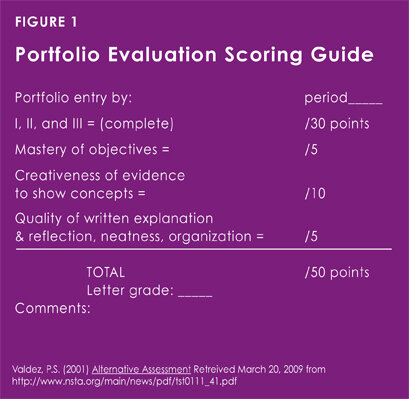
An analytic rubric is what most people picture. Like the table above, it breaks down the components of the finished work and scores each one separately. The final score is often a sum of the points from each criterion. This type is great for giving detailed feedback, as it pinpoints specific areas of strength and weakness.
A holistic rubric is a bit different. Instead of scoring individual criteria, it assesses the work as a whole. It uses a single scale with descriptors that cover all criteria at once. For example, a '4' might describe an essay that is well-argued, clearly written, and uses strong evidence. A '3' describes one that is solid but less polished in all those areas.
Holistic rubrics are faster to use and are effective for getting a general impression of performance, like when sorting entries in a contest. Analytic rubrics take more time but provide richer, more targeted feedback for learning.
Choosing the right type of rubric depends on your goal. Do you need a quick, overall judgment (holistic) or detailed, formative feedback (analytic)?
Rubrics aren't just for school. They appear in many professional fields. Businesses use them for performance reviews, project evaluations, and hiring decisions. In healthcare, they can be used to assess a clinician's diagnostic skills. By defining what quality looks like, rubrics bring consistency and objectivity to any task that requires human judgment.
Ready to check your understanding? This quiz covers the core ideas about rubrics.
What is the primary purpose of using a rubric?
A rubric is built on three core components: Criteria, Performance Levels, and __________.
Ultimately, a good rubric demystifies success. It provides a clear road map, making the evaluation process more transparent and empowering for everyone involved.