European Portuguese Essentials A1-A2
Pronunciation and Alphabet
The Alphabet
The Portuguese alphabet is nearly identical to the English one. It uses the same 26 letters you already know. The main difference lies in how these letters are pronounced and combined.
The letters K, W, and Y are used only in foreign words, so you won't see them much in native Portuguese vocabulary. For now, we'll focus on the core sounds that make Portuguese unique.
Vowel Sounds
Vowels are the heart of Portuguese pronunciation. Unlike English, where vowels can have many different sounds, Portuguese vowels are generally more consistent. European Portuguese is known for its closed vowel sounds, which can make it sound a bit clipped or mumbled to a new listener. Let's start with the five basic vowels.
father
The letter A often sounds like the 'a' in "father."
finger
The letter E can sound like the 'e' in "met" when stressed. In European Portuguese, an unstressed 'e' at the end of a word is often silent or sounds like a very short 'uh'.
book
The letter I almost always sounds like the 'ee' in "see."
eye
The letter O can be open, like the 'o' in "log," or closed, like the 'o' in "go."
moon
And the letter U sounds like the 'oo' in "moon."
Portuguese also has nasal vowels. These are sounds produced with air passing through both the mouth and the nose. You'll see them when a vowel is followed by an M or N, or when it has a tilde (~) over it.
mother
Think of nasal sounds as adding a slight 'ng' quality to the end of the vowel sound, without actually closing your throat to say 'g'.
Consonants and Combinations
Many consonants sound similar to their English counterparts, but there are a few tricky ones. Mastering these will make a big difference in how you sound.
The letter Ç (called a cedilha) only appears before 'a', 'o', or 'u' and is always pronounced like a soft 's', as in "see."
lunch
The letter R is also different. At the beginning of a word, or when it's doubled (RR), it has a guttural sound, similar to the 'h' in "house" but made in the back of the throat. Between vowels, it's a quick tap of the tongue, like the 'tt' in the American pronunciation of "butter."
Some letters also change their sound depending on the vowel that follows them.
A good rule to remember: C and G are "hard" (like in 'car' and 'go') before A, O, and U. They become "soft" (like 's' in 'cell' and 'j' in 'gem') before E and I.
Finally, Portuguese uses digraphs, which are two letters that combine to make a single sound. These are essential for reading and speaking correctly.
| Digraph | Sound | Example |
|---|---|---|
| CH | like 'sh' in shoe | chave (key) |
| LH | like 'lli' in million | olho (eye) |
| NH | like 'ny' in canyon | banho (bath) |
Accent Marks
You'll notice little marks above some vowels. These are accent marks, and they have two main jobs: to show which syllable to stress in a word and to change the sound of the vowel.
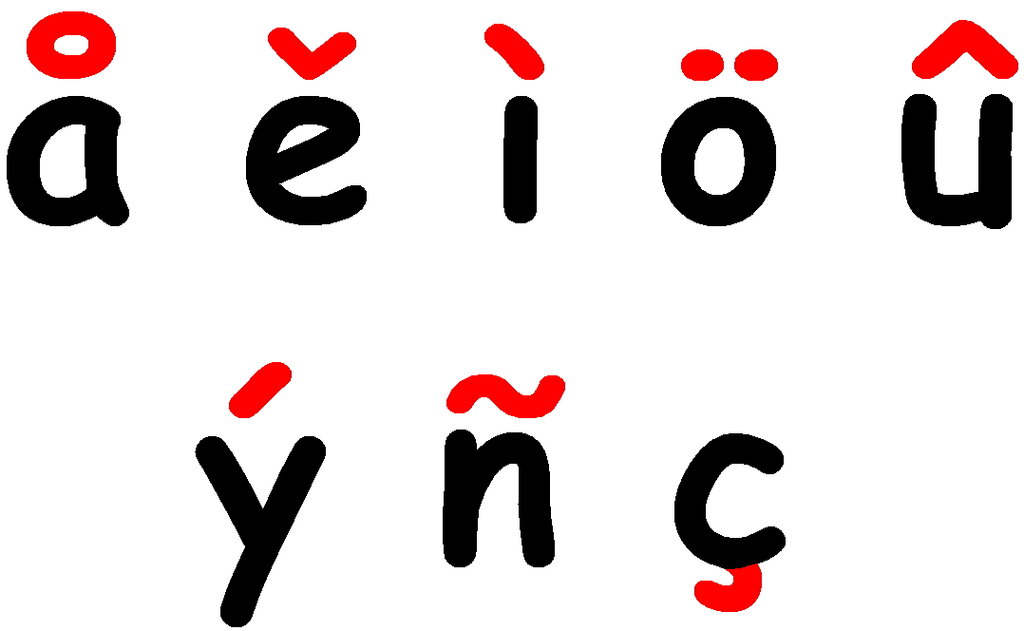
There are four main accent marks in Portuguese:
- Acute accent (´): Used on á, é, í, ó, ú. It indicates a stressed, open vowel sound.
- Circumflex accent (^): Used on â, ê, ô. It indicates a stressed, closed vowel sound.
- Tilde (~): Used on ã, õ. It makes the vowel sound nasal.
- Grave accent (`): Only used on the letter à. It doesn't change pronunciation but indicates the fusion of two words, usually the preposition 'a' and the article 'a'.
Don't worry about memorizing every rule for accent placement right now. Just get used to noticing them and listening for how they affect the sound of a word.
coffee (shows stress and open 'e')
peach (shows stress and closed 'e')
Ready to test your knowledge? Let's see what you've learned about the sounds of Portuguese.
How is the letter 'Ç' (cedilha) pronounced in Portuguese?
What does the tilde (~) accent mark indicate?
Getting comfortable with these sounds is the first major step. Practice them out loud, even if it feels strange at first. This foundation will make everything that comes next much easier.