European Political and Economic Landscape
West European Leadership
The Faltering Engines of Europe
For decades, the Franco-German partnership served as the unshakeable core of the European project. This powerhouse duo, complemented by the economic heft of the UK and the strategic positioning of the Benelux nations, drove the continent's agenda. But as of 2025-2026, this engine is sputtering. Internal political turmoil, economic stagnation, and the growing influence of far-right populism are weakening Europe's traditional leaders from within, limiting their ability to act decisively on a chaotic global stage.
Germany's Uneasy Centre
Germany's post-Merkel era has been defined by instability. The chancellorship of Friedrich Merz, a figure who represents a sharp turn to the right for the Christian Democratic Union (CDU), is built on a precarious coalition. This political fragility makes it difficult for Germany to confidently assume the role of Europe's 'Zentralmacht', or central power. While Germany has the economic and demographic weight to lead, its government is consumed by internal battles and the alarming electoral success of the far-right Alternative für Deutschland (AfD). The AfD's rise, particularly in eastern Germany, forces the mainstream parties into an awkward dance, trying to counter populist narratives without adopting them.
To turn things around, Merz needs to find his feet fast, show that he can be the chancellor for all Germans and chart a path towards the future.
This internal division has direct external consequences. Berlin's capacity for bold European initiatives is hampered. The country's leadership is hesitant, often reactive rather than proactive, as it navigates a domestic landscape where consensus is increasingly elusive. This creates a power vacuum at the heart of the EU.
France's Paralysis
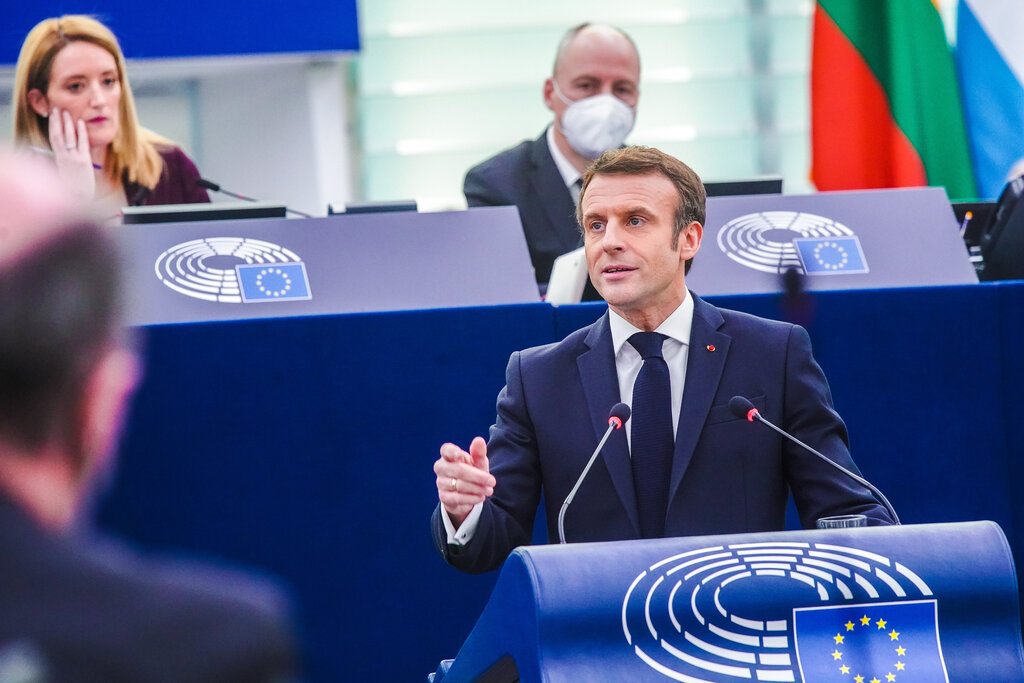
Across the Rhine, France faces a similar, if structurally different, crisis. President Emmanuel Macron's second term is marked by the absence of a parliamentary majority. His government, led by Prime Minister Sebastien Lecornu, must constantly negotiate with opposition parties to pass legislation, a process that has led to political gridlock. This is especially true for the national budget, where battles over spending cuts and deficit reduction are fierce and protracted. Every reform is a fight, draining political capital and attention from larger European and global issues.
Looming over this stalemate is the persistent strength of the (RN). The party has successfully shed some of its toxic historical image to become a dominant force in French politics, consistently polling as the country's most popular party. This forces Macron's centrist government to walk a tightrope, trying to address public anxieties about immigration and cost of living without ceding ground to the far-right's agenda. The result is often policy paralysis, preventing France from acting as the dynamic partner Germany needs.
Stagnation and New Alliances
The political weakness in Paris and Berlin is mirrored by economic stagnation across the E3. Germany's export-oriented model is struggling with high energy costs and slowing global demand. France is saddled with high public debt, and the post-Brexit UK is still grappling with sluggish growth and finding its new economic footing. This shared economic malaise severely constrains their financial firepower and makes ambitious joint investments, such as in defence or green technology, much harder to fund.
Deep-seated economic problems mean that the traditional engines of Europe lack the fuel for ambitious projects.
In response to these challenges and a more tense transatlantic relationship, new, more flexible security arrangements are emerging. The '' agreement, a strategic security and defence pact between the UK and Germany, is a prime example. This bilateral treaty focuses on military cooperation, intelligence sharing, and joint industrial projects. While practical, it also signals a shift away from EU-centric defence structures, reflecting a reality where key European powers are hedging their bets and seeking security outside of, or alongside, the EU's common framework.
The story is similar in the Benelux countries. In the Netherlands, the rise of Geert Wilders's Party for Freedom (PVV) has shattered the old political consensus, creating long and difficult coalition negotiations. This pattern of fragmentation and the rise of populist, often Eurosceptic, parties is repeated across the region, further complicating decision-making at the EU level. When national governments are fragile and focused inward, their leaders have little mandate or energy for forging the compromises necessary for collective European action.
What is the primary reason the text gives for the weakening of the traditional Franco-German leadership in the EU?
In Germany, the rise of which political party is forcing mainstream parties into an "awkward dance" and contributing to internal division?
The combined effect of these trends is a Western Europe that is less stable and less capable of global leadership. The old certainties of the Franco-German alliance and a cohesive EU bloc are being tested, not just by external threats, but by deep-seated weaknesses within its most powerful member states.