EU Sustainability Directives Explained
Introduction to EU Corporate Sustainability Regulations
A New Era for EU Business
For years, many companies treated sustainability like an optional side project. They might publish a glossy annual report or launch a green marketing campaign, but meaningful action wasn't always a requirement. The European Union is changing that. Through a series of powerful new laws, the EU is making sustainability a core, non-negotiable part of doing business.
This shift isn't just about protecting the environment. It’s about creating a more transparent and accountable market where businesses, investors, and consumers can make genuinely informed decisions. The goal is to reshape corporate behavior from the inside out, moving from voluntary gestures to mandatory, verifiable action. Let's look at the key pieces of this regulatory puzzle.
Empowering Consumers Against Greenwashing
Have you ever bought a product labeled "eco-friendly" or "conscious" and wondered what that really means? You're not alone. Vague and misleading environmental claims, often called "greenwashing," make it difficult for consumers to support truly sustainable companies.
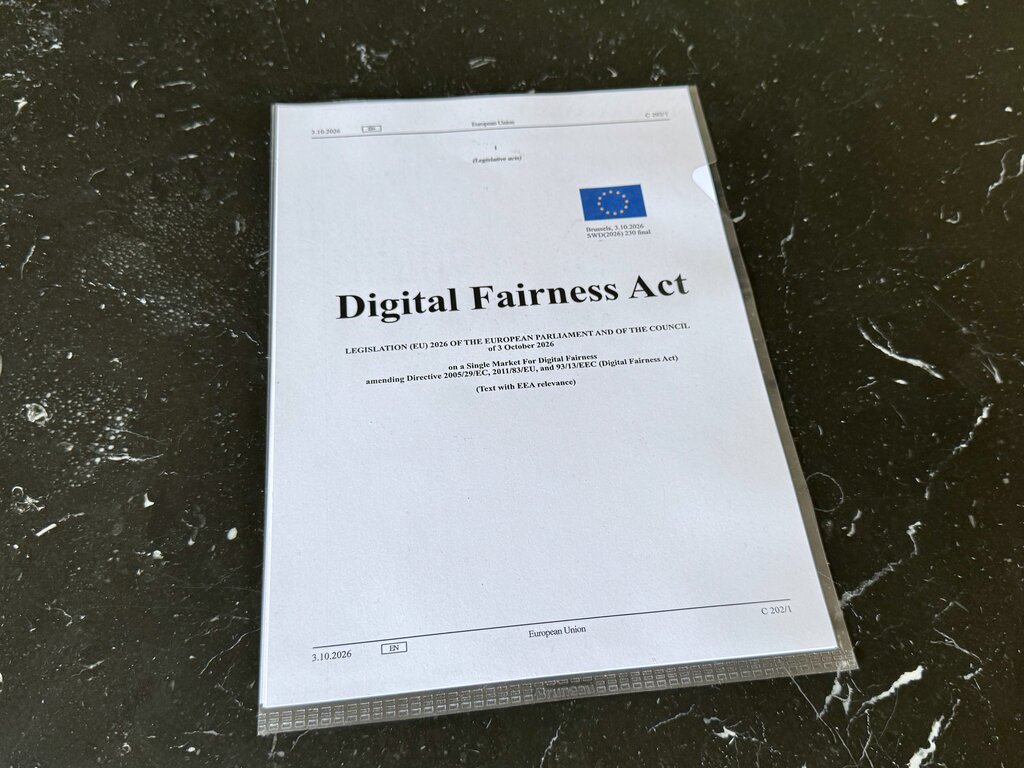
The Omnibus Directive, also known as the "Directive on Empowering Consumers for the Green Transition," tackles this problem head-on. It updates existing EU consumer protection laws to ban unfair commercial practices related to sustainability. Its main job is to ensure that when a company makes a green claim, it has to back it up with clear, verifiable evidence.
Under the Omnibus Directive, generic claims like "good for the planet" without proof are no longer allowed. Companies must be specific about what makes their product sustainable.
This directive also targets premature obsolescence—the practice of designing products to break down quickly so you have to buy a new one. By demanding more transparency about a product's durability and repairability, the law helps consumers make choices that are better for both their wallets and the environment.
Reporting You Can Trust
If the Omnibus Directive is about what companies say to customers, the Corporate Sustainability Reporting Directive (CSRD) is about what they disclose to the public and investors. The CSRD fundamentally changes the game for corporate transparency.
Previously, sustainability reporting was often inconsistent and hard to compare. One company's report might focus on carbon emissions, while another highlighted community engagement. The CSRD replaces this patchwork with a standardized, mandatory framework. It requires large companies to report on a wide range of environmental, social, and governance (ESG) topics using a common set of rules, known as the European Sustainability Reporting Standards (ESRS).
In July 2023, the EU adopted European Sustainability Reporting Standards to be used by companies reporting under the CSRD.
The big idea here is to elevate sustainability information to the same level of importance and reliability as financial data. Just as investors analyze a company's balance sheet, they will now be able to analyze its audited sustainability performance. This makes it much easier to see which companies are managing risks and creating long-term value in a changing world.
Accountability Across the Supply Chain
A company's impact doesn't stop at its own factory gates. It extends to its vast network of suppliers, distributors, and contractors all over the world. The Corporate Sustainability Due Diligence Directive (CSDDD) addresses this reality.
This directive requires large companies to actively identify, prevent, and mitigate adverse human rights and environmental impacts within their global value chains. It's no longer enough for a company to be unaware of problems like forced labor or deforestation happening with a supplier. The CSDDD makes them responsible for taking action.
This represents a major step toward corporate accountability, compelling businesses to look beyond their own operations and take responsibility for their broader footprint. Together, these three directives create a comprehensive framework that connects consumer information, corporate reporting, and supply chain management, driving sustainability into the heart of EU commerce.
What is the primary objective of the new wave of EU sustainability directives like the CSRD, CSDDD, and the Omnibus Directive?
Which directive specifically targets 'greenwashing' by banning vague environmental claims and requiring companies to provide clear, verifiable evidence for their 'eco-friendly' labels?
This new regulatory landscape marks a significant evolution in how business is conducted in the EU, setting a standard that is likely to influence corporate practices globally.