Ethiopia and Early Christianity
Introduction to Ethiopian Christianity
An Ancient Faith
Christianity's roots in Ethiopia run deeper than in almost any other country. The story begins not with kings or councils, but with a chance encounter on a desert road. The New Testament's Book of Acts tells of an Ethiopian eunuch, a high official for the queen, who was reading scripture while returning from Jerusalem. The apostle Philip met him and explained the text, leading to the official's immediate baptism.

This event, happening shortly after the time of Jesus, marks one of the earliest known conversions of a non-Jewish person. While it shows an early connection, it was a personal conversion, not the start of a national movement. That would come a few centuries later, in the powerful Kingdom of Aksum.
The First Christian Kingdom
The Kingdom of Aksum, located in modern-day Ethiopia and Eritrea, was a major trading power in the ancient world, rivaling Rome, Persia, and China. Its influence stretched across the Red Sea, connecting Africa with the Mediterranean and the Indian Ocean. The kingdom’s official embrace of Christianity, however, came about through another unexpected event.

In the early 4th century, a Christian philosopher from Tyre named Meropius was traveling home by sea with two young relatives, Frumentius and Aedesius. Their ship was attacked near the Red Sea coast, and everyone aboard was killed except for the two boys. They were taken to the Aksumite capital and presented to the king as slaves.
But their intelligence and education did not go unnoticed. They rose through the ranks of the royal court, earning the king's trust. Aedesius became the royal cupbearer, while Frumentius became the king's treasurer and secretary. When the king died, the queen asked them to stay and tutor her young son, the future King Ezana, until he was old enough to rule.
During this time, Frumentius used his influence to support Christian merchants in the area, helping them find places to worship and encouraging the faith's growth.
Once King Ezana came of age, Frumentius and Aedesius were granted permission to leave. Aedesius returned to Tyre, but Frumentius traveled to Alexandria, Egypt. There, he met with the patriarch, Athanasius, and urged him to send a bishop to Aksum to lead the growing Christian community. Recognizing Frumentius's unique position and dedication, Athanasius consecrated Frumentius himself as the first bishop of Ethiopia.
Upon his return to Aksum, Frumentius baptized King Ezana, who then declared Christianity the official state religion around 330 AD. This monumental decision made the Kingdom of Aksum one of the very first states in the world to formally adopt Christianity.
The Nine Saints Arrive
Christianity was now the religion of the court, but its spread throughout the vast kingdom was a gradual process. A major catalyst for this expansion came about a century and a half later with the arrival of the Nine Saints.
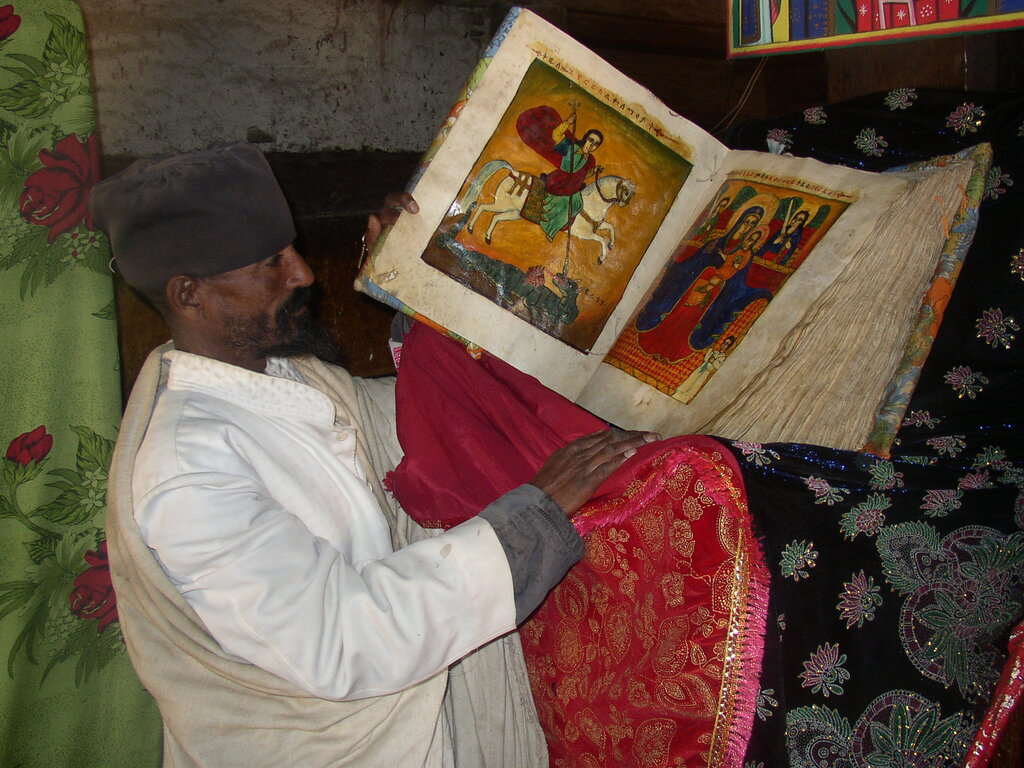
These missionaries came from various parts of the Roman Empire, such as Syria and Constantinople. They were likely fleeing persecution that followed the Council of Chalcedon in 451 AD, a major church council that resulted in a theological split. Finding refuge in Aksum, they dedicated themselves to spreading the Christian faith beyond the capital.
The Nine Saints played a crucial role in two key areas. First, they translated the Bible and other religious texts from Greek into Ge'ez, the local language. This made scripture accessible to the broader population for the first time. Second, they established monasteries, which became centers of learning, worship, and evangelism, helping to integrate Christian teachings with local customs and traditions.
Their work solidified Christianity's place in Ethiopian society, moving it from a royal decree to a deeply rooted part of the culture. This unique history, from the eunuch on the road to a powerful king and dedicated missionaries, shaped the distinct and enduring traditions of Ethiopian Christianity.
Ready to check your understanding?
According to the New Testament's Book of Acts, who was the first recorded Ethiopian convert to Christianity?
What action by King Ezana officially established Christianity as the state religion of the Kingdom of Aksum around 330 AD?
The early adoption and unique development of Christianity in Ethiopia established one of the world's oldest and most fascinating Christian traditions.