Ethical Hacking and Penetration Testing Essentials
Advanced Reconnaissance Strategies
Beyond Basic Lookups
Effective ethical hacking isn't about brute force; it's about precision. The foundation of any successful penetration test is deep reconnaissance, moving far beyond simple IP address and WHOIS checks. We enter the realm of OSINT, or Open Source Intelligence. This is the disciplined practice of collecting and analysing data from publicly available sources to build a comprehensive picture of a target's digital footprint. The goal is to map out attack surfaces, identify potential weaknesses, and understand the target's infrastructure, all without triggering alarms.
Information gathering, or reconnaissance, is the foundation of a successful penetration test.
Passive vs Active Reconnaissance
Reconnaissance is split into two main approaches: passive and active. Passive reconnaissance is like being a detective observing a scene from afar. You gather intelligence without ever directly interacting with the target's systems. You're analysing public records, social media, news articles, and using third-party services that have already scanned the internet. This method is stealthy and carries almost no risk of detection.
A key technique in passive reconnaissance is using advanced search operators, often called 'dorks', on search engines like Google and Censys. These allow you to uncover sensitive information that has been unintentionally indexed and made public.
## Example Google Dorks:

# Find login pages
inurl:admin OR inurl:login

# Search for specific file types containing sensitive words
filetype:pdf "confidential" site:targetcompany.com

# Find subdomains of a target
site:*.targetcompany.com -www.targetcompany.com
Active reconnaissance, on the other hand, involves direct engagement with the target's infrastructure. This is like the detective knocking on doors and asking questions. You might send packets to their servers to identify open ports, probe their DNS servers, or test their web applications for responses. While this approach yields more detailed and current information, it's also much noisier. Each interaction leaves a digital footprint that could be logged and detected by an intrusion detection system.
Most professional engagements use a combination of both. Passive recon builds the map, and active recon verifies the details on the ground.
Professional OSINT Tools
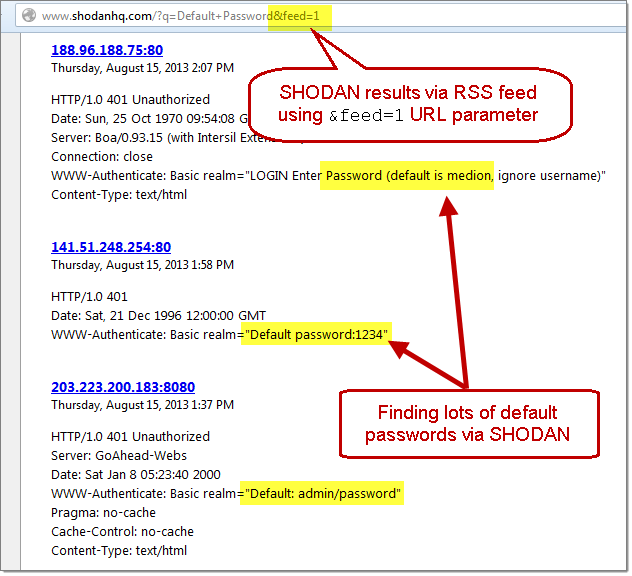
Beyond search engines, specialised tools are essential for advanced reconnaissance. Shodan is a search engine specifically for internet-connected devices. Instead of web pages, it finds everything from webcams and routers to industrial control systems and unsecured databases. It's an invaluable tool for identifying a target's exposed hardware and IoT assets.
Another powerful tool is Maltego. It excels at relationship mapping. You can feed it a single piece of information, like a domain name, and it will pivot from there, using various public data sources to automatically discover and visualise the relationships between domains, IP addresses, email addresses, and even people associated with the target.
Advanced DNS Interrogation
A company's Domain Name System (DNS) records are a goldmine for understanding its network structure. While a basic lookup gives you an IP address, advanced techniques can reveal much more. The goal is to uncover not just public-facing servers but also internal hostnames, which can provide clues about the internal network architecture.
| Technique | Goal | How It Works | Risk |
|---|---|---|---|
| Zone Transfer | Obtain all DNS records for a domain. | An AXFR request is sent to the target's DNS server, asking for a full copy of the zone file. | High. This is an unusual request and often logged. Most servers are configured to deny it. |
| Subdomain Enumeration | Discover non-public subdomains. | Uses wordlists (brute force) and search engines to guess and find subdomains like 'test', 'dev', or 'vpn'. | Medium. Can generate a lot of DNS query traffic, which may be detected. |
Tools like dnsrecon or Sublist3r automate these processes, combining various techniques to build a comprehensive list of a target's domains and subdomains. This list becomes a crucial part of your targeting plan for later phases of the ethical hack.
What is the primary goal of Open Source Intelligence (OSINT) in the context of ethical hacking?
An ethical hacker is using advanced Google search operators (often called 'dorks') to find unintentionally indexed sensitive documents on a company's website. Which type of reconnaissance is this?
With a thorough map of the target's digital and human landscape, you are prepared to move from passive observation to more active scanning and enumeration.