Ethereum Fundamentals
Ethereum Basics
More Than Digital Money
Bitcoin showed the world that a secure, decentralized financial system was possible. It created digital money without a central bank. Ethereum, launched in 2015, asked a powerful follow-up question: What else can we decentralize?
Instead of just a ledger for transactions, Ethereum's creators envisioned a global, shared computer. Anyone could use this computer to run applications that are censorship-resistant, transparent, and always online. These are called decentralized applications, or dApps.
The key innovation that makes this possible is the smart contract. A smart contract is just a program stored on the blockchain that runs when predetermined conditions are met. Think of it like a digital vending machine. If you put in the right amount of money (data), it automatically dispenses your snack (executes the contract's terms) without needing a person to operate it.
The World Computer
How does this global computer actually run code? Through the Ethereum Virtual Machine, or EVM. The EVM is the environment where all Ethereum smart contracts and applications live and execute. It's the processing unit of this world computer.
Every computer (or “node”) connected to the Ethereum network runs a copy of the EVM. This massive parallel processing is what makes the system so robust. When a smart contract is executed, every node runs the calculation to verify its outcome. This ensures the results are consistent and tamper-proof across the entire network.
Think of the EVM as the operating system for Ethereum. It handles the code execution and makes sure the rules of the network are followed.
This design choice makes Ethereum fundamentally different from Bitcoin. While Bitcoin's scripting language is intentionally limited for security, Ethereum's allows for complex, general-purpose programs. This flexibility unlocked a new world of possibilities, from decentralized finance (DeFi) to digital collectibles (NFTs).
| Feature | Bitcoin | Ethereum |
|---|---|---|
| Primary Goal | A peer-to-peer electronic cash system | A platform for decentralized applications |
| Core Unit | Bitcoin (BTC) | Ether (ETH) |
| Programming | Limited scripting capabilities | Supports complex smart contracts (Turing-complete) |
| Block Time | Approximately 10 minutes | Approximately 12 seconds |
Paying for Computation
Running computations on thousands of computers around the world isn't free. To prevent spam and allocate resources, Ethereum uses a pricing mechanism called gas.
Every operation on the Ethereum network, from a simple transaction to a complex smart contract interaction, requires a certain amount of computational effort. Gas is the unit used to measure that effort.
Gas
noun
A unit that measures the amount of computational effort required to execute specific operations on the Ethereum network.
The transaction fee is paid in Ethereum's native cryptocurrency, Ether (ETH). The total fee is calculated as the amount of gas required for the operation multiplied by the price per unit of gas. This fee compensates the network participants (validators) who run the computers that process the transaction.
Gas prices fluctuate based on network demand. When the network is busy, the price of gas goes up, making transactions more expensive. This system ensures that the network's limited computational resources are used efficiently.
Gas is the fuel for the Ethereum network. Ether (ETH) is the currency you use to buy that fuel.
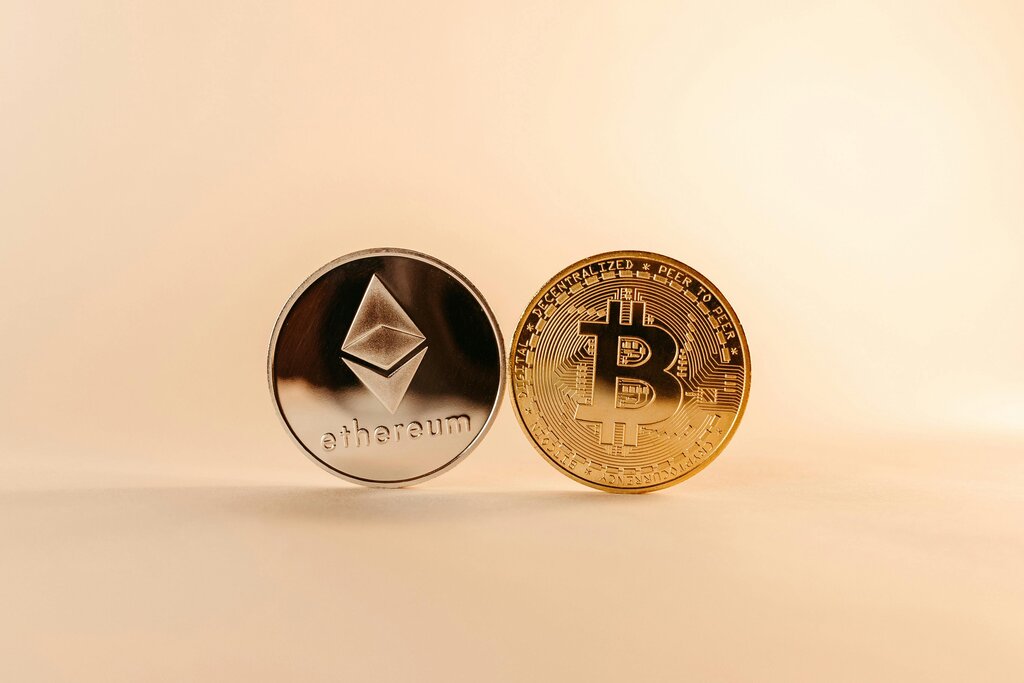
While Bitcoin's BTC is primarily used as a store of value and medium of exchange, Ether has a more direct utility within its ecosystem. It is essential for interacting with dApps, paying for transactions, and participating in the network's security.
Time to check your understanding of these core concepts.
What is the primary conceptual innovation Ethereum introduced compared to Bitcoin?
A smart contract is best described as a program stored on the blockchain that runs when predetermined conditions are met.
Ethereum's invention of a programmable blockchain expanded the possibilities of what a decentralized network could do, paving the way for a new generation of internet applications.