Essential Foundations of Drawing
Pressure and Line Weight
Beyond the Outline
You already know how to draw a line. But a line can be more than just an edge that separates one shape from another. By varying the pressure you apply to your pencil, you transform a simple contour into a dynamic tool that can suggest weight, depth, and light before you ever lay down a single patch of shading.
A line with a single, uniform weight is flat. It communicates shape, but not form. A line that swells from thin to thick and back again has life. It describes not just where an object ends, but how it exists in space. This control over line weight is the difference between a simple diagram and a drawing with genuine presence.
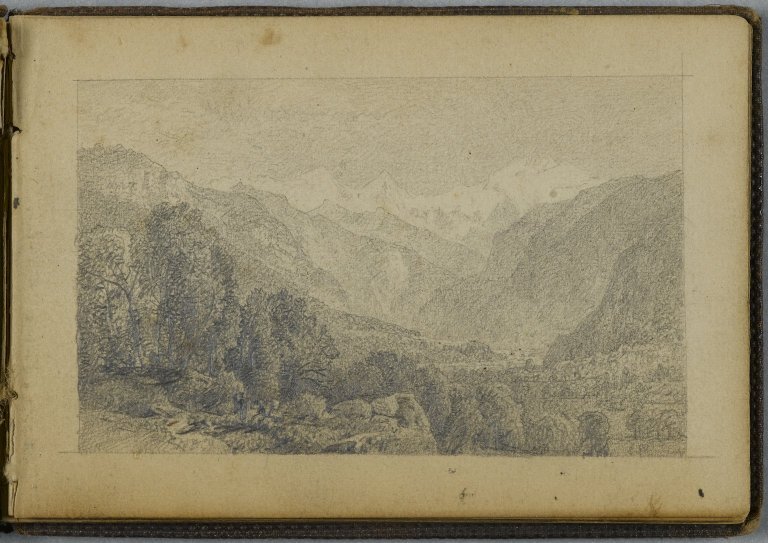
Use line weight and the density and grouping of objects to create a sense of light and shade, depth and structure.
Mastering this isn't about muscle, but about sensitivity. It’s about learning how the pencil feels as it moves across the paper and translating that feeling into intentional marks.
Controlling the Line
The fundamental exercise for pressure control is the tapered line. This is a stroke that begins with minimal pressure, gradually thickens as you press down, and then thins out again as you lift off. Think of it as a gentle swell. Practice making rows of these lines, aiming for smooth, consistent transitions.
Once you're comfortable, try creating lines that are weighted on one end. Start light and press harder, ending abruptly. Then do the reverse: start with heavy pressure and lift away. This skill is crucial for defining edges where one form overlaps another.
Your choice of pencil significantly impacts your ability to control line weight. Pencils are graded on a scale from H (hard) to B (soft). An H-grade pencil has more clay mixed with the graphite, creating lighter, crisper lines that are difficult to smudge. A B-grade pencil has more graphite, resulting in darker, softer lines that respond dramatically to changes in pressure. For practicing line weight, a 2B or 4B pencil is ideal. It’s soft enough to give you a wide range of values but not so soft that it becomes messy.
Line Weight in Action
With control over your lines, you can start using them functionally to create the illusion of three-dimensional space.
First, use weight to suggest depth. Objects that are closer to the viewer generally have heavier, darker lines. Elements in the background should be drawn with a lighter touch. This simple rule immediately creates a sense of foreground, middle ground, and background.
Second, use line weight to suggest a light source. The parts of an object in shadow will have thicker, darker edges. The parts facing the light will have thinner, lighter, or even broken lines. By weighting the bottom edge of a sphere, for instance, you imply it’s resting on a surface and that the light is coming from above.
This leads to the concept of edge variation. A hard edge, created with a sharp, definite line, suggests a crisp corner or a distinct material change. A soft edge, made with a lighter, sketchier line, can suggest a rounded surface or a transition into shadow. Even without shading, you can describe the physical properties of an object just by changing the character of its outline. This is a key part of expressive mark-making, where your lines do more than just describe; they interpret.
This isn't a rigid system of rules. The goal is to develop a rhythmic, intuitive approach. Your hand should learn to apply pressure where a form feels heavier or recedes into shadow, and lighten up where it catches the light or drifts into the distance. This is how a drawing starts to breathe.
For instance, in , the artist focuses exclusively on the outer and inner edges of a subject. By varying the line weight during this exercise, you can capture not just the shape, but also the form and volume of the subject without using any shading at all.
Ready to test your understanding?
What is the primary artistic purpose of varying the pressure on your pencil to change line weight?
According to the text, which type of pencil is ideal for practicing line weight control?
By moving beyond simple outlines, your drawings will gain a new level of sophistication and realism. Keep practicing pressure control until it becomes second nature.