Essential Digital Marketing Tools
Introduction to Digital Marketing
What Is Digital Marketing?
Digital marketing is any marketing effort that uses an electronic device or the internet. Businesses leverage digital channels such as search engines, social media, email, and their websites to connect with current and prospective customers.
Think about the last time you saw an ad. Was it on a billboard or in a magazine? Or was it in your social media feed or at the top of a Google search? For most of us, it was probably the latter. That's digital marketing in action.
Unlike traditional marketing, digital marketing allows for a two-way conversation. It's not just about broadcasting a message; it’s about engaging with an audience, getting feedback, and building relationships. Its importance comes from a simple fact: your customers are online. Being where your customers are is the first rule of business.
The goal is to reach people where they already spend their time and attention—on the internet.
The Main Channels
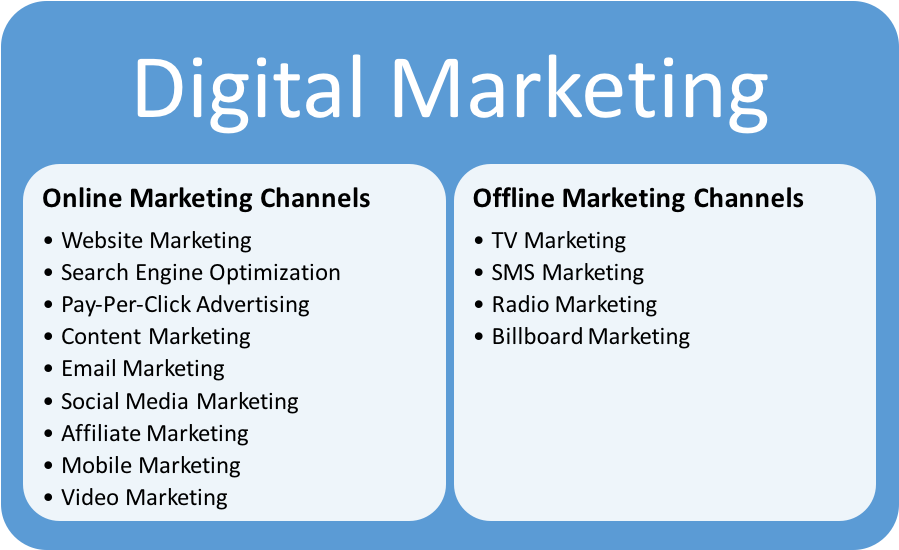
Digital marketing isn't just one thing. It's a collection of different tools and methods, often called "channels." Each channel offers a unique way to reach people. While there are many, a few core channels form the foundation of most digital strategies.
Search Engine Optimization (SEO) This is the process of making your website more visible on search engines like Google. When you search for something, you probably click on one of the first few results. SEO is the art and science of getting your website to show up in that prime real estate without paying for an ad. It involves using the right keywords, making your site fast, and ensuring it's easy to use.
SEO
noun
The practice of increasing the quantity and quality of traffic to your website through organic search engine results.
Content Marketing Instead of directly advertising a product, content marketing focuses on creating and sharing valuable, relevant, and consistent content to attract and retain a clearly defined audience. This could be a blog post, a how-to video, a podcast, or an infographic. The idea is to provide value first. By helping your audience solve a problem or learn something new, you build trust and establish your brand as an authority.
Social Media Marketing This involves using social media platforms like Facebook, Instagram, X (formerly Twitter), and LinkedIn to promote a product or service. It's more than just posting updates. It’s about engaging with your audience, listening to their conversations, running targeted ad campaigns, and directing followers to your website.
Email Marketing Email is one of the most direct and effective ways of connecting with your leads, nurturing them, and turning them into customers. You can use email to share company news, promote special deals, or share valuable content. Because people have opted in to receive your messages, you're communicating with an audience that is already interested in what you have to say.
Pay-Per-Click (PPC) Advertising PPC is a model of internet marketing in which advertisers pay a fee each time one of their ads is clicked. The most common type is search engine advertising, which allows you to pay for a top spot in the search results. For example, those listings you see labeled "Ad" at the top of Google are PPC ads. You're essentially buying visits to your site, rather than trying to "earn" those visits organically through SEO.
Building Your Strategy
Using these channels effectively requires a plan. A digital marketing strategy is a roadmap that outlines how you'll achieve your marketing goals. It doesn't have to be complicated, but it should cover a few key components.
First, you need to know your audience. Who are you trying to reach? Understanding their needs and where they spend their time online is crucial. Second, you must set clear goals. Do you want to increase sales, build brand awareness, or generate leads?
Once you know who you're targeting and what you want to achieve, you can choose the right channels. You don't need to be on every platform. It's better to do a great job on one or two channels where your audience is most active than to spread yourself too thin. Finally, a strategy includes how you'll measure your results to see what's working and what isn't, so you can adjust your plan over time.
Understanding when and how to leverage each is key to a successful digital marketing strategy.
Now, let's test what you've learned about the basics of digital marketing.
What is a primary characteristic that distinguishes digital marketing from traditional marketing?
A small bakery wants to appear in the top results on Google when people search for "cupcakes near me" but doesn't want to pay for ad placement. Which strategy should be their main focus?
By understanding these core concepts, you have a solid foundation for exploring how to use specific tools and techniques to grow a business online.