Essential AI Tools for Beginners
Mastering Conversational Prompts
From Conversation to Command
Using a large language model (LLM) effectively is less like chatting with a person and more like writing a precise, miniature computer program. A vague request gets you a vague, and often useless, response. A well-structured prompt, however, acts as a clear set of instructions that guides the AI to a reliable and high-quality result. The goal is to eliminate guesswork and make the AI's output consistent and predictable.
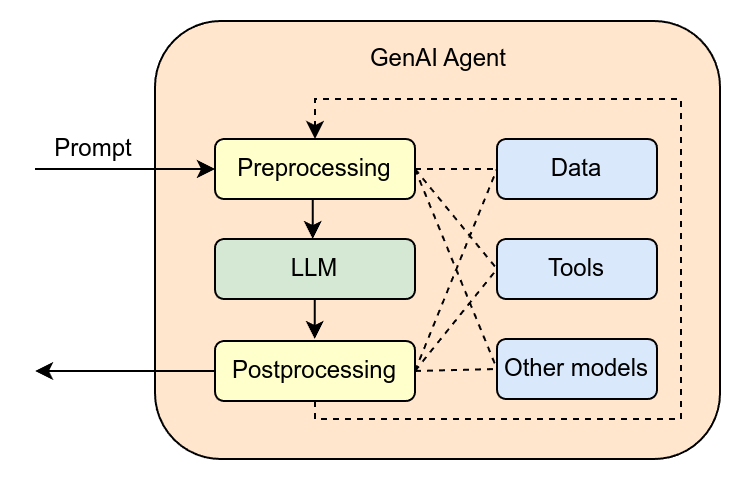
Moving from basic queries to professional prompting means treating your instructions as an 'implicit program.' You're not just asking a question; you're defining a process for the AI to follow. Several frameworks can help bring this structure to your requests.
The PCTC Framework
One of the most robust methods for structuring a prompt is the PCTC framework. It forces you to be specific by breaking your request into four key parts: Persona, Context, Task, and Constraint.
| Component | Purpose |
|---|---|
| Persona | Assign a role to the AI. (e.g., "Act as an expert copywriter.") |
| Context | Provide background information the AI needs. (e.g., "This is for a new brand of eco-friendly dog toys.") |
| Task | State the specific action you want the AI to perform. (e.g., "Write three headlines.") |
| Constraint | Define the rules, boundaries, and format for the output. (e.g., "Each headline must be under 10 words and include a pun.") |
Using this structure transforms a simple request into a detailed brief. Compare the difference in the following prompts.
## Vague Prompt

Write some headlines for my new product.


## PCTC Prompt

**Persona:** Act as a senior marketing copywriter specializing in direct-to-consumer pet products.

**Context:** We are launching 'Pawsitive Play,' a new line of dog toys made from 100% recycled ocean plastic. The target audience is environmentally conscious millennials.

**Task:** Generate five compelling headlines for a social media ad campaign.

**Constraint:** Each headline must be under 12 words. Avoid jargon. The tone should be playful but sincere. Do not use the word 'new'.
Guiding the AI's Reasoning
Even with a great structure, complex problems can cause an AI to jump to conclusions and make mistakes. To prevent this, you can use (CoT) prompting. Instead of just asking for the final answer, you instruct the AI to explain its reasoning step-by-step. This forces a more logical, deliberate process and significantly reduces the risk of where the model confidently invents incorrect facts.
For example, instead of asking, "Is a 12-foot ladder tall enough to reach a 10-foot gutter on a one-story house with a 30-degree roof pitch?" you would add, "Explain your reasoning step-by-step, considering the ladder placement angle and safe climbing practices."
This makes the output more reliable and gives you insight into how the AI arrived at its answer, allowing you to correct its logic if needed.
Teaching by Example
Sometimes, the best way to specify a format or style is to show, not just tell. This is the idea behind few-shot prompting. Instead of only describing what you want (a zero-shot prompt), you provide 2-3 complete examples of the input and desired output. This small amount of in-prompt training can improve accuracy dramatically.
To keep your examples separate from your actual query, it's crucial to use delimiters. These are markers that clearly define different sections of your prompt. Common choices include triple quotes ("""), XML tags (<example>), or even simple markers like ###.
## Few-Shot Prompt with Delimiters

Translate the following company names into playful, single-word .com domain names.

<example>
Input: "Speedy Shipping Services"
Output: "Shipfast.com"
</example>

<example>
Input: "Creative Corner Cafe"
Output: "Creacorner.com"
</example>

<example>
Input: "Bright Bulb Ideas"
Output: "Bulbright.com"
</example>

---

Input: "Global Tech Innovations"
Output:
The AI learns the pattern from your examples and applies it to the new input. This is far more effective than trying to describe the pattern in words. You can also ask the AI to help you write better prompts. This is called meta-prompting.
Try this: take a prompt you've written and ask the AI, "Please improve this prompt to be clearer, more specific, and better structured for a large language model. Add a persona, context, an explicit task, and constraints."
The AI will often return a much more robust prompt using the very principles you're learning. By iterating on your prompts and using these frameworks, you move from a casual user to a skilled operator who can get consistent, high-quality results from any major LLM.
What is the primary purpose of using a Chain-of-Thought (CoT) prompt?
In the context of large language models, what is a 'hallucination'?