Erythrocyte Lifecycle and Bilirubin Metabolism
Splenic Sequestration
The Final Chapter for Red Blood Cells
A red blood cell, or erythrocyte, has a hardworking but finite lifespan of about 120 days. Over this period, it endures constant stress while squeezing through the body's narrowest capillaries. This repeated mechanical strain takes a toll on its cell membrane, gradually reducing its flexibility and deformability.
This process of ageing is called senescence. As the erythrocyte becomes more rigid and its surface proteins change, it's marked for removal. The primary site for this cellular retirement is the spleen, an organ that acts as a sophisticated quality-control filter for the blood.
Old, inflexible red blood cells can no longer effectively navigate the circulatory system and are targeted for destruction.
The Spleen's Filter
The spleen's red pulp contains a network of narrow passages called the . Healthy, flexible red blood cells can easily deform to pass through these tight spaces and re-enter circulation. However, older, stiffer erythrocytes are unable to make the squeeze. They become physically trapped, a process known as splenic sequestration.
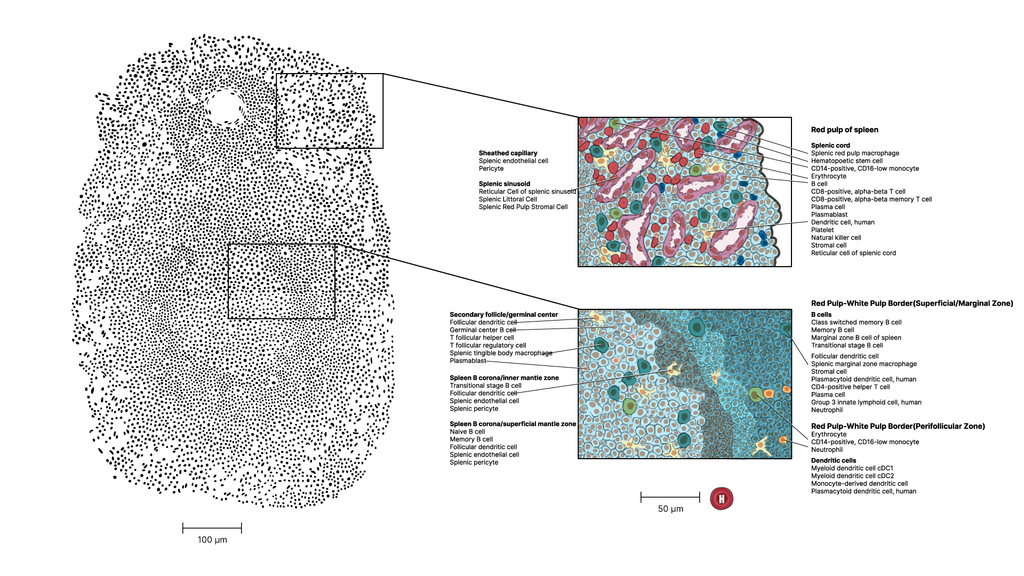
Once trapped in the splenic cords, the senescent red blood cells are cleared from the body by specialized immune cells.
The Clean-up Crew
Resident macrophages within the spleen are responsible for identifying and destroying these trapped, ageing erythrocytes. These large scavenger cells recognise specific signals on the surface of senescent red blood cells, triggering their engulfment through a process called .
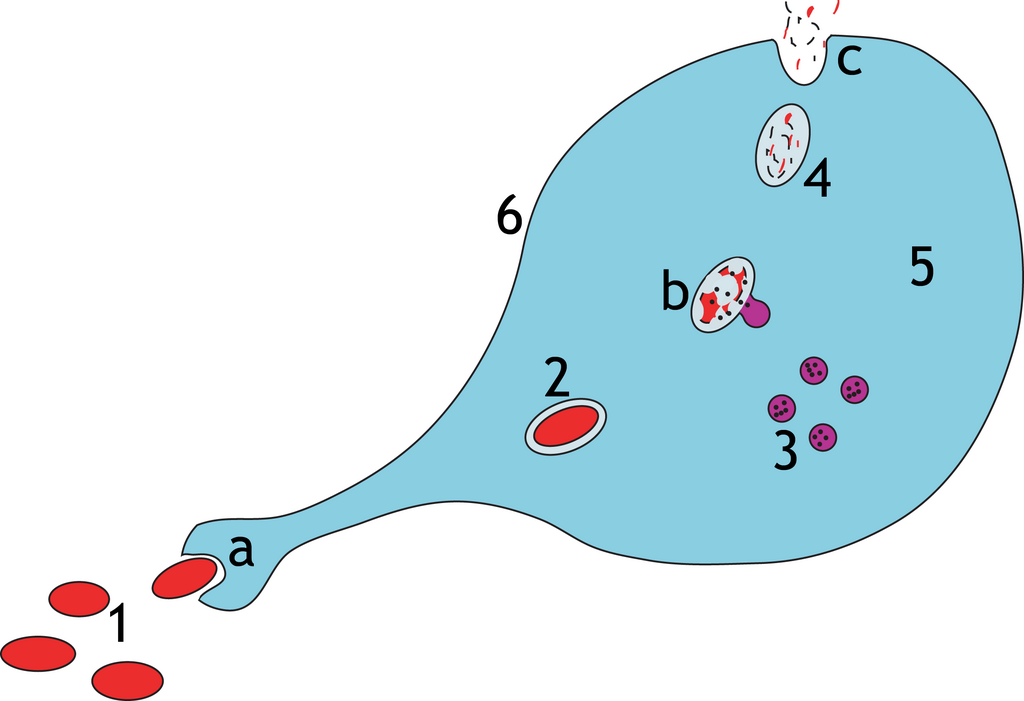
Inside the macrophage, the old red blood cell is broken down. Its components, most importantly the iron-rich haemoglobin molecule, are released. This marks the end of the erythrocyte's life cycle and the beginning of a new process: the recycling of its valuable parts.
Now let's check your understanding of how red blood cells are retired from service.
What is the approximate lifespan of a human red blood cell?
The process by which a red blood cell ages, becoming more rigid and less deformable, is known as:
The breakdown of haemoglobin is a critical step in recycling iron and other components, which we will explore next.