ERPNext Module Mastery
ERPNext Overview
What is ERPNext?
Enterprise Resource Planning (ERP) software acts like a central nervous system for a business. It connects different departments—like sales, accounting, and inventory—into a single, unified system. This prevents data silos and helps everyone work from the same playbook.
ERPNext is a popular open-source ERP system. This means its source code is freely available, allowing for deep customization. It was created by a company called Frappe Technologies and is built on their own Frappe Framework, a powerful platform for developing web applications.
ERPNext is an open-source ERP platform that unifies all core business processes into one system.
Being open-source makes it a flexible and cost-effective option for businesses of all sizes, from small startups to large enterprises.
The Core Building Blocks
One of ERPNext's biggest strengths is its modular design. Think of it like a set of building blocks, where each block, or "module," handles a specific business function. You can start with just the modules you need and add more as your business grows.
This approach keeps the system from feeling bloated and allows you to tailor it precisely to your company's workflow.
For implementers, ERPNext’s modularity also means you can start small — a few critical DocTypes, a handful of Wiki pages, and a basic workflow — and expand organically based on demonstrated usage and ROI.
Some of the most essential modules include:
- Accounting: Manages your chart of accounts, general ledger, taxes, and financial reporting.
- Selling: Handles the entire sales cycle, from leads and quotations to sales orders and invoices.
- Buying: Manages procurement, including material requests, purchase orders, and supplier invoices.
- Stock (Inventory): Tracks item warehouses, stock levels, serial numbers, and material transfers.
- HR & Payroll: Covers employee lifecycle, attendance, leave, and payroll processing.
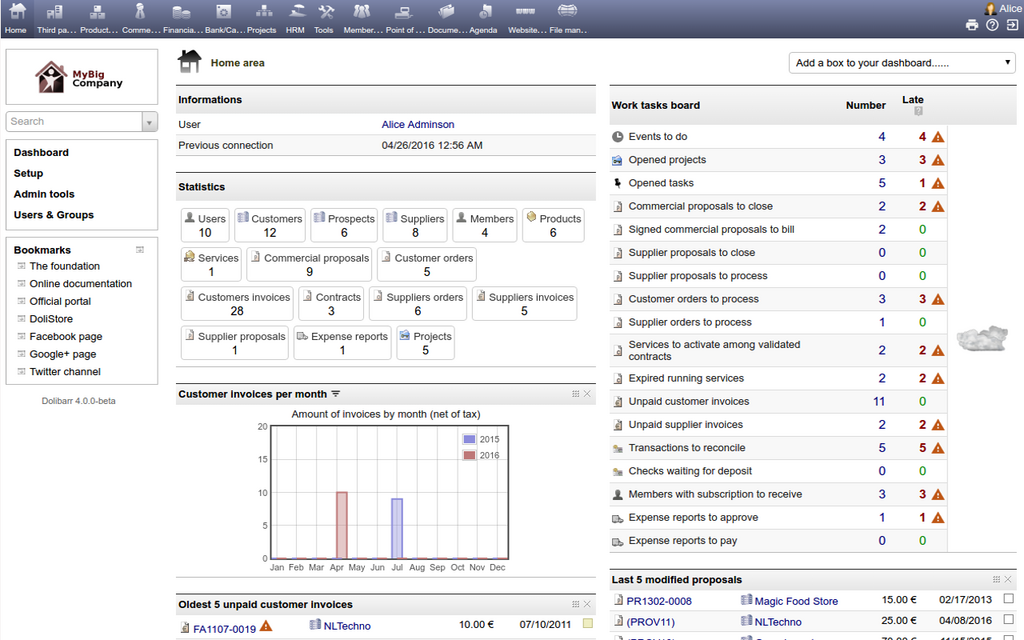
All these modules are built on a shared database. When the sales team makes a sale, the inventory module automatically updates stock levels, and the accounting module records the revenue. This tight integration is what makes an ERP so powerful.
Navigation and Integration
ERPNext is a web-based application, so you can access it from any browser. The user interface is designed to be clean and intuitive. The main navigation happens through a sidebar that lists all the available modules. Within each module, you'll find related reports, settings, and "DocTypes."
A DocType is a core concept in ERPNext. It's essentially a template for a type of document, like a Sales Order, a Journal Entry, or an Employee record. Every transaction and record in the system is stored as a document created from a DocType.
Most of your time in ERPNext will be spent creating, viewing, and managing documents based on these DocTypes.
No software exists in a vacuum. ERPNext is designed to connect with other tools your business might use. It has a built-in REST API, which is a standard way for different software systems to communicate. Using this API, you can integrate ERPNext with e-commerce platforms like Shopify, payment gateways, or specialized CRM tools.
It also supports webhooks, which allow ERPNext to send real-time updates to other applications when certain events happen, like a new customer being created or an invoice being paid. This makes it possible to build automated workflows that span multiple systems.
What is the primary function of an Enterprise Resource Planning (ERP) system?
ERPNext is built on a platform for developing web applications created by Frappe Technologies. What is this platform called?
This overview provides a foundation for understanding ERPNext. You've seen how its modular architecture, core concepts like DocTypes, and integration capabilities come together to create a comprehensive system for managing a business.