ERP Systems Explained
Introduction to ERP
What Is an ERP?
Enterprise Resource Planning, or ERP, is a type of software that acts like the central nervous system for a business. It integrates all the essential day-to-day business processes into a single, unified system. Think of finance, human resources, manufacturing, and the supply chain all sharing information and working together seamlessly.
The main goal of an ERP is to create a single source of truth, breaking down the information silos that often exist between different departments.
Imagine a company where the sales team, the warehouse, and the accounting department all use separate software that doesn't communicate. The sales team might sell a product that the warehouse thinks is out of stock. Accounting might have to manually chase down sales figures to create an invoice. It's inefficient and prone to errors.
An ERP system solves this. When a salesperson enters an order, the system automatically checks inventory, alerts the warehouse to ship the product, and tells the finance department to bill the customer. Everyone has access to the same real-time information, which leads to smarter decisions, streamlined operations, and less wasted time.
A Quick History
ERP systems didn't appear overnight. They evolved over several decades, starting as simpler tools for specific tasks.
In the 1960s, the focus was purely on managing inventory. By the 1970s, Material Requirements Planning (MRP) systems emerged to help manufacturers plan which materials they needed and when. In the 1980s, MRP II expanded on this by adding financial and scheduling capabilities.
Finally, in the 1990s, the term ERP was coined. These new systems aimed to integrate all of a company's back-office functions, from HR and finance to manufacturing and sales, into one comprehensive platform. Since then, they've continued to evolve, with many now being hosted in the cloud, making them more accessible and flexible.
Core Components
Modern ERP systems are typically modular, meaning businesses can choose the components they need. While the specific modules vary, most ERPs are built around a few core functions.
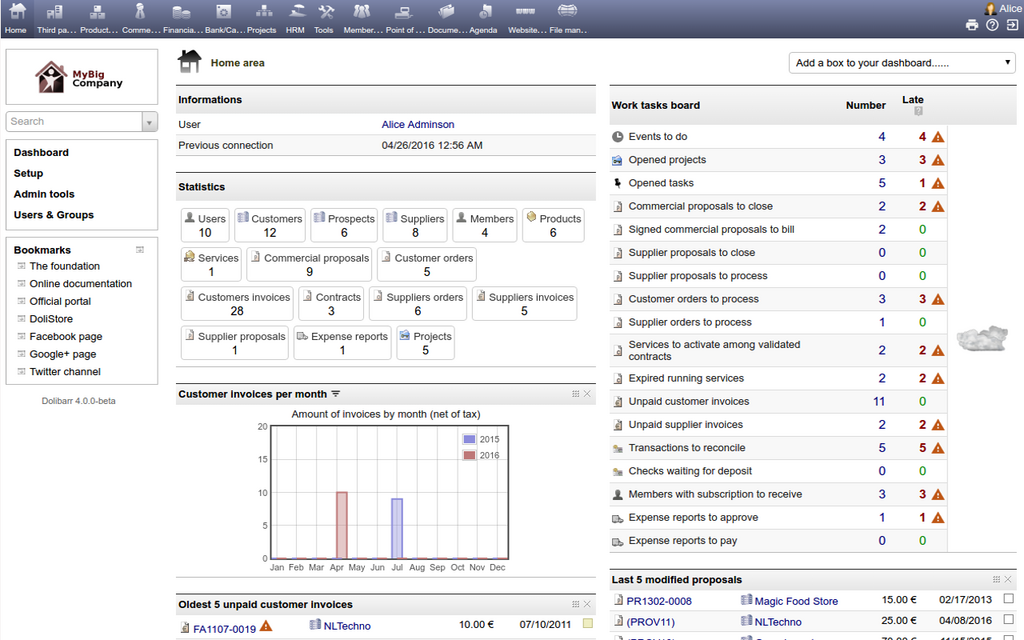
Here's a look at some of the most common modules and what they do.
| Module | Key Functions |
|---|---|
| Finance & Accounting | Manages the general ledger, accounts payable/receivable, budgeting, and financial reporting. |
| Human Resources (HR) | Handles payroll, employee records, recruiting, time tracking, and benefits administration. |
| Supply Chain Management (SCM) | Controls inventory, purchasing, order processing, and logistics from supplier to customer. |
| Manufacturing | Manages production scheduling, quality control, and shop floor operations. |
| Customer Relationship Management (CRM) | Tracks interactions with customers, manages sales pipelines, and supports marketing efforts. |
The power of ERP comes from how these modules talk to each other. A sale recorded in the CRM module can automatically trigger an invoice in the Finance module and a shipping order in the SCM module. This integration eliminates the need for manual data entry between systems, reducing errors and saving time.
By bringing all critical operations into a single system, ERP helps organizations eliminate data silos, reduce redundancies, and enhance decision-making through accurate and up-to-date information.
Now that you understand the basic building blocks, let's look at what puts the "enterprise" in Enterprise Resource Planning.
Ready to test your knowledge?
What is the primary purpose of an Enterprise Resource Planning (ERP) system?
Before the development of modern ERP systems in the 1990s, a precursor system from the 1970s focused specifically on helping manufacturers plan their material needs. What was this system called?
By integrating these different functions, an ERP system provides a holistic view of the business, helping leaders make more informed strategic decisions.