ERP System Administration Fundamentals
ERP System Basics
What Is an ERP System?
Think of a large company. The sales team has its own software for tracking customers. The warehouse has another system for inventory. The accounting department uses something else entirely for finances. Information gets stuck in separate silos, and getting a clear picture of the whole business is a nightmare.
This is the problem that Enterprise Resource Planning (ERP) systems solve. An ERP system is a single, integrated software application that manages a company's core business processes. It acts like a central nervous system, connecting all the different departments and functions into one cohesive whole.
Enterprise Resource Planning
noun
A type of software that organizations use to manage day-to-day business activities such as accounting, procurement, project management, risk management and compliance, and supply chain operations.
Instead of each department having its own separate database, everyone uses the same one. When the sales team makes a sale, the system automatically updates inventory levels for the warehouse team and generates an invoice for the finance team. This shared database provides a single source of truth, ensuring everyone is working with the same, up-to-date information.
The main purpose of an ERP is to increase organizational efficiency by managing and improving how company resources are utilized. It's about breaking down barriers between business units and creating a smoother, more automated flow of work.
Common ERP Modules
ERP systems are not one-size-fits-all. They are typically modular, meaning a company can choose the components that are most relevant to their business. Each module is designed to handle the specific tasks of one business area, but they all connect to the same central database to share information.
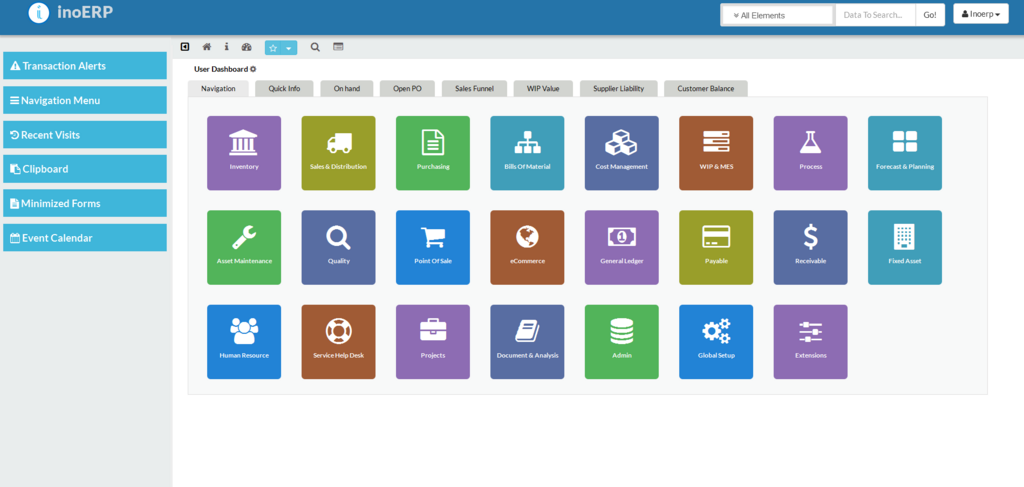
While there are many specialized modules available, most ERP systems include a core set of functions that are common across industries.
| Module | Primary Function |
|---|---|
| Finance & Accounting | Manages the general ledger, accounts payable/receivable, budgeting, and financial reporting. |
| Human Resources (HR) | Handles payroll, benefits administration, employee data, recruiting, and time tracking. |
| Supply Chain Management (SCM) | Controls inventory, purchasing, order processing, and warehouse logistics. |
| Customer Relationship Management (CRM) | Manages interactions with current and potential customers, including sales, marketing, and support. |
| Manufacturing/Production | Oversees production planning, scheduling, quality control, and managing bills of materials. |
By integrating these functions, a company can achieve a holistic view of its operations. For example, the CRM module can provide sales forecasts that help the Manufacturing module plan production schedules, which in turn informs the SCM module about raw materials that need to be purchased.
Why Bother with an ERP?
Implementing an ERP system is a major undertaking, but the benefits can be transformative. The primary advantages revolve around creating a more efficient and responsive business.
With a single source of truth, data is more accurate and reliable. Reports that once took days to compile from different spreadsheets can be generated in real-time. This allows leaders to make faster, more informed decisions based on a complete picture of the company's health.
Efficiency gets a huge boost. Automating repetitive tasks, like data entry between systems, frees up employees to focus on more valuable work. Streamlined processes, from order fulfillment to financial closing, reduce delays and cut operational costs.
With ERP solutions, businesses can automate and streamline their entire invoicing process in real-time, drastically reducing the potential of human errors and time-consuming manual tasks, ensuring that invoices are able to be processed and paid efficiently.
Ultimately, an ERP system provides the foundational data and process infrastructure that helps a company scale. By standardizing core business processes, it becomes easier to manage growth, maintain compliance, and adapt to changing market conditions.
What is the fundamental problem that Enterprise Resource Planning (ERP) systems are designed to solve?
When a company implements an ERP system, all departments use a single, shared __________.