ERP Product Management Essentials
ERP Fundamentals
What Is an ERP System?
Think of a large company. It has a sales team closing deals, an accounting team managing finances, a warehouse team tracking inventory, and an HR team handling payroll. In the past, each department often used its own separate software. The sales team's system didn't talk to the warehouse's, and the accounting team had to manually pull data from everywhere.
This created data silos. Information was scattered, often out of date, and getting a complete picture of the business was a huge challenge. Enterprise Resource Planning (ERP) systems were created to solve this exact problem.
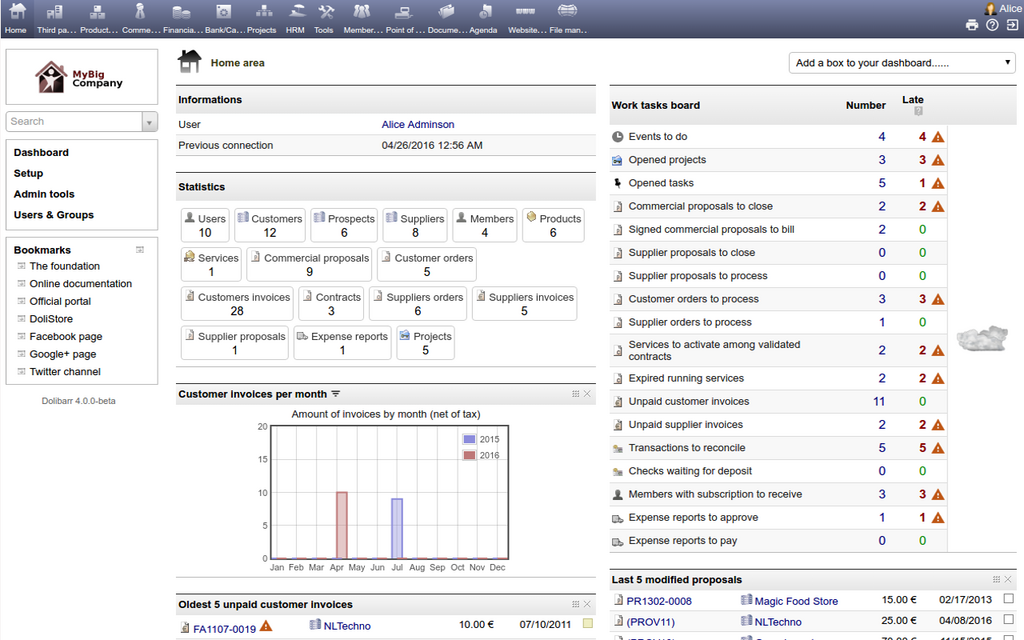
Enterprise Resource Planning (ERP) systems centralize finance, operations, HR, and supply chain, serving as the backbone of modern enterprise operations.
An ERP system integrates all of these different functions into a single, shared database. When a salesperson makes a sale, the system can automatically alert the warehouse to ship the product, update the inventory levels, and tell the finance department to create an invoice. Everyone in the company works from the same set of data, which is always up to date.
This creates a single source of truth for the entire organization, eliminating redundant data entry and giving leaders a real-time view of what's happening.
A Quick History
ERP systems didn't just appear overnight. They evolved over several decades, starting from a much simpler concept: managing inventory.
In the 1960s, manufacturers used basic computer programs to keep track of their stock. By the 1970s, this evolved into Material Requirements Planning (MRP) systems. MRP helped companies figure out which raw materials they needed and when, based on their production schedules.
The 1980s saw the rise of Manufacturing Resource Planning (MRP II), which expanded on MRP to include more of the manufacturing process, like shop floor scheduling and capacity planning.
Finally, in the 1990s, technology company Gartner coined the term "Enterprise Resource Planning." ERP systems took the integrated approach of MRP II and applied it to the entire business, pulling in functions like finance, project management, and human resources. The focus shifted from just managing manufacturing to managing the whole enterprise.
The Building Blocks
Modern ERP systems are typically modular. This means companies can choose the components, or modules, that are most relevant to their operations. While the specific modules can vary, most ERP systems are built around a few core functions.
Think of it like building with LEGO bricks. A company can start with the essential blocks for finance and inventory, then add on other blocks for HR or sales as it grows.
Here are some of the most common modules and what they do.
| Module | Primary Function |
|---|---|
| Finance & Accounting | Manages the general ledger, accounts payable/receivable, and financial reporting. This is the core of most ERP systems. |
| Human Resources (HR) | Handles everything related to employees, including payroll, benefits, recruiting, and performance management. |
| Supply Chain Management (SCM) | Manages the flow of goods from raw materials to finished products. Includes procurement, inventory, and logistics. |
| Manufacturing | Controls the entire production process, from planning and scheduling to quality control. |
| Customer Relationship Management (CRM) | Tracks all interactions with customers, from initial sales leads to post-sale support. |
| Project Management | Helps plan, execute, and monitor projects, including resource allocation and budget tracking. |
Why Bother with an ERP?
Implementing an ERP system is a major undertaking, but the benefits can be transformative. By integrating all parts of the business, companies can operate more efficiently and make smarter decisions.
Improved Efficiency With a single, unified system, processes that used to take days of manual work can be automated. There's no need to re-enter data across different systems, which saves time and dramatically reduces human error.
ERP software helps organizations handle routine tasks more efficiently, saving valuable time for employees.
Better Decision-Making Because all the data is in one place, leaders can get a comprehensive, up-to-the-minute view of the entire business. They can run reports that pull data from sales, finance, and inventory simultaneously, providing insights that would be impossible to get from separate systems.
Enhanced Collaboration A centralized system breaks down the walls between departments. A salesperson can check real-time inventory levels before promising a delivery date to a customer. The finance team can see upcoming purchase orders and plan cash flow accordingly. This shared visibility helps everyone work together more effectively.
Scalability As a business grows, its processes become more complex. ERP systems are designed to handle that complexity. They provide a stable, scalable foundation that can support the company as it adds new products, opens new locations, and enters new markets.
What is the primary problem that Enterprise Resource Planning (ERP) systems were designed to solve?
Arrange the following systems in the correct chronological order of their development.
Understanding these core concepts is the first step toward appreciating the power of ERP. It's the central system that allows a business to see itself clearly and operate as a unified whole.