ERP Implementation and Reporting
ERP Fundamentals
What Is an ERP System?
Think of a business as a team of specialists. You have the accounting team managing money, the sales team closing deals, and the warehouse team tracking inventory. In the past, each team often used its own separate software, like isolated islands of information. Getting a complete picture of the business meant a lot of manual work, like sending emails and compiling spreadsheets.
Enterprise Resource Planning, or ERP, changes that. It’s a type of software that brings all these different business functions together into one shared system. Instead of separate islands, everyone works from the same map. An ERP system acts as a central brain for the organization, managing and connecting everything from finance and human resources to manufacturing and the supply chain.
Enterprise Resource Planning (ERP) systems have become the backbone of modern municipal operations, integrating finance, human resources, procurement, and other critical functions into a unified platform.
This integration allows information to flow smoothly between departments. When a salesperson makes a sale, the system can automatically alert the warehouse to ship the product and tell the finance team to send an invoice. No more waiting for someone to pass the message along.
The Building Blocks of ERP
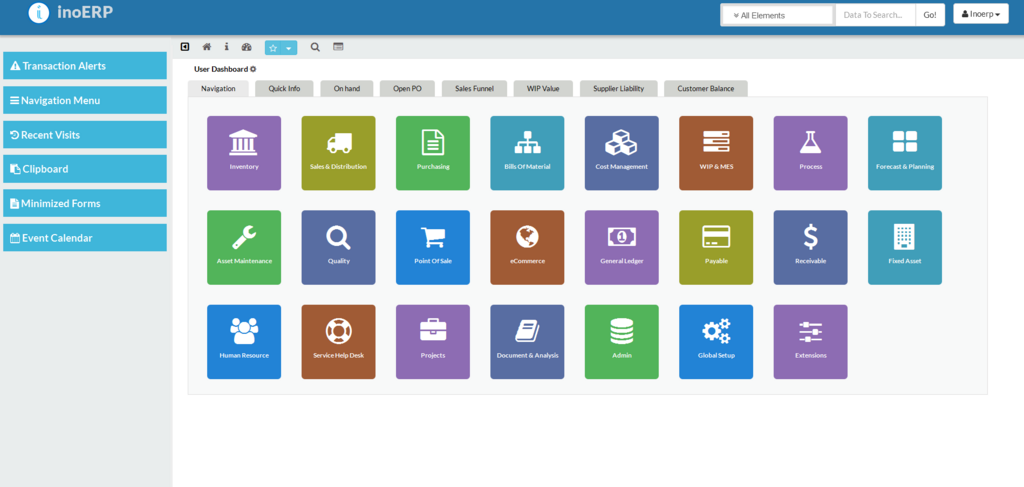
An ERP system isn't a single piece of software, but a suite of different applications or modules. Each module handles a specific business function. Companies can choose the modules they need and add more as they grow. Some of the most common components include:
- Financial Management: This is the core of most ERPs. It handles tasks like accounts payable, accounts receivable, and the general ledger. It provides a real-time view of the company's financial health.
- Human Resources (HR): This module manages everything related to employees, from payroll and benefits to recruiting and performance tracking.
- Supply Chain Management (SCM): For companies that make or sell physical products, this is vital. It tracks goods from the supplier to the manufacturer and finally to the customer.
- Customer Relationship Management (CRM): This helps manage interactions with customers, tracking sales leads, customer service requests, and marketing campaigns.
Why Bother with ERP?
Implementing an ERP system is a major undertaking, so why do companies do it? The main benefit is creating a single source of truth. When everyone in the company uses the same data, you eliminate confusion and errors caused by conflicting information.
This leads to several key advantages:
- Improved Efficiency: Automating repetitive tasks and streamlining workflows frees up employees to focus on more important work.
- Better Decision-Making: With access to real-time, company-wide data, managers can make faster, more informed decisions.
- Enhanced Collaboration: Departments can easily share information, breaking down the silos that slow businesses down.
- Scalability: A good ERP system can grow with a company, supporting new products, new markets, and more employees without needing to be replaced.
Instead of juggling dozens of separate applications, an ERP system provides one central hub for everything.
From Factory Floors to the Cloud
ERP systems didn't appear overnight. Their roots go back to the 1960s with inventory management systems used in manufacturing. These evolved into Material Requirements Planning (MRP) systems in the 1970s to help plan production processes. By the 1990s, they had expanded to cover other business functions, and the term "ERP" was born.
The biggest evolution, however, has been in how ERPs are delivered. Originally, companies had to buy and maintain their own expensive servers to run the software. This is known as an on-premises solution. Today, many companies opt for cloud-based ERPs.
| Feature | On-Premises ERP | Cloud-Based ERP |
|---|---|---|
| Deployment | Hosted on a company's own servers | Hosted on the vendor's servers, accessed online |
| Cost | High upfront cost for hardware and licenses | Lower upfront cost, paid via a subscription (SaaS) |
| Maintenance | Managed by the company's IT staff | Managed by the ERP provider |
| Accessibility | Limited to the company's network | Accessible from anywhere with an internet connection |
Cloud solutions have made powerful ERP systems accessible to smaller businesses that couldn't afford the massive upfront investment of an on-premises system. This flexibility has fueled their widespread adoption across nearly every industry.
Ready to check your understanding?
What is the primary goal of an Enterprise Resource Planning (ERP) system?
A company's sales team promises a delivery date to a customer, but the warehouse team can't meet it because their inventory data is out of sync. Which core benefit of an ERP system is designed to solve this problem?
Understanding these fundamentals provides a solid base for seeing how ERP systems drive modern business operations.