Equity Swaps Explained
Introduction to Derivatives
What Are Derivatives?
Imagine you're a farmer who grows wheat. You know you'll have a big harvest in three months, but you're worried the price of wheat might drop by then. Across town, a baker needs to buy wheat in three months and is worried the price might go up. You two could make a deal today: you agree to sell your wheat to the baker in three months for a price you both decide on now.
This simple agreement is the essence of a derivative. It's a financial contract whose value is derived from an underlying asset. The asset could be a commodity like wheat, a stock, a currency, or even an interest rate.
Derivatives are financial instruments whose value depends on underlying assets such as stocks, bonds, commodities, or market indices.
The main purpose of these instruments is to manage risk, a practice known as hedging. That's what the farmer and the baker did. By locking in a price, they both reduced their uncertainty about the future.
However, derivatives are also used for speculation. A speculator might enter a similar contract not because they need wheat, but because they have a hunch about which way the price will move. They're betting on the future price to make a profit.
The Four Main Types
Derivatives come in several forms, but most fall into four basic categories.
Underlying Asset
noun
The financial instrument or physical commodity on which a derivative's price is based. Examples include stocks, bonds, interest rates, and commodities like oil or gold.
Forwards and Futures are very similar to the farmer-baker deal. They are contracts to buy or sell an asset at a predetermined price on a specific future date. The main difference lies in how they are traded. Forwards are private, custom agreements between two parties (known as over-the-counter), while futures are standardized contracts traded on an exchange, like the stock market. This standardization makes futures easier to buy and sell.
| Feature | Forwards | Futures |
|---|---|---|
| Agreement | Private, customized | Standardized |
| Trading | Over-the-counter (OTC) | Public exchanges |
| Regulation | Self-regulated | Regulated by exchange |
| Risk | Higher counterparty risk | Lower risk (clearing house) |
Options give the holder the right, but not the obligation, to buy or sell an underlying asset at a set price on or before a certain date. You pay a premium for this right, much like an insurance policy.
There are two kinds of options:
- A call option gives you the right to buy.
- A put option gives you the right to sell.
If you buy a call option for a stock at $100, you have the choice to buy it for $100 later, even if the market price jumps to $120. If the price drops to $80, you can just let the option expire and only lose the premium you paid.
Swaps are agreements between two parties to exchange sequences of cash flows for a set period. The most common type is an interest rate swap. For example, one company might agree to pay a fixed interest rate to another in exchange for receiving a floating (variable) interest rate. This allows both companies to better manage their debt obligations.
The Role of Derivatives
Derivatives play a crucial role in modern finance. They allow businesses and investors to transfer risk to those willing to take it on. An airline can use futures contracts to lock in fuel prices, protecting itself from sudden spikes. A multinational corporation can use currency forwards to hedge against unfavorable exchange rate movements.
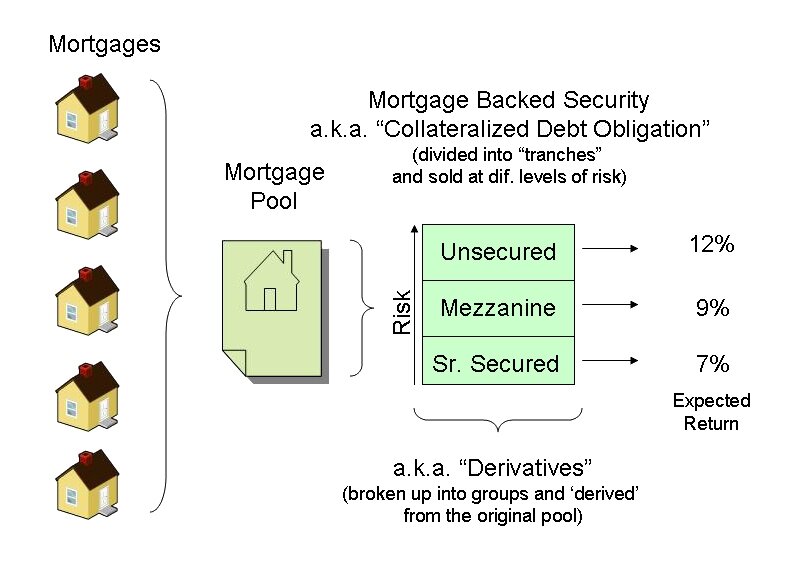
They also add liquidity to the market, meaning it's easier to buy and sell assets. Because speculators are willing to take on risk, they provide a counterparty for hedgers, making the markets more efficient. This process of figuring out what things might be worth in the future is called price discovery.
While they are powerful tools for managing risk, their complexity means they also carry their own risks, especially when used for speculation. Understanding these basic building blocks is the first step to navigating the world of finance.
Ready to test your knowledge?