Epithelial Tissue Essentials
Epithelial Tissue Overview
The Body's First Line of Defense
Your body is a complex landscape of tissues and organs, and lining almost every surface is a remarkable material called epithelial tissue, or epithelium. Think of it as the body's custom wallpaper. It covers the outside of your body (your skin), lines the inside of your organs like the stomach and intestines, and even forms your glands.
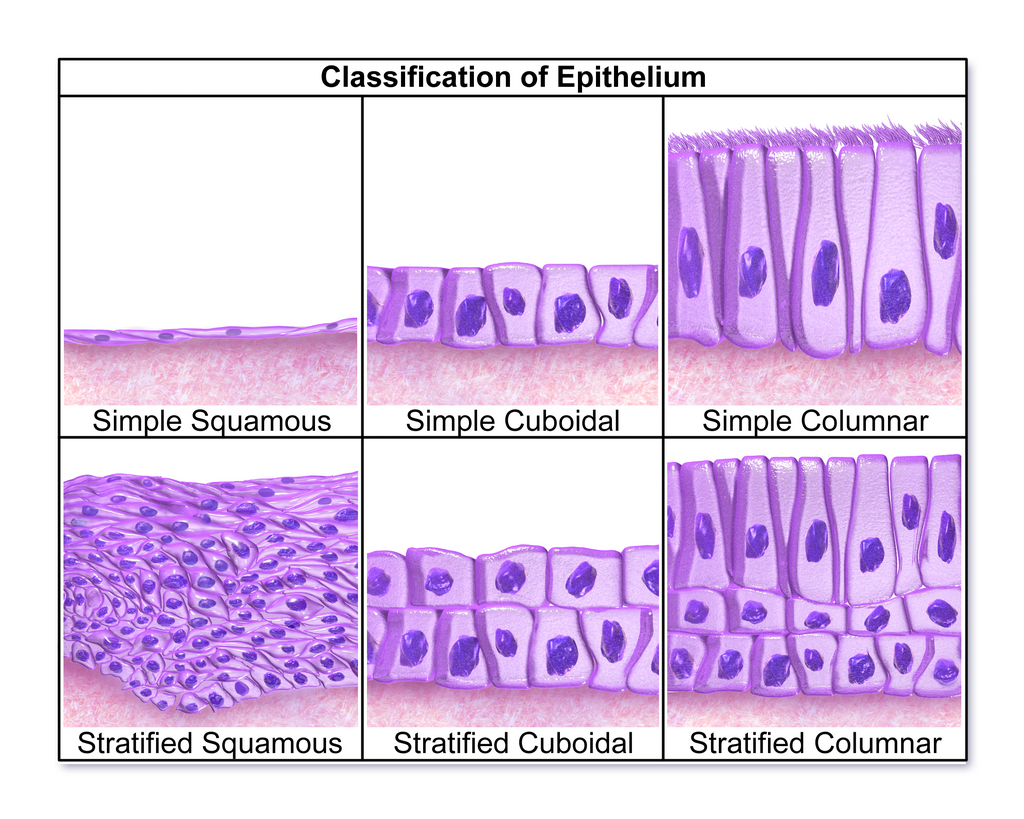
Epithelial tissue, also referred to as epithelium, refers to the sheets of cells that cover exterior surfaces of the body, lines internal cavities and passageways, and forms certain glands.
What makes epithelium unique is its structure. The cells are packed together incredibly tightly, like bricks in a wall, with very little space or material between them. This minimal space is filled with something called an extracellular matrix, which acts as a sort of cellular glue.
Another key feature is that epithelial tissue is avascular, meaning it doesn't have its own blood vessels. So how do the cells get oxygen and nutrients? They rely on the underlying connective tissue, which is rich in blood vessels. Nutrients simply diffuse across the boundary from the connective tissue into the epithelium.
More Than Just a Barrier
This tightly packed structure makes epithelium an amazing protective barrier, but its job doesn't stop there. It has several crucial functions based on where it's located in the body.
-
Protection: The most obvious example is your skin. The epithelial layer, called the epidermis, shields your body from mechanical injury, harmful chemicals, invading bacteria, and water loss.
-
Absorption: In your digestive tract, the epithelial lining is specialized to absorb nutrients from the food you eat. The cells here have tiny finger-like projections called microvilli that increase their surface area for maximum absorption.
-
Secretion: Epithelium is the primary tissue in glands. These cells produce and secrete substances like hormones, mucus, sweat, and enzymes.
-
Sensation: Your skin is sensitive to touch, temperature, and pain because it contains specialized epithelial cells and nerve endings that detect changes in the environment.
Where It All Begins
All tissues in the body, including epithelium, arise from three primary layers of cells that form during early embryonic development. These are called germ layers.
-
Ectoderm: The outer layer. This gives rise to the epithelium you see, like the epidermis of the skin.
-
Endoderm: The inner layer. It forms the epithelial lining of internal passageways, such as the digestive and respiratory tracts.
-
Mesoderm: The middle layer. This layer forms the specialized epithelium that lines body cavities and blood vessels, known as mesothelium and endothelium, respectively.
This diverse origin is why epithelial tissue can be found in so many different parts of the body, performing such a wide range of functions. It is truly one of the foundational building blocks of human anatomy.