Epic of Europe
Transitioning from Classical Antiquity
The Long Sunset
The end of the Western Roman Empire wasn't a sudden crash. It was a slow, uneven unraveling that lasted for generations. By the 4th century CE, the once-mighty empire was strained by its own immense size. Its borders were too long, its armies too expensive, and its political system prone to civil war. Central authority weakened, creating power vacuums that ambitious generals and external groups were eager to fill.
This era of transformation is often called the Migration Period, a time when various peoples, many of them Germanic, moved into and within the empire's territories. These weren't just chaotic invasions. They were complex movements of people seeking land, security, or opportunity. Groups like the Goths, Vandals, and Franks sometimes came as conquerors, but just as often they were refugees or were even invited in as allies and soldiers for the Roman army itself.
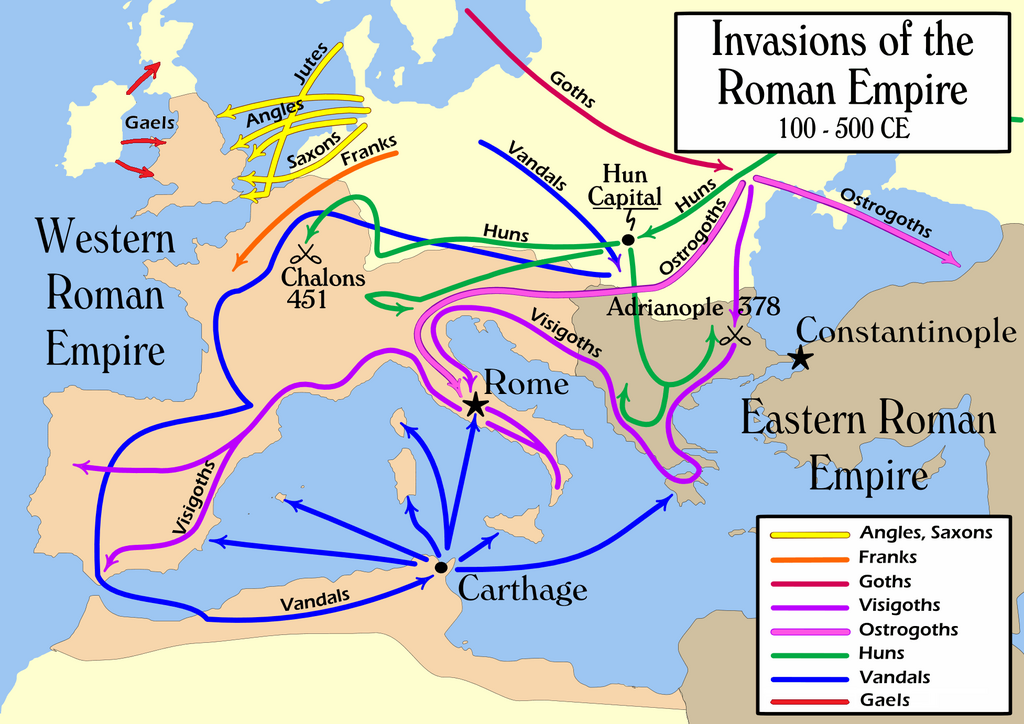
This process fundamentally redrew the map of Europe. The unified political structure of the West dissolved, not overnight, but piece by piece, as Roman provincial control gave way to a patchwork of new, localized kingdoms.
New Kingdoms from Old Bricks
The new Germanic rulers weren't interested in erasing Roman culture. In fact, many admired it and sought to legitimize their own power by adopting its traditions. They saw themselves not as destroyers, but as inheritors. They moved into Roman villas, minted coins with their own faces in the style of Roman emperors, and adopted Latin for official documents.
Crucially, they preserved elements of Roman administration. Written law codes, a concept foreign to many Germanic oral traditions, were compiled based on Roman legal principles. For example, the Visigothic Code in Spain blended Germanic customs with a sophisticated Roman legal framework. This fusion was a practical necessity. These new kings ruled over a majority Gallo-Roman population and needed the existing administrative machinery to govern effectively. The old Roman aristocracy often continued to serve as bishops and administrators, providing a bridge of continuity between the old world and the new.
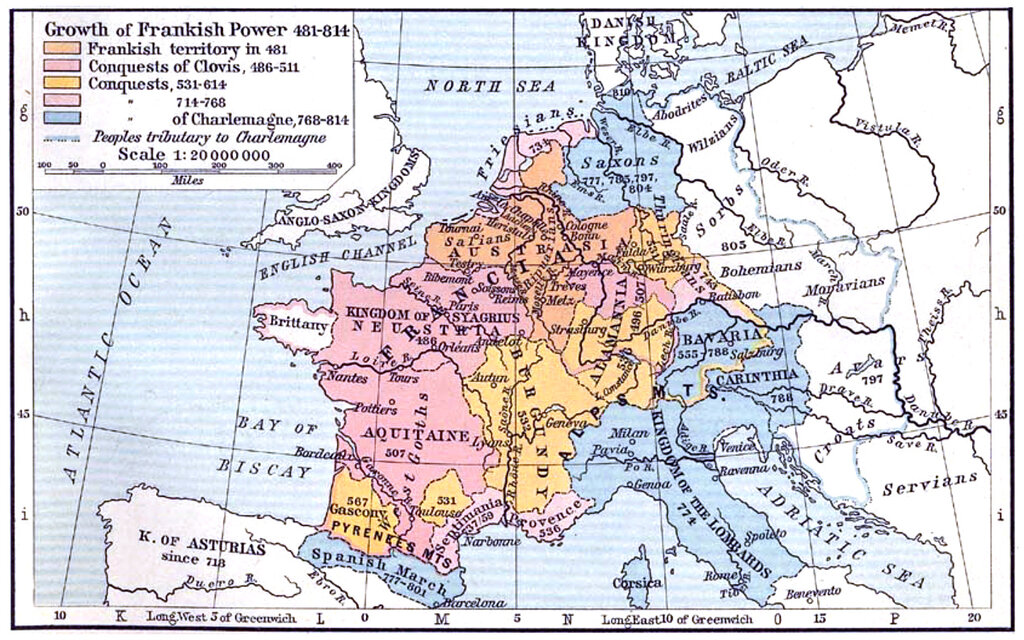
The most successful of these successor states was established by the in Gaul. Under the , and later the Carolingians, they forged a powerful kingdom that would become the heart of medieval Europe. Charlemagne, the greatest Carolingian ruler, was even crowned 'Emperor of the Romans' in 800 CE, a clear signal of the ambition to revive the glory and unity of the fallen empire.
From the City to the Manor
The economic landscape of Europe changed just as dramatically as the political one. The Roman Empire was built on a vast, interconnected network of cities and trade routes protected by its legions. Grain from Egypt fed Rome, wine from Gaul was shipped to Britain, and Spanish olive oil was found across the empire. This intricate system depended entirely on imperial peace and infrastructure.
As central authority crumbled and raids became common, long-distance trade became dangerous and prohibitively expensive. The great Roman roads fell into disrepair. Cities, once bustling centers of commerce and administration, began to shrink as their economic lifelines were cut. The population shifted from urban centers to the countryside in search of safety and sustenance.
Life became intensely local. The focus narrowed from the empire to the village, from the Mediterranean world to the nearby forest and fields.
In response, a new socio-economic system emerged: manorialism. Large agricultural estates, or manors, became the primary units of production. These were owned by lords—warriors who could offer protection—and worked by peasants or serfs. In exchange for safety, the peasants gave the lord a share of their crops and their labor. This system was largely self-sufficient. What couldn't be grown or made on the manor was often acquired through barter with nearby settlements, as the complex, coin-based economy of Rome largely disappeared.
This was the foundation of feudalism. Political power, once centralized in the emperor, became decentralized and personal. It was based on oaths of loyalty between lords and their vassals, with land—the primary source of wealth—being the currency of power. This transition wasn't a conscious choice, but a pragmatic adaptation to a world where imperial trade and protection had vanished, leaving a void that had to be filled by new, local arrangements.
Which statement best describes the end of the Western Roman Empire?
How did the new Germanic rulers who took over parts of the Western Roman Empire generally treat Roman culture and institutions?
The shift from the classical to the medieval world was a messy, complex process of decay and creation. The Roman Empire in the West didn't truly 'fall'—it transformed into something new, leaving behind a legacy of law, language, and ideas that would form the bedrock of European civilization.