Environmental Chemistry Interactions
Sulfur and Phosphorus in Environmental Systems
Cycles of Life
Nature is the ultimate recycler. Essential elements for life, like carbon and nitrogen, are not used up and discarded. Instead, they move through the living and non-living parts of our world in continuous loops called biogeochemical cycles. Think of them as the planet's circulatory system, constantly moving nutrients where they need to go.
Two of these crucial, yet less famous, cycles are for sulfur and phosphorus. They might not get the same attention as carbon, but without them, life as we know it would grind to a halt.
Biogeochemical cycles are nature's recycling systems, moving essential elements through Earth's ecosystems.
The Sulfur Cycle
Sulfur is a key ingredient in some amino acids, the building blocks of proteins. It's woven into the fabric of every living thing.
Most of Earth's sulfur is locked away in rocks and sediments, or dissolved in the ocean as sulfate (). It's released naturally in a few ways. The slow weathering of rocks leaches sulfur into rivers and oceans. Volcanoes are a more dramatic source, spewing sulfur dioxide () gas into the atmosphere.
In the environment, microorganisms are the main drivers of the sulfur cycle. In places without oxygen, like waterlogged soil or deep-sea sediments, certain bacteria use sulfate instead of oxygen for respiration. This process releases hydrogen sulfide (), the gas responsible for the smell of rotten eggs. Other microbes do the opposite, converting sulfides back into sulfate.
Over the oceans, tiny phytoplankton release a compound called dimethyl sulfide (DMS). When DMS enters the atmosphere, it helps seed the formation of clouds, which has a major influence on weather and climate. Eventually, sulfur in the atmosphere falls back to the surface with rain, completing the cycle.
The Phosphorus Cycle
Phosphorus is another non-negotiable for life. It forms the backbone of DNA and RNA, it's a key part of the molecule that cells use for energy (ATP), and it makes up our cell membranes. Every living organism needs it.
Unlike sulfur, the phosphorus cycle is almost entirely land- and water-based. There's no significant gas phase, so very little phosphorus moves through the atmosphere. This makes the cycle much slower.
The vast majority of phosphorus is found in rocks. Over long periods, the weathering of these rocks releases phosphate (), a form of phosphorus that plants can absorb. Plants take it up from the soil or water, and from there it moves up the food chain as animals eat the plants.
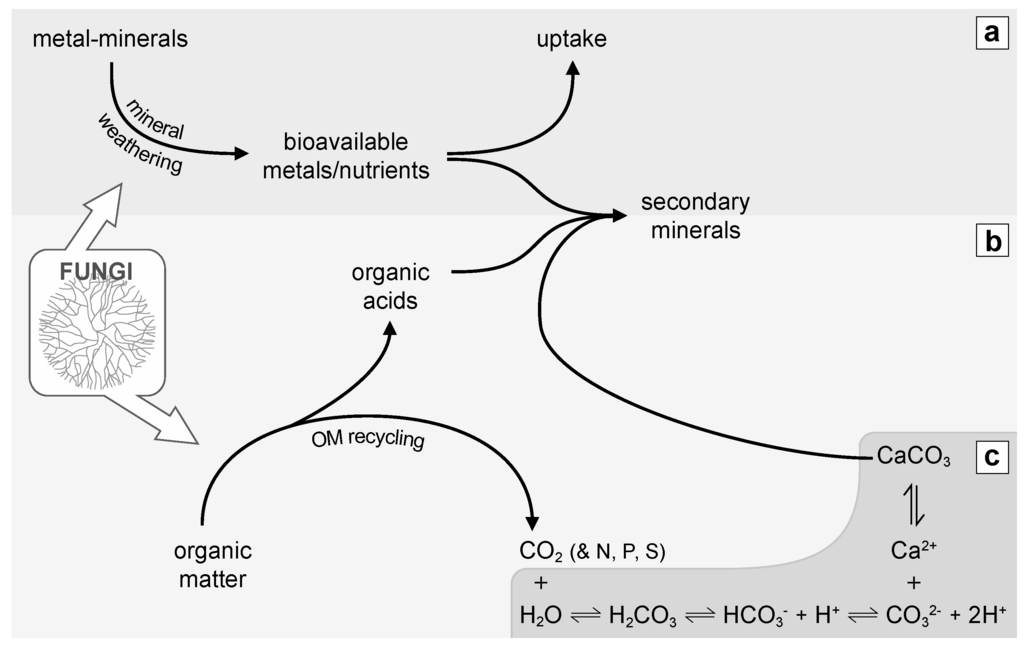
When plants and animals die, decomposers like bacteria and fungi break down their tissues, returning phosphate to the soil and water. This is a relatively fast part of the cycle. However, a lot of phosphorus gets washed from the land into rivers and eventually ends up in the ocean. There, it can be incorporated into marine sediments, where it might remain locked away for millions of years.
The only way for this phosphorus to return to land is through an incredibly slow geological process called uplift, where the seafloor is pushed up to form new mountains. This is why phosphorus is often a limiting nutrient in ecosystems, meaning its scarcity limits the amount of life that can be supported.
Human activities, particularly the use of fertilizers in agriculture, have dramatically altered both the sulfur and phosphorus cycles, often with unintended consequences for ecosystems.
Time to check your understanding of these essential cycles.
What is the primary reservoir where most of the Earth's sulfur and phosphorus are stored?
Unlike the sulfur cycle, the phosphorus cycle is much slower primarily because it lacks a significant...
Understanding how elements like sulfur and phosphorus move through the environment is key to seeing the interconnectedness of all life on Earth. These silent, steady cycles are the foundation of healthy ecosystems.