Entrepreneurship Essentials
Introduction to Entrepreneurship
More Than Just a Business Owner
What comes to mind when you hear the word “entrepreneur”? Many people picture a tech genius launching the next big app from a garage, or a charismatic leader building a global empire. While those images can be true, entrepreneurship is a much broader concept.
At its core, entrepreneurship is about identifying a problem and creating an innovative solution to solve it.
This is different from simply owning a business. A small business owner might open a franchise restaurant, following a proven model. An entrepreneur, on the other hand, creates something new. They might invent a new way to deliver food, a new type of cuisine, or a new dining experience altogether. The key ingredients are innovation and the willingness to take on risk to bring a new idea to life.
entrepreneurship
noun
The activity of setting up a business or businesses, taking on financial risks in the hope of profit.
The Entrepreneurial Mindset
Entrepreneurs aren't born, they're made. They cultivate a specific set of traits and attitudes that help them navigate the uncertain path of building something from nothing. While there's no single formula for success, successful founders often share a few key characteristics.
| Characteristic | What it looks like in practice |
|---|---|
| Vision | Seeing a future that doesn't exist yet and being able to clearly articulate it. |
| Resilience | Facing rejection and failure not as an endpoint, but as a learning opportunity. |
| Calculated Risk-Taking | Making bold decisions based on a mix of data and intuition, not reckless gambles. |
| Creativity | Connecting seemingly unrelated ideas to solve problems in a novel way. |
| Action-Oriented | Preferring to test an idea quickly rather than spending months perfecting a plan. |
Think of resilience. Every entrepreneur has a story about a product that didn't sell, an investor who said no, or a plan that fell apart. The ones who succeed are those who get back up, analyze what went wrong, and try a different approach. They have a deep-seated belief in their vision that helps them push through the inevitable tough times.
Ventures Come in All Sizes
Entrepreneurship isn't one-size-fits-all. It takes many forms, from a local coffee shop to a global software company. The type of venture an entrepreneur starts depends on their goals, resources, and the problem they want to solve.
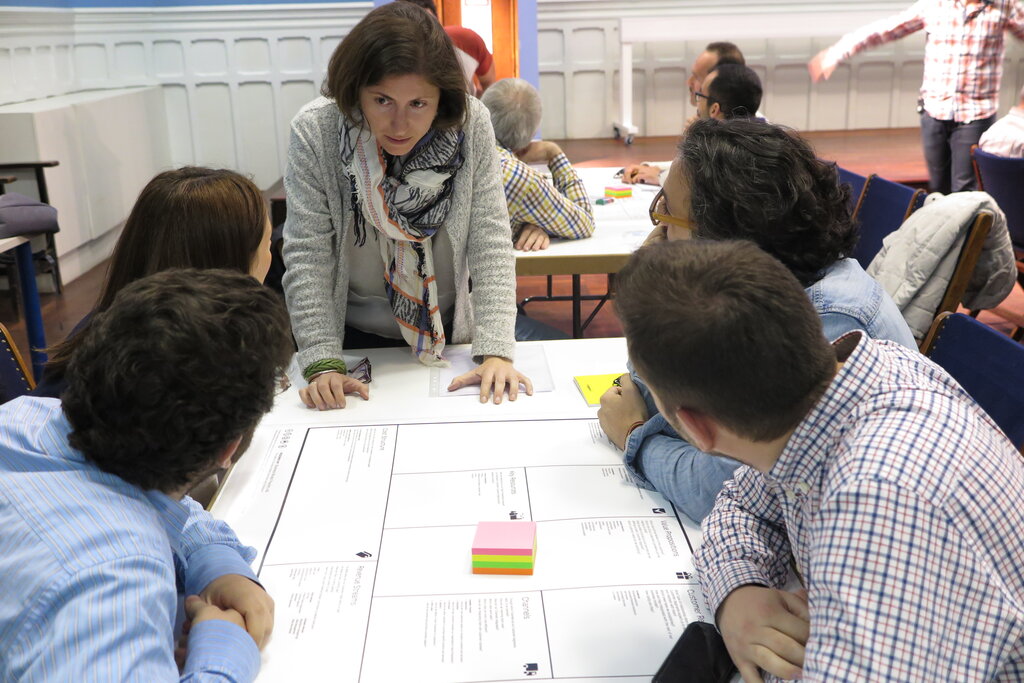
Here are a few common types:
-
Small Business Entrepreneurship: These are the shops and services that form the backbone of our communities—bakeries, plumbers, local consultants. Their goal is often to provide a great service and a good life for their family, not necessarily to take over the world.
-
Scalable Startups: These are the businesses we often see in the news. They start with an idea they believe can grow very large, very quickly. Think of companies like Airbnb or Stripe. Their founders seek outside investment to fuel rapid expansion.
-
Large Company Entrepreneurship: Sometimes, innovation happens inside a big, established company. An employee might develop a new product or create a more efficient process. This is often called “intrapreneurship,” and it's how large companies stay competitive.
-
Social Entrepreneurship: These ventures are created to solve social or environmental problems. While they still need to be financially sustainable, their primary goal is to make a positive impact. Think of a company that develops affordable water filters for developing nations or creates jobs for formerly incarcerated individuals.
The Engine of the Economy
Why does entrepreneurship matter so much? Because it's a powerful driver of economic growth and social change. When entrepreneurs create new businesses, they do more than just make a product or offer a service.
Entrepreneurs create jobs, introduce new technologies, and challenge existing industries to be better. They are the catalysts for innovation.
A new software company might hire dozens of engineers, salespeople, and support staff. A successful social enterprise could inspire a whole new industry focused on sustainability. This cycle of innovation and job creation pushes the entire economy forward, leading to new opportunities and a higher quality of life for everyone.
What is the primary characteristic that distinguishes an entrepreneur from a typical small business owner?
An employee at a large tech firm develops a new, more efficient internal software that the company adopts company-wide. This is an example of:
This introduction lays the groundwork for understanding the entrepreneurial journey. It starts with an idea and a mindset, shaping economies and solving the world's problems one venture at a time.