Entity Relationship Diagrams Explained
Introduction to ERDs
The Blueprint for Your Data
Before constructing a building, an architect draws a blueprint. It shows what the rooms are, where the doors go, and how everything connects. It’s a plan that everyone from the builder to the client can understand.
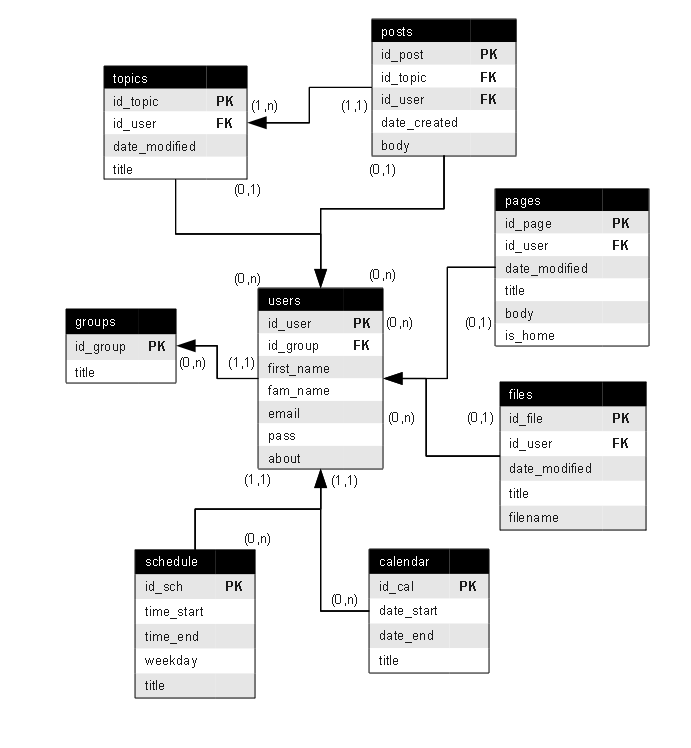
An Entity-Relationship Diagram, or ERD, is the blueprint for a database. It’s a visual map that shows how different pieces of information are grouped and related to each other. Instead of rooms and doors, an ERD shows tables, fields, and the links between them. It provides a clear, high-level view of the entire data structure before a single line of code is written.
A Quick History
The concept isn't new. In 1976, a computer scientist named Peter Chen published a paper titled "The Entity-Relationship Model—Toward a Unified View of Data." He proposed a standardized way to diagram how data is stored. His model was simple yet powerful, and it quickly became a cornerstone of database design. While notations have evolved, Chen's core ideas remain the foundation for how we map out databases today.
Why Bother with Diagrams?
Creating an ERD might seem like an extra step, but it saves immense time and effort down the road. Its main purpose is to ensure everyone involved in a project is on the same page.
Database administrators, software developers, and business stakeholders all need to understand the data. An ERD acts as a common language, translating complex requirements into a straightforward visual format. This helps catch design flaws, misunderstandings, and logical errors early on, when they are cheap and easy to fix.
Good database design prevents future headaches. An ERD is the first step in planning a system that is efficient, scalable, and easy to maintain.
ERDs are crucial throughout the design process. They start as a conceptual model, a big-picture sketch of the main ideas. This evolves into a logical model, which adds more detail without worrying about a specific database system. Finally, it becomes a physical model, a detailed blueprint ready for implementation on a particular technology like MySQL or PostgreSQL.
The Basic Building Blocks
Every ERD is built from a few core components. While there are many different symbols and notations, they all represent the same three basic ideas.
Here’s what they are:
-
Entities: These are the main objects, concepts, or things you want to store information about. Think of them as nouns. In a university database, entities might include
Student,Course, andProfessor. -
Attributes: These are the properties or characteristics of an entity. If
Studentis an entity, its attributes could bestudentID,firstName, andmajor. -
Relationships: These show how entities are connected to each other. They're the verbs that link the nouns. For example, a
Professorteaches aCourse, and aStudentenrolls in aCourse.
Together, these three components allow you to model almost any data scenario, from a simple contact list to a massive e-commerce platform.
Let's check your understanding of these foundational concepts.
What is the primary purpose of creating an Entity-Relationship Diagram (ERD) before building a database?
According to the provided text, who first published the paper proposing the Entity-Relationship Model?
Understanding these core ideas is the first step toward designing clean, logical, and efficient databases.