Enterprise Data Ingestion Pipeline Architecture
Data Ingestion Fundamentals
Bringing Data In-House
Companies today are swimming in data. It comes from everywhere: sales transactions, customer feedback, website clicks, social media mentions, and sensors on machinery. But raw, scattered data isn't very useful. Before it can be analyzed for insights, it has to be collected and organized. This process is called data ingestion.
Think of it like a chef preparing for a big meal. Ingredients (data) arrive from various suppliers (sources). The chef can't just throw them all in a pot. They must be gathered, cleaned, chopped, and organized on the prep station (a central data system) before the actual cooking (analysis) can begin. Data ingestion is that crucial prep work. It's the first step in any data pipeline, a series of steps that move and process data from its origin to a final destination where it can be used.
Data ingestion is the process of moving data from various sources into a centralized storage system where it can be accessed, used, and analyzed.
The Classic Recipe: ETL
A very common method for ingesting data is a process known as ETL, which stands for Extract, Transform, and Load. It’s a reliable, step-by-step approach to getting data ready for use.
-
Extract: First, data is pulled from its original sources. These can be incredibly diverse. A company might need to extract sales figures from a structured database, customer comments from a social media feed, and log files from a web server. The key is gathering all the relevant raw data, no matter where it lives.
-
Transform: Raw data is often messy, inconsistent, and not ready for analysis. The transformation step cleans it up. This can involve many tasks: correcting errors, deleting duplicate entries, converting data to a standard format (like making sure all dates are
YYYY-MM-DD), and enriching the data by combining it with information from other sources. -
Load: Once the data is clean and properly formatted, it's loaded into a central repository. This is often a specialized database called a data warehouse, which is designed for fast and complex analysis.
ETL processes are useful for data that needs cleaning in order to be used by the target system.
Timing Is Everything
Data doesn't always have to be ingested immediately. The urgency depends on the need. The two main timing approaches for data ingestion are batch and real-time.
| Batch Ingestion | Real-Time Ingestion | |
|---|---|---|
| How it Works | Data is collected and processed in large groups or "batches" on a set schedule (e.g., once a day). | Data is processed and loaded individually or in small groups, almost as soon as it's created. |
| Best For | Large volumes of non-urgent data, like end-of-day sales reports or monthly payroll processing. | Time-sensitive data where immediate action is needed, like credit card fraud detection or website analytics. |
| Analogy | Processing a stack of mail that has collected over a week. | Reading and responding to text messages as they arrive. |
Choosing the right approach is a trade-off. Batch processing is often more efficient and cost-effective for handling massive amounts of data. Real-time, or streaming, ingestion provides up-to-the-minute insights but is generally more complex and expensive to build and maintain.
Common Hurdles
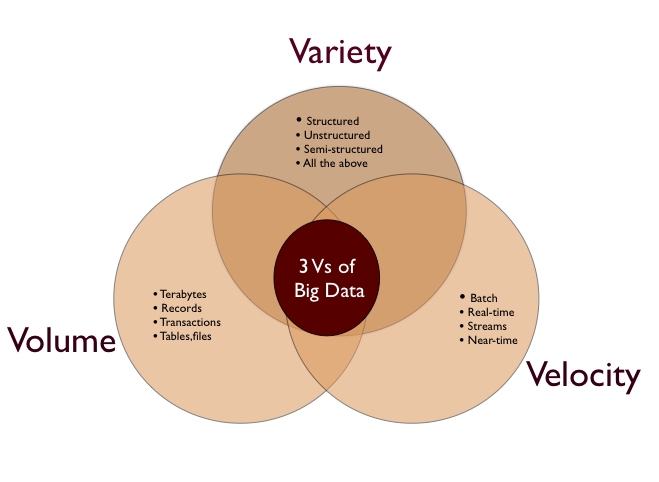
While the concepts are straightforward, data ingestion in the real world can be tricky. Organizations often run into several key challenges.
-
Variety: Data comes in all shapes and sizes. Structured data, like you'd find in a spreadsheet, is neat and orderly. Unstructured data, like emails or videos, is not. An ingestion process must be able to handle this diversity.
-
Volume: The sheer amount of data being generated can be staggering. Systems need to be able to handle terabytes or even petabytes of information without slowing down.
-
Velocity: Data can arrive incredibly fast, especially in real-time systems. The ingestion process has to keep up to avoid creating a bottleneck.
-
Quality: If you put flawed data into your system, you'll get flawed analysis out of it. This is the classic "garbage in, garbage out" problem. A good ingestion process includes checks and balances to ensure data is accurate, complete, and consistent before it's loaded.
Getting data ingestion right is a fundamental part of building a data-driven organization. It’s the essential groundwork that makes all subsequent analysis possible.