Enterprise Data Entropy Explained
Introduction to Data Entropy
The Measure of Surprise
Entropy, in the world of data, is a measure of uncertainty or randomness. Think of it as the average amount of “surprise” you get from a piece of information. If a dataset is highly predictable, it has low entropy. If it's chaotic and unpredictable, it has high entropy.
Imagine two sets of coin flips. One is from a fair coin: Heads, Tails, Tails, Heads, Tails... The other is from a two-headed coin: Heads, Heads, Heads, Heads, Heads... The first set has high entropy because you can't be sure what the next flip will be. The second has zero entropy; the outcome is always certain.
This concept comes from information theory, a field pioneered by Claude Shannon in the 1940s. He wanted to quantify the information in a message. He realized that the less likely an event is, the more information it provides when it happens. Receiving a message that says “the sun rose this morning” contains very little information. A message saying “it’s snowing in the Sahara” contains a lot.
He defined a quantitative measure of uncertainty—entropy—and identified the bit as the natural unit of information.
The Math Behind the Message
Shannon created a formula to calculate entropy. It works by finding the average information content across all possible outcomes. The information content of a single outcome, , is based on its probability, . It's defined as:
The base-2 logarithm means the result is measured in bits. One bit represents the answer to a single yes/no question. For a fair coin flip, the probability of heads is 0.5. The information you get from seeing heads is bit. This makes intuitive sense—you need exactly one yes/no question (e.g., "Was it heads?") to know the result.
Entropy, denoted as , is the weighted average of the information for all possible outcomes. You multiply each outcome's information content by its probability and sum them all up.
Let's apply this to our coins.
-
Fair Coin: , bit.
-
Two-Headed Coin: , bits. (Note: is defined as 0).
The fair coin has the maximum possible entropy for a two-outcome system, confirming it has the most uncertainty.
Why Entropy Matters for Data
Understanding entropy isn't just an academic exercise. It has practical implications for managing data, especially in terms of quality and security.
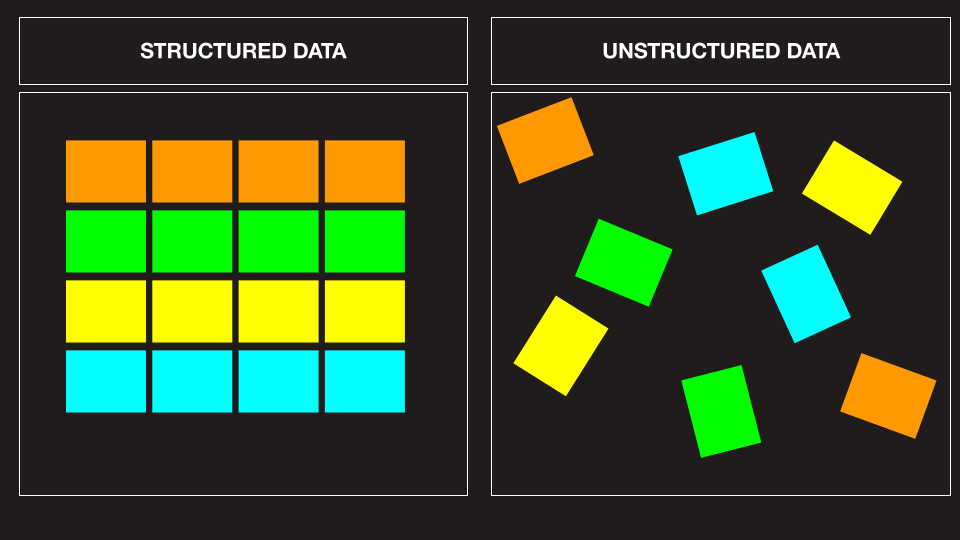
Data Quality A dataset with unusually low entropy might signal a problem. For example, if a column for "Country" in a global customer database only contains "United States," it's a low-entropy situation. This could indicate a data entry error, a biased sample, or a system malfunction. High entropy isn't always good, either. A column that should have limited options (like "T-Shirt Size") but contains random, garbage text would have high entropy, signaling poor data quality.
Data Security
Entropy is fundamental to cryptography. A strong password is one that is random and unpredictable—it has high entropy. An attacker trying to guess a password like Password123 (very low entropy) will succeed quickly. Guessing a password like 8!k&jQ#z$P@v (very high entropy) is practically impossible because the number of possibilities is enormous. The strength of encryption keys relies entirely on their entropy. A key generated from a truly random source is secure; one generated from a predictable process is vulnerable.
In essence, entropy provides a mathematical lens to view the predictability of our data. Whether we're cleaning a database, creating a secure password, or compressing a file, entropy is the underlying concept that governs the limits of what's possible.
Time to check your understanding.
In the context of information theory, what does entropy primarily measure?
You are analyzing a 'Marital Status' column in a large user database. You find that 99% of the entries are 'Married'. What does this indicate about the entropy of this column?
Entropy is a core idea in information theory with tangible effects on how we handle data. By measuring the randomness or uncertainty in a dataset, we can make better decisions about its quality, security, and management.