English Speaking Fundamentals
Greetings and Introductions
Making a Good First Impression
The first words you say to someone can set the tone for your entire conversation. A simple greeting is the key to starting on the right foot. Think of it as opening a door for communication.
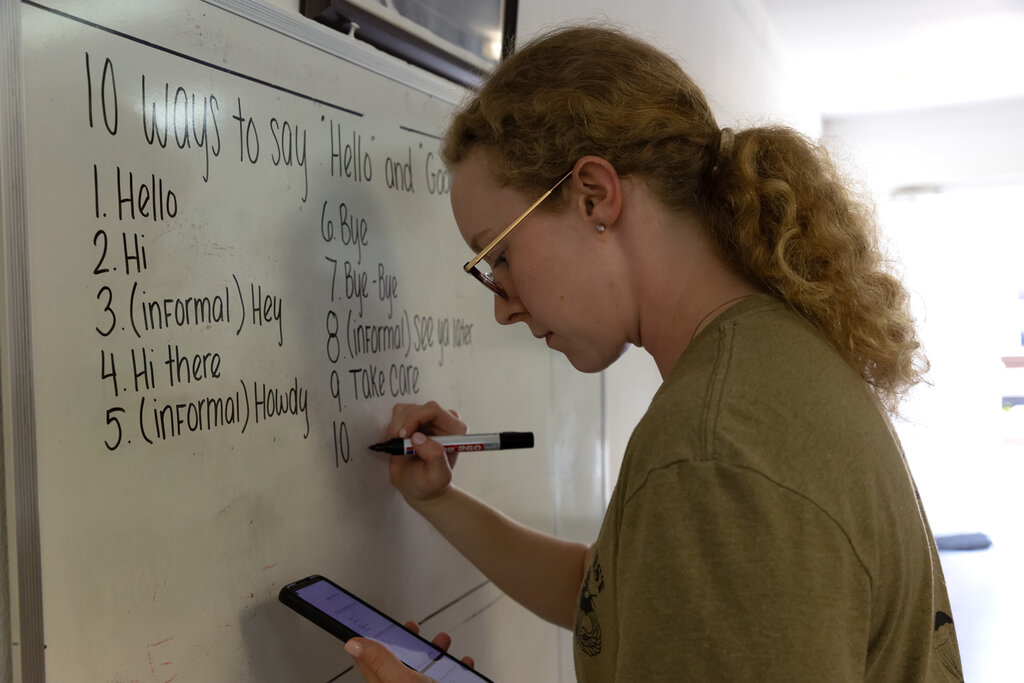
In English, greetings can change depending on the time of day. While 'Hello' and 'Hi' work anytime, some greetings are more specific.
| Greeting | When to Use It |
|---|---|
| Good morning | From waking up until noon (12:00 PM) |
| Good afternoon | From noon until about 5:00 PM |
| Good evening | From about 5:00 PM onwards |
It's also important to know the difference between formal and informal situations. You might greet a close friend differently than you would a new boss.
Informal greetings are for friends, family, and people you know well. 'Hi' or 'Hey' are very common and friendly.
Formal greetings are for people you don't know, older people, or in professional settings like a job interview. 'Hello', 'Good morning', or 'Good afternoon' are safe and respectful choices.
When in doubt, a simple 'Hello' is always a polite and appropriate choice for any situation.
Introducing Yourself
After the greeting, the next step is often introducing yourself. The most common way to do this is by sharing your name. You can say 'My name is...' or, more casually, 'I'm...'.
For example:
- 'My name is Sarah.'
- 'I'm David.'
It's also common to say where you're from, especially when meeting people from different places. You would say, 'I am from [your country or city].'

After you introduce yourself, it's polite to add a friendly phrase. This shows you're happy to meet the other person.
Putting it all together: 'Hello, my name is Maria. I'm from Brazil. It's nice to meet you.'
Another key part of any introduction is asking about the other person. The most common question is 'How are you?'. It’s a polite way to show you are interested in their well being. A simple 'Fine, thanks. And you?' is a standard reply.
greeting
noun
A polite word or sign of welcome or recognition.
While words are important, so is how you say them. In many English speaking cultures, making eye contact and offering a firm handshake (in formal or business settings) shows confidence and respect. A simple smile always makes a greeting feel warmer and more sincere.
Let's review the key phrases we've learned.
Now, let's test your knowledge.
You are at a job interview. Which of the following is the most appropriate greeting?
Which of these greetings is NOT dependent on the time of day?
With these basics, you're ready to start conversations and make new connections.