English Manorial Records for Genealogy
Introduction to Manorial Records
What Was a Manor?
Before you can understand manorial records, you need to know what a manor was. For centuries, a manor was the basic unit of land ownership and administration in England and Wales. It wasn't just a big house; it was an entire estate, often including a village, farmland, woodland, and the people who lived and worked there.
At the head was the lord of the manor. The lord held the land from a higher authority, like the monarch or a powerful noble. The land was then worked by tenants. Some tenants were 'freeholders' who owned their land outright and paid a fixed rent. Most, however, were 'copyholders' or 'villeins'—unfree tenants who held their land in exchange for labor services or payments to the lord. The lord's private land, which tenants worked for him, was called the demesne.
This whole system was managed through a manorial court. The court handled land transfers, enforced local customs, and settled disputes among tenants. And where there's administration, there are records.
The Records Left Behind
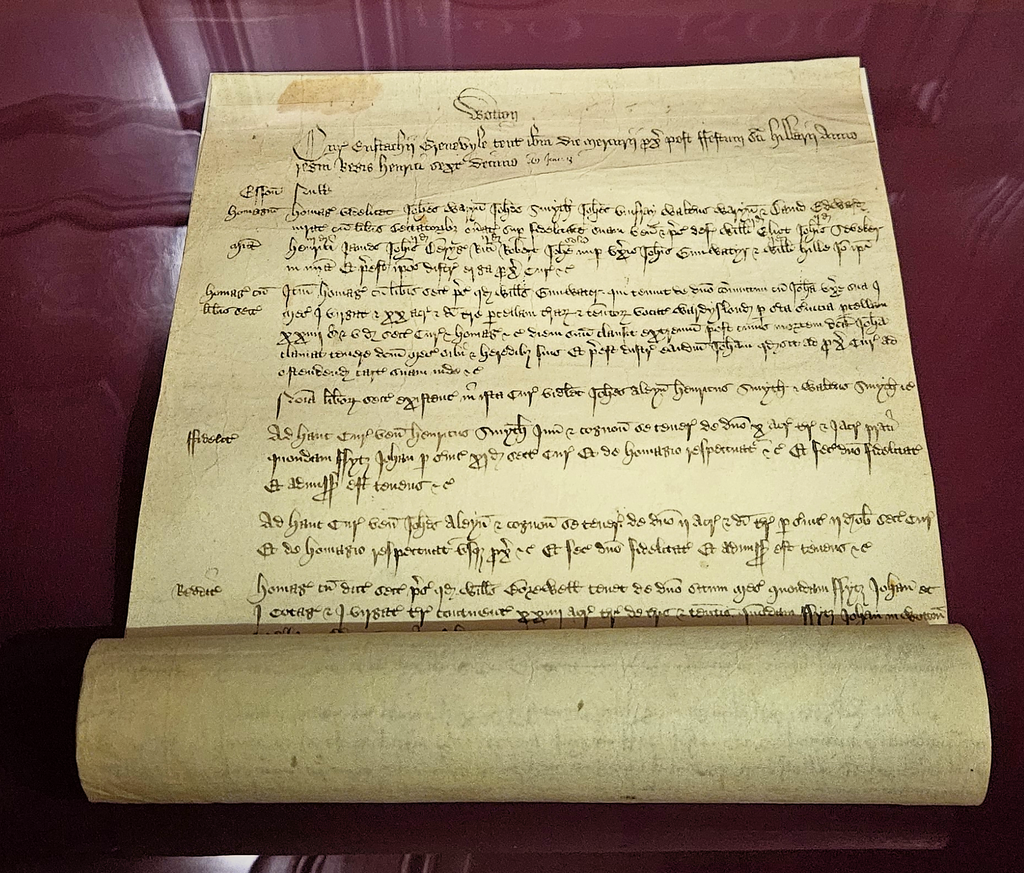
Manorial records are the documents created by the administration of a manor. They span from the 12th century all the way up to the 1920s, when the last remnants of the manorial system were legally abolished. These documents are a goldmine for genealogists.
Manorial records are notable for being one of the types of document where information about ordinary people - not just the upper classes - is likely to have survived, perhaps even from the medieval period.
Unlike many state or church records that focus on the wealthy, manorial documents recorded the lives of everyday farmers and laborers. They can tell you where an ancestor lived, what land they held, who their neighbors were, and even details about minor disputes or fines.
| Record Type | Description |
|---|---|
| Court Rolls | The minutes of the manorial court. They record land transfers, tenant disputes, fines, and local bylaws. The most common type of manorial record. |
| Surveys & Extents | Detailed lists of tenants, the land they held, the rent or services they owed, and the value of the manor's resources. |
| Terriers | A detailed survey of land within the manor, describing the boundaries and features of each holding. |
| Maps | Maps showing the layout of the manor, including fields, buildings, and property boundaries. |
| Accounts | Financial records kept by the lord's officials, such as a bailiff or reeve, detailing the manor's income and expenses. |
These documents provide a window into the daily lives of people who might not appear in any other historical record.
Why They Matter for Your Research
So, why should a family historian care about these old documents? Manorial records can help you break through brick walls and add rich context to your family tree. Because they deal with land, they often track families in one place over many generations.
If your ancestors were farmers or laborers in rural England or Wales before the 20th century, their lives were almost certainly touched by the manorial system.
When a copyhold tenant died, their heir had to be formally admitted to the tenancy in the manorial court. This created a record of inheritance, often naming the deceased tenant and their successor, which can be invaluable for confirming family relationships. These records can predate parish registers and censuses by centuries, pushing your family line back further than you thought possible.
They also paint a picture of your ancestor's world. You might discover the size of their farm, the crops they grew, or a fine they paid for letting their animals stray. This information brings your family story to life, transforming names and dates into real people living in a specific time and place.
Time to test your knowledge on the basics of manorial records.
In the context of the manorial system, what was the 'demesne'?
Why are manorial records particularly valuable for genealogists and family historians?
Understanding manorial records is key to exploring the lives of ordinary people in the past. They offer a unique and detailed perspective that is often missing from other historical sources.