English Communication Essentials
Greetings and Introductions
Saying Hello
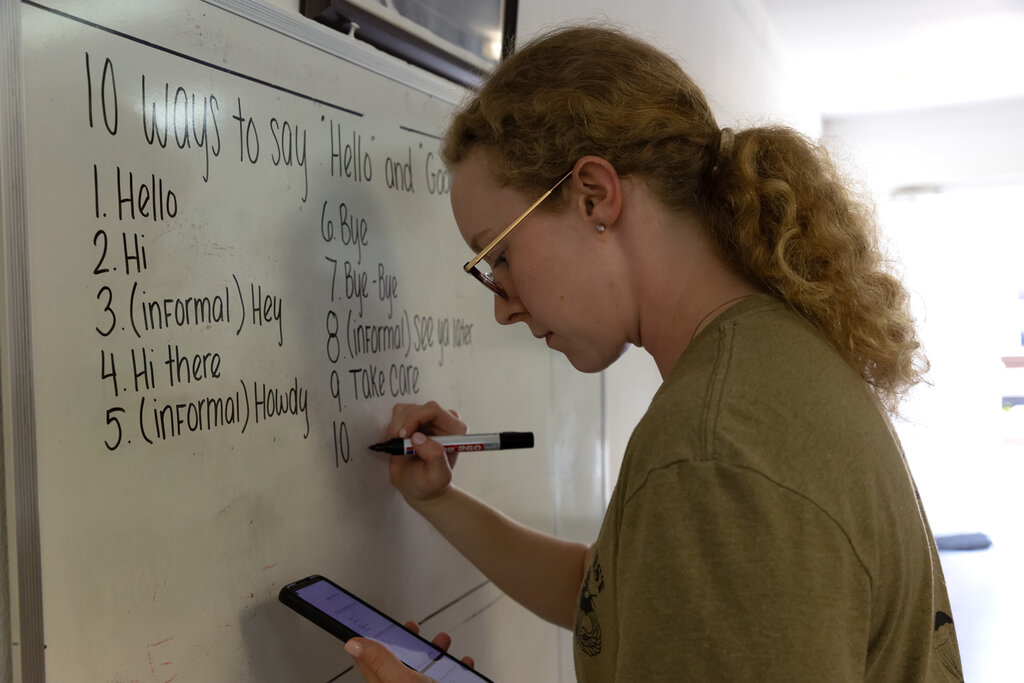
Starting a conversation in English is simple. The two most common greetings are "Hello" and "Hi." They both mean the same thing, but we use them in slightly different situations.
"Hello" is a standard greeting you can use for anyone. It works for friends, family, teachers, or someone you're meeting for the first time. It's always a safe choice.
"Hi" is a little more casual. It's perfect for friends, classmates, or people you know well. While you can say "Hi" to a stranger, "Hello" is often a better starting point if you want to be more polite.
You can use "Hello" in any situation, but "Hi" is best for people you already know or in casual settings.
Introducing Yourself
After you say hello, the next step is to introduce yourself. The most direct way is to say, "My name is..." followed by your name. For example, "Hello, my name is Maria."
A more relaxed way to introduce yourself is to say, "I'm..." This is very common and sounds friendly. For instance: "Hi, I'm David."
When someone tells you their name, it's polite to respond with "Nice to meet you." This shows you are happy to meet them.
Let's put it together. A short, friendly introduction looks like this:
You: "Hello, my name is Alex." The other person: "Hi Alex, I'm Sam. Nice to meet you." You: "Nice to meet you too."
How Are You?
Once you've exchanged names, it's common to ask how the other person is doing. The classic question is, "How are you?"
This is usually just a polite way to continue the conversation. The answer is almost always positive. You don't need to share detailed information about your day unless you are talking to a close friend.
The very first step in any language course is learning how to greet people and introduce yourself.
Here are some typical ways to ask and answer.
| Question | Common Responses |
|---|---|
| How are you? | I'm fine, thank you. And you? |
| How's it going? | Good, thanks. How about you? |
| What's up? | Not much. You? |
Notice that after answering, you should always ask the question back. This keeps the conversation going and shows you are interested in the other person.
Cultural Notes
When you greet someone in many English-speaking cultures, a smile is very important. It makes you seem friendly and approachable. Making eye contact is also key. It shows that you are engaged and listening.
A handshake is common in formal situations or when meeting someone for the first time, especially in a professional setting. With friends or in casual situations, a simple wave or a nod is often enough. Don't worry too much about physical gestures at first. A warm "Hello" and a smile are always a great start.
Let's review the key phrases we've learned.
Now, let's test your knowledge.
You are meeting your new teacher for the first time. Which greeting is the safest and most polite choice?
When someone tells you their name, the most polite response is "How are you?"
With these basic phrases, you're ready to start your first conversations in English. Practice them, and you'll feel more confident each time.