English B1 Practical Proficiency
Building Vocabulary
Words Are Your Tools
Think of learning vocabulary as building a toolkit. You don't need every tool in the hardware store; you just need the right ones for the job. The goal isn't to memorize the dictionary. It's to collect the words and phrases you'll actually use to express your thoughts and understand others.
Rather than memorizing isolated words, focus on vocabulary that is relevant to everyday life and your personal interests.
The most effective way to learn is by focusing on themes. Instead of studying a random list of words, group them by topics that matter to you and your daily life. This method, called thematic learning, makes new words easier to remember because they're connected to a specific context.
Start With Your World
Begin with the vocabulary that revolves around you. This includes talking about who you are, your family, what you do for work, and how you spend your free time. These are the conversations you're most likely to have, so mastering this vocabulary first gives you a practical foundation.
Let’s start with personal introductions. These are the phrases you'll use every time you meet someone new.
| English Phrase | When to Use It |
|---|---|
| My name is... | Formal and informal introductions. |
| I'm from... | Stating your city or country of origin. |
| I work as a/an... | Describing your profession. |
| I'm a student. | If you are currently studying. |
| In my free time, I like to... | Talking about your hobbies. |
Next, let's cover family. You can describe your family by naming the people in it. Start with your immediate family. For example: "I have one brother and two sisters." Or, "My mother is a teacher and my father is a doctor."
Talking about your hobbies and interests is a great way to connect with people. Think about what you enjoy doing. Do you like reading, watching movies, playing sports, or cooking? Having the right words helps you share your passions.
For example:
- "I enjoy hiking on the weekends."
- "My favorite hobby is playing the guitar."
- "I'm interested in photography."
Putting Words into Practice
Knowing a word is one thing; using it correctly is another. The key to making vocabulary stick is to use it in context. Don't just memorize a word, try to use it in a sentence right away. This active use moves the word from your short-term to your long-term memory.
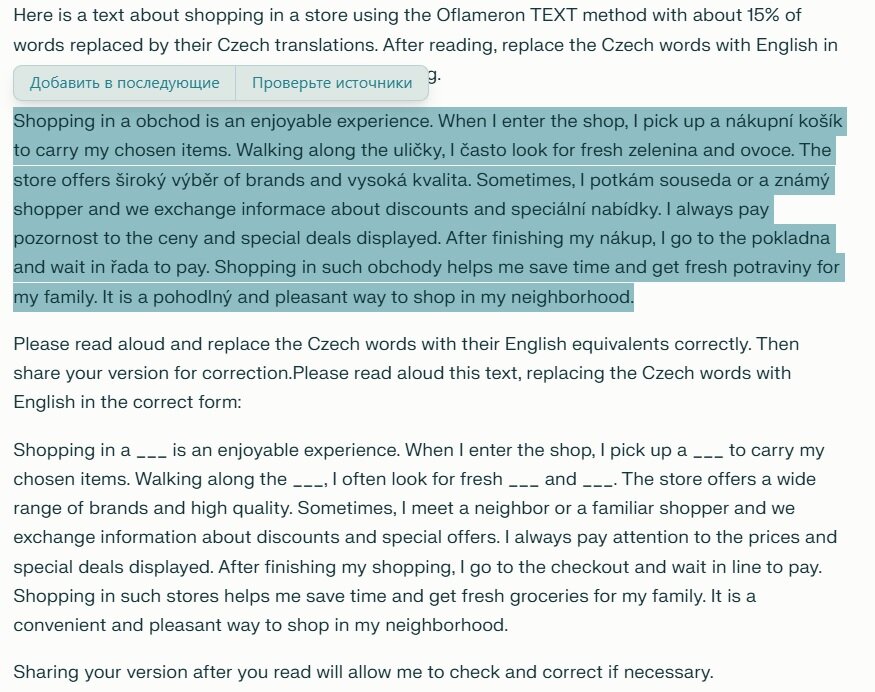
One powerful technique is to write short paragraphs or dialogues. Let's try it. Imagine you're at a party and meet someone new. How would you introduce yourself and talk about your job and hobbies?
Here’s an example dialogue:
Alex: Hi, my name is Alex. Ben: Hi Alex! I'm Ben. Nice to meet you. Alex: You too! So, what do you do for work? Ben: I work as a graphic designer. What about you? Alex: I'm a software developer. In my free time, I like to play video games.
Now, try writing your own. Use the vocabulary for introductions, work, and hobbies we just covered. The act of writing forces you to think about which words fit together and how to form natural-sounding sentences.
Let's review the key ideas and words from this section.
Ready to test your knowledge?
According to the text, what is the most effective way to make new vocabulary memorable?
The key to moving a new word from your short-term to your long-term memory is to ______.
Building your vocabulary is a continuous process. By focusing on relevant topics and practicing with context, you'll equip yourself with the tools you need for meaningful conversations.