Engineering the Reusable Rocket Revolution
Reusable Vehicle Architectures
The Price of a Return Ticket
Getting a rocket to space is one challenge. Getting it back in one piece is another entirely. For decades, rockets were disposable, single-use machines. But reusability changes the economics of spaceflight. The catch is that a return ticket isn't free. Every component added for recovery—wings, landing legs, extra propellant—is mass that isn't payload. This fundamental trade-off has pushed engineers down two very different architectural paths: flying back like a plane or landing vertically like a rocket.
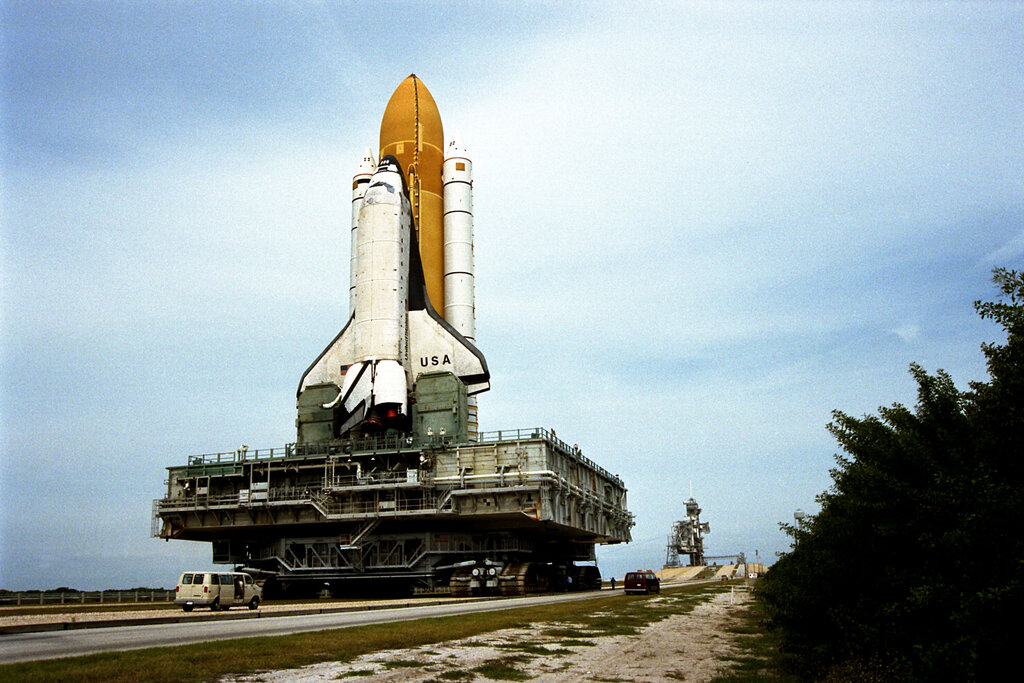
The winged recovery approach is best seen in the Space Shuttle. Its delta wings and control surfaces allowed it to glide to a controlled, unpowered landing on a runway. This design, however, carried significant penalties. The wings, tail, and robust landing gear were dead weight for most of the ascent, contributing to a high . Furthermore, the massive surface area required an extensive, fragile, and high-maintenance thermal protection system to survive the intense heat of atmospheric re-entry.
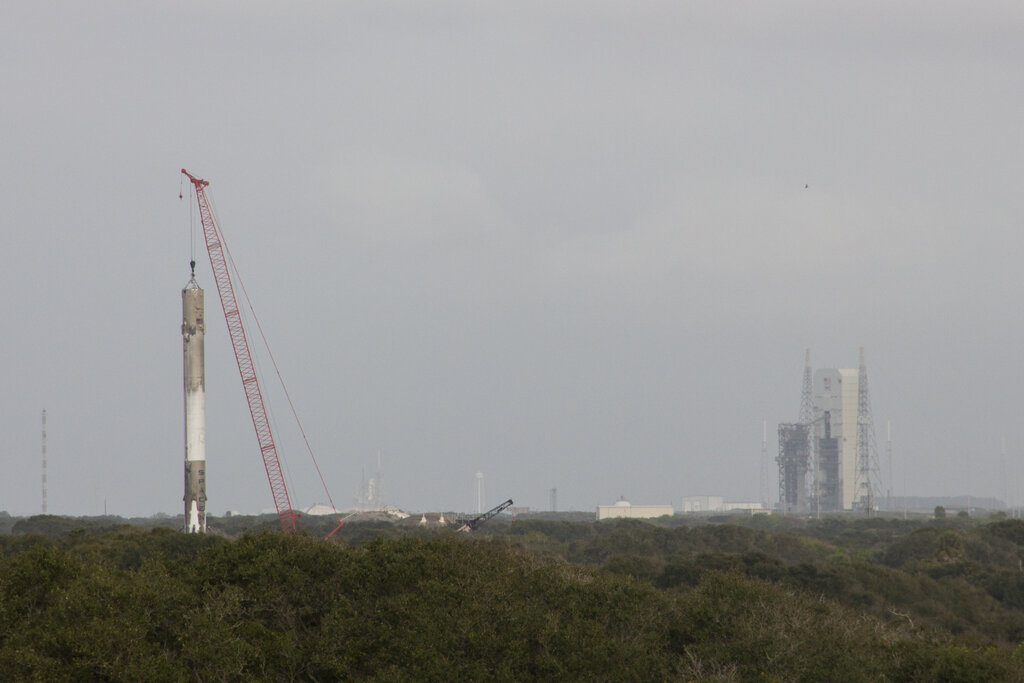
In contrast, the modern paradigm has shifted towards Vertical Takeoff, Vertical Landing, or . Instead of gliding, a VTVL booster flips itself around after stage separation, performs a series of engine burns to slow its descent, and lands upright on retractable legs. This is the architecture used by SpaceX's Falcon 9 and Blue Origin's New Shepard.
The VTVL approach trades the heavy, complex aerodynamic surfaces of a winged vehicle for extra propellant and advanced avionics.
Payload and Performance Trade-Offs
Why has the industry largely pivoted to VTVL? It comes down to efficiency. While VTVL boosters must reserve a significant amount of propellant for landing burns, they shed the constant weight penalty of wings. This results in a more efficient design for the primary mission: getting to orbit. The mass penalty is paid primarily in fuel, which is consumed, rather than in hardware that must be carried all the way.
| Feature | Winged Recovery (e.g., Space Shuttle) | VTVL (e.g., Falcon 9) |
|---|---|---|
| Recovery Hardware | Wings, tail, landing gear, thermal tiles | Landing legs, grid fins, extra propellant |
| Mass Penalty | High dry mass, carried for the entire flight | Consumable propellant, lighter hardware |
| Landing Method | Unpowered glide to a runway | Powered descent to a landing pad or ship |
| Complexity | Aerodynamic and thermal systems | Propulsion, guidance, and control systems |
This trade-off directly impacts payload capacity. A Falcon 9 flying in a reusable configuration can carry significantly less mass to orbit than if it were flown in an expendable mode where all propellant is used for the ascent. This payload reduction is the cost of reusability. For customers with lighter satellites, the lower launch price of a reusable rocket is a compelling offer. For heavier payloads, an expendable flight might still be necessary.
One Stage or Two?
The discussion so far has focused on two-stage-to-orbit (TSTO) systems, where only the first stage booster is recovered. This is the current operational standard. The ultimate goal for many, however, is a fully reusable Single-Stage-to-Orbit () vehicle. An SSTO would fly to orbit, deliver its payload, and return for a landing, all without discarding any hardware.
The challenge is immense. The dry mass fraction of an SSTO must be extraordinarily low, as the vehicle has to carry the propellant for its final orbital insertion all the way from the launchpad. Prototypes like the DC-X in the 1990s demonstrated VTVL principles, but no orbital-class SSTO has yet been successful. The structural and engine performance requirements remain just beyond our current technological grasp, making multi-stage reusable vehicles the more practical architecture for now.
What is the primary disadvantage of the winged recovery approach, as seen in the Space Shuttle, when compared to VTVL systems?
According to the text, why has the space industry largely shifted towards VTVL (Vertical Takeoff, Vertical Landing) systems like the Falcon 9?