Engineering Organization AI Transformation
Organizational AI Strategy
The AI-First Engineering Mindset
Moving to an AI-augmented workflow isn't about buying new software. It's a fundamental shift in how your team thinks about building products. The goal is to cultivate an 'AI-First' mindset, where AI is treated as a core collaborator from the very beginning, not an afterthought or a fancy add-on.
Think of it like this: a tool-first approach asks, "How can we use this new AI tool to do what we already do, but faster?" This often leads to minor efficiency gains but doesn't change the game. An AI-First approach asks, "With AI as a partner, what new problems can we solve? How can we fundamentally redesign our workflow to create more value?" This reframes AI from a simple utility to a strategic partner in creation.
Where Do You Stand? Assessing AI Readiness
Before you can build a roadmap, you need to know your starting point. Jumping into AI adoption without a clear assessment is like starting a construction project without surveying the land. You need a simple, repeatable way to evaluate potential AI initiatives. The Adoption-Impact-ROI model provides this framework.
| Factor | Key Questions |
|---|---|
| Adoption | How steep is the learning curve for the team? Does it integrate with our existing tools and infrastructure? What is the level of cultural readiness or resistance? |
| Impact | How much pain does this solve? Will it unblock a major bottleneck, significantly improve quality, or enable a completely new capability? |
| ROI | What is the total cost (licensing, training, integration) versus the expected value? How quickly will we see a return on this investment? |
Using this model helps you move beyond the hype and make objective decisions. An AI tool for automating pull request summaries might be an easy win (High Adoption, Medium Impact, Fast ROI), while an AI for redesigning your entire system architecture is a much larger bet (Low Adoption, High Impact, Slow ROI). The goal is to find a balanced portfolio of initiatives that deliver both short-term wins and long-term transformation.
Finding Your High-Leverage Entry Points
You don't need to overhaul everything at once. The most successful AI integrations target specific, high-leverage entry points—the places in your workflow where a small change can produce an outsized result. These are often the tasks that are repetitive, time-consuming, and act as bottlenecks for the entire team.
Common entry points in engineering departments include:
- Code Generation & Refactoring: Using AI to write boilerplate code, translate code between languages, or clean up a frees up developers to focus on complex logic.
- Automated Testing: Generating unit tests, integration tests, and even user scenarios can dramatically reduce the manual effort required for quality assurance.
- Intelligent Documentation: AI can generate and maintain documentation from code comments and logic, ensuring it's never out of date.
- Advanced Debugging: Instead of just getting an error message, developers can ask an AI to analyze the stack trace, suggest potential causes, and even propose a fix.
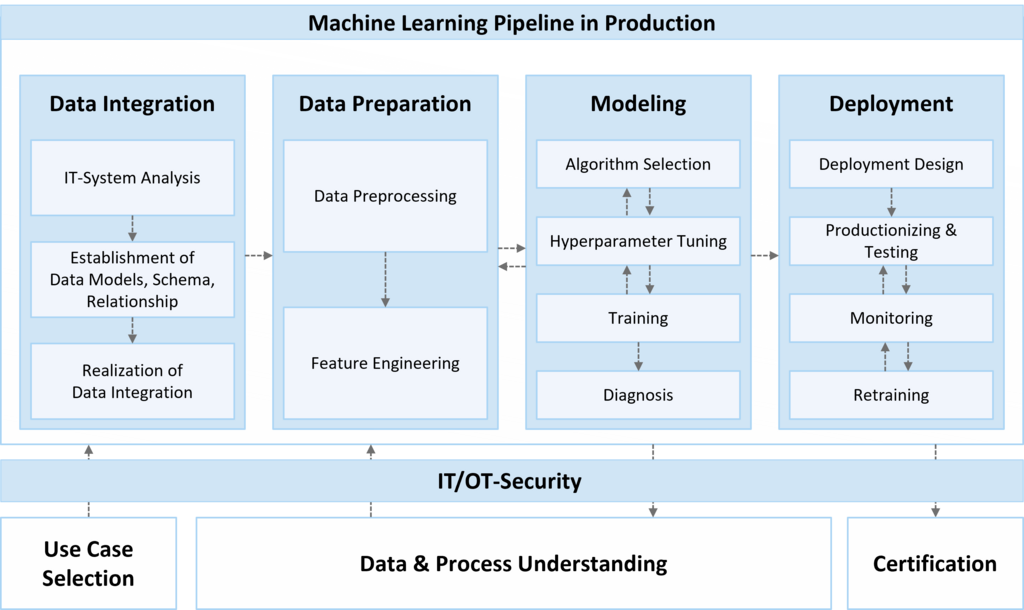
By focusing on these bottlenecks first, you create momentum. The team sees immediate value, which builds confidence and enthusiasm for tackling more ambitious AI-driven transformations down the road.
From Lines of Code to Value Delivered
The final piece of the strategic puzzle is redefining success. For decades, engineering productivity was often measured by outputs: lines of code written, features shipped, tickets closed. An AI-First model requires a shift to measuring outcomes—the actual value delivered to the business and its customers.
Instead of asking "How many features did we ship?" start asking "Did we reduce customer churn? Did we increase user engagement? Did we lower our operational costs?"
This shift is crucial because AI excels at automating outputs. An AI can write thousands of lines of code in seconds, but that code is worthless if it doesn't solve a real problem. When you measure outcomes, you align the engineering team's incentives with the organization's strategic goals. AI becomes a tool not for writing more code, but for achieving better results. Communicating this change to stakeholders ensures everyone understands that the goal isn't just to be busy, but to be effective.
What is the primary difference between an 'AI-First' mindset and a 'tool-first' approach to AI adoption?
Why is it strategic to begin AI integration by targeting 'high-leverage entry points'?