Energy Management Systems Explained
Energy Management Fundamentals
What Is an Energy Management System?
Think about the electricity in your home. You flip a switch, and a light turns on. You adjust a thermostat, and the room gets warmer or cooler. We use energy constantly, but we rarely think about how much we're using or where it's all going. Now, scale that up to a factory, an office building, or even an entire city. Managing that energy use becomes a massive challenge. That's where an Energy Management System, or EMS, comes in.
Energy Management System
noun
A system of computer-aided tools used by operators of electric utility grids to monitor, control, and optimize the performance of the generation or transmission system.
At its core, an EMS is a smart system designed to keep a close eye on energy consumption. Its main job is to help organizations use energy more efficiently. This isn't just about saving money, though that's a big part of it. It's also about reducing waste and operating more sustainably.
Implementing an EMS is essential to ensure the project’s profitability, efficiency, and long-term viability.
An effective EMS doesn't just track energy use; it provides the tools to actively manage it. It helps answer critical questions like: Where are we using the most energy? When are our peak usage times? Is any equipment running when it shouldn't be? By providing clear answers, an EMS turns raw data into actionable insights.
The Three Core Components
Every Energy Management System, regardless of its size or complexity, is built on three key pillars: monitoring, control, and optimization.
1. Monitoring: This is the foundation. You can't manage what you don't measure. The EMS uses sensors and smart meters to collect real-time data on energy consumption from various points in a facility. It tracks electricity, gas, water, and steam usage, providing a detailed picture of where resources are going.
2. Control: Once the system knows what's happening, it can take action. The control component allows users to manage energy-consuming equipment remotely. This could be as simple as scheduling lights to turn off automatically after business hours or as complex as adjusting a factory's HVAC system based on production schedules and outside temperatures.
3. Optimization: This is where the real intelligence lies. The EMS analyzes the data it collects to find patterns and opportunities for improvement. It might suggest shifting a high-energy process to off-peak hours when electricity is cheaper, or identify a machine that is using more power than it should, indicating a need for maintenance. Optimization is a continuous cycle of analysis and refinement.
Why Bother with an EMS?
Implementing an EMS requires an investment of time and money, but the benefits are significant and wide-ranging.
| Benefit | Description |
|---|---|
| Cost Savings | The most direct benefit. By reducing wasted energy and shifting usage to cheaper times, organizations can significantly lower their utility bills. |
| Environmental Impact | Less energy consumed means fewer greenhouse gas emissions. An EMS is a powerful tool for companies looking to reduce their carbon footprint. |
| Regulatory Compliance | Many governments have regulations regarding energy consumption and emissions. An EMS helps organizations track their performance and generate the reports needed to prove compliance. |
| Improved Operations | By monitoring equipment performance, an EMS can help predict maintenance needs, preventing costly breakdowns and extending the life of machinery. |
These systems are incredibly versatile and can be found in almost every sector.
Industrial: Factories and manufacturing plants use EMS to manage the massive amounts of energy needed for production, from running heavy machinery to controlling climate in sensitive environments.
Commercial: Office buildings, retail stores, and hospitals use EMS to control lighting, heating, and cooling, which often account for the largest share of their energy costs.
Residential: While less common at the individual home level, smart home technology is essentially a small-scale EMS. Smart thermostats, lighting, and appliances help homeowners monitor and control their energy use, often right from their phones.
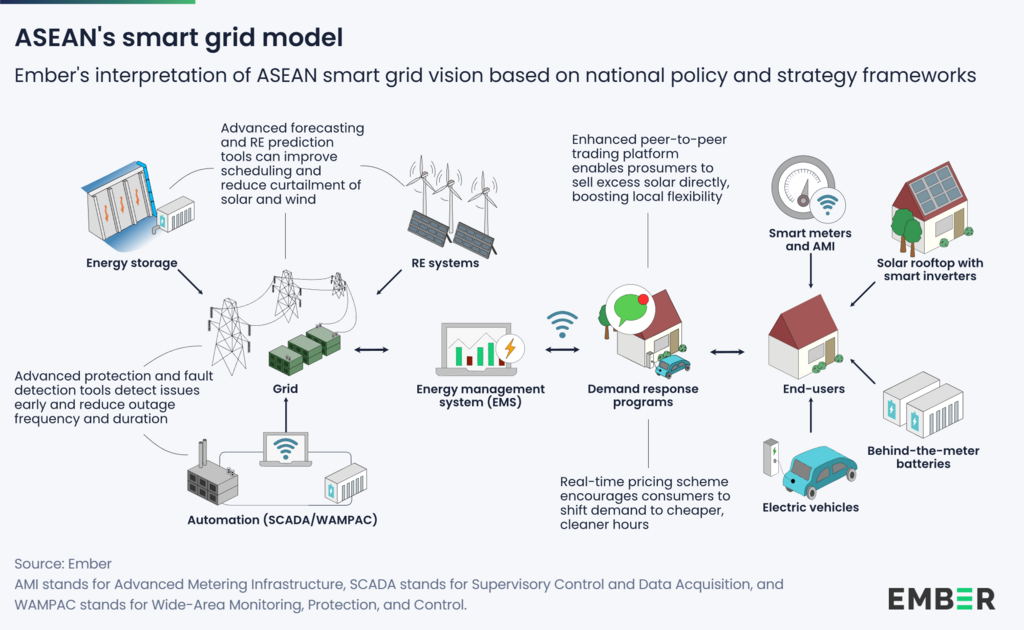
Ultimately, an Energy Management System empowers users to make smarter decisions. It provides the visibility and control needed to turn energy from an uncontrollable overhead cost into a manageable resource.
Ready to check your understanding?
What is the primary purpose of an Energy Management System (EMS)?
Which pillar of an EMS is described as the 'foundation' because you can't manage what you don't measure?
By understanding these fundamentals, you can see how managing energy is a critical part of modern operations, helping organizations become more efficient, sustainable, and profitable.