Endogenous Retroviruses and Aging Biology
Introduction to ERVs and TEs
The Genome's Hitchhikers
Our genome isn't just a static blueprint of genes. It's a dynamic place, filled with mobile pieces of DNA called transposable elements (TEs), or "jumping genes." These are sequences of DNA that can move from one location in the genome to another.
TEs are broadly sorted into two classes based on how they move.
Class I TEs, or retrotransposons, use a "copy-and-paste" mechanism. They first transcribe their DNA into an RNA intermediate. This RNA is then reverse-transcribed back into DNA, which is inserted into a new spot in the genome. The original copy stays put.
Class II TEs, or DNA transposons, use a "cut-and-paste" method. An enzyme cuts the TE sequence out of its original location and pastes it somewhere else.
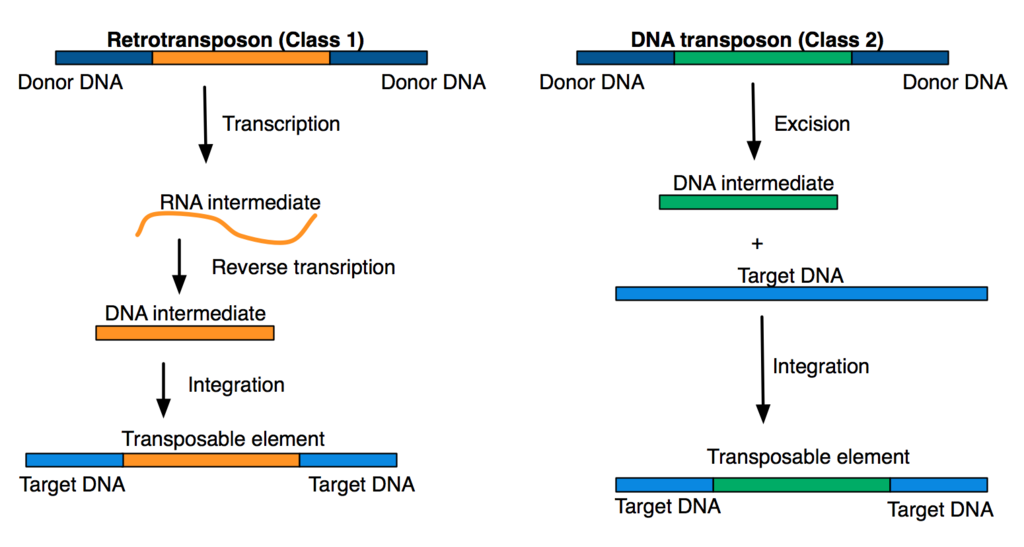
Because retrotransposons duplicate themselves with each jump, they are far more abundant in our genome than their cut-and-paste counterparts.
Viral Ghosts in Our DNA
One of the most fascinating types of retrotransposons is the endogenous retrovirus, or ERV. These are the remnants of ancient viruses that infected our ancestors millions of years ago.
The human endogenous retroviruses (HERVs) are ancient exogenous retroviruses that were embedded in the germline over 30 million years ago and underwent an endogenization process.
For a virus to become "endogenous," it must infect a germline cell, like an egg or sperm. Only then can it be passed down to the next generation. Over eons, mutations accumulate in the viral DNA, disabling its ability to replicate and cause disease. What's left is a sort of viral fossil, permanently integrated into our species' genetic code.
A Crowded Genome
It might be surprising to learn just how much of our DNA is made of these elements. Protein-coding genes, the sequences that build all the proteins in our bodies, make up only about 1.5% of the human genome. In contrast, transposable elements occupy a staggering 45%.
Within that 45%, ERVs alone account for about 8% of our DNA. That's more than five times the amount of DNA dedicated to building proteins. This means we carry around a significant amount of genetic material that originated from ancient viruses.
More Than Just Junk
For a long time, TEs were dismissed as "junk DNA," functionless leftovers from our evolutionary past. But we now know they play active roles in the genome. They are a major source of genetic variation and have been co-opted for important cellular functions.
For example, some ERV sequences have been repurposed by the body to function as promoters or enhancers, which are DNA sequences that help regulate when and where genes are turned on.
Several studies have shed light on the pivotal contribution of LTRs in promoting or enhancing the expression of several genes in humans.
One of the most crucial roles for an ERV is in human development. A protein called syncytin, which is essential for the formation of the placenta, is derived from an ancient ERV gene. Without this captured viral gene, human pregnancy as we know it would not be possible.
From shaping our evolution to building essential tissues, these genomic hitchhikers are a powerful reminder that our DNA is not just a set of instructions, but a living history book of our species' long journey.
What percentage of the human genome is composed of protein-coding genes, the sequences that build all the proteins in our bodies?
For an ancient virus to become an endogenous retrovirus (ERV) and be passed down through generations, which type of cell must it have originally infected?