Enchanted Crossroads the History of New Mexico
Ancestral Puebloan Social Governance
From Pithouse to Pueblo
Early Ancestral Puebloans often lived in pithouses, dwellings dug partially into the earth. But over time, a major societal and architectural shift occurred. Communities began constructing complex, multi-story masonry buildings, the great pueblos that still capture our imagination. This wasn't just a change in architecture; it was a revolution in social organization. Building and maintaining these massive structures required sophisticated coordination, planning, and a more integrated community.
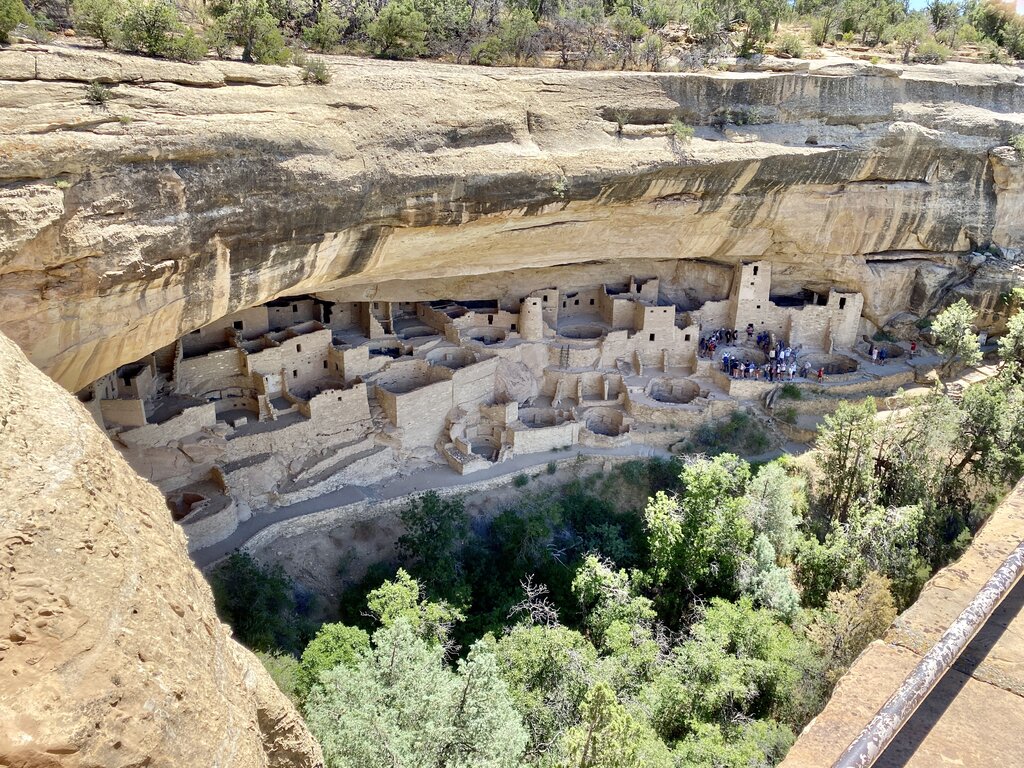
These apartment-like complexes, often nestled into cliff alcoves or perched on mesas, concentrated populations into dense villages. Living in such close quarters demanded new rules for social interaction, resource allocation, and dispute resolution. The move from scattered, semi-subterranean homes to monumental communal dwellings marked the rise of a more complex and interconnected Pueblo society.
The Chaco Phenomenon
Nowhere is this complexity more evident than in Chaco Canyon. Between about 850 and 1250 CE, Chaco became a major cultural and political center for Ancestral Puebloan peoples. The canyon is home to massive, planned structures known as Great Houses, such as Pueblo Bonito. With hundreds of rooms stacked several stories high, their construction suggests a stratified society with a leadership class capable of organizing and directing large-scale labor projects.
Chaco served as a hub, connected by an extensive road system to over 150 other Great Houses in the region. This network facilitated the movement of goods, people, and ideas, cementing Chaco's central role. The scale of the system indicates a level of regional organization previously unseen in the Southwest.
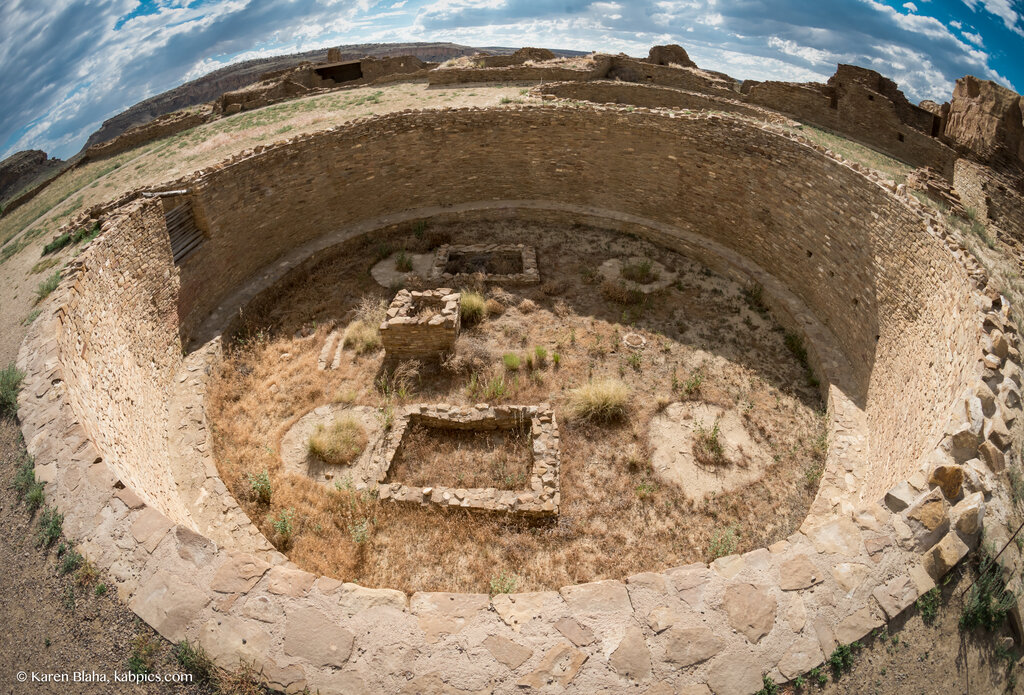
Central to this organization were ceremonial structures called kivas. While smaller kivas served individual clans or families, Great Kivas were massive, public chambers. These were likely centers for region-wide religious ceremonies and political gatherings, reinforcing a shared identity and allowing leaders to manage community affairs. The presence of both small and great kivas shows a society with multiple layers of social and political organization, from the family unit to the entire regional network.
The architecture of Chaco Canyon directly reflects its social structure. The size of the Great Houses and the centralized Great Kivas point to a society with clear leadership and a high degree of communal organization.
Lifeblood of the Desert
Survival in the arid Southwest depended on one crucial resource: water. The Ancestral Puebloans became masters of water management, developing sophisticated irrigation systems to support their agricultural society, which was based primarily on maize, beans, and squash.
They built small dams, canals, and terraced gardens to capture and distribute every possible drop of rainfall and runoff. These systems were not individual efforts; they were communal projects requiring cooperation and shared labor. The success of the entire community depended on the careful maintenance of this infrastructure. This shared need for water management likely strengthened social bonds and reinforced the authority of leaders who could organize these vital projects.
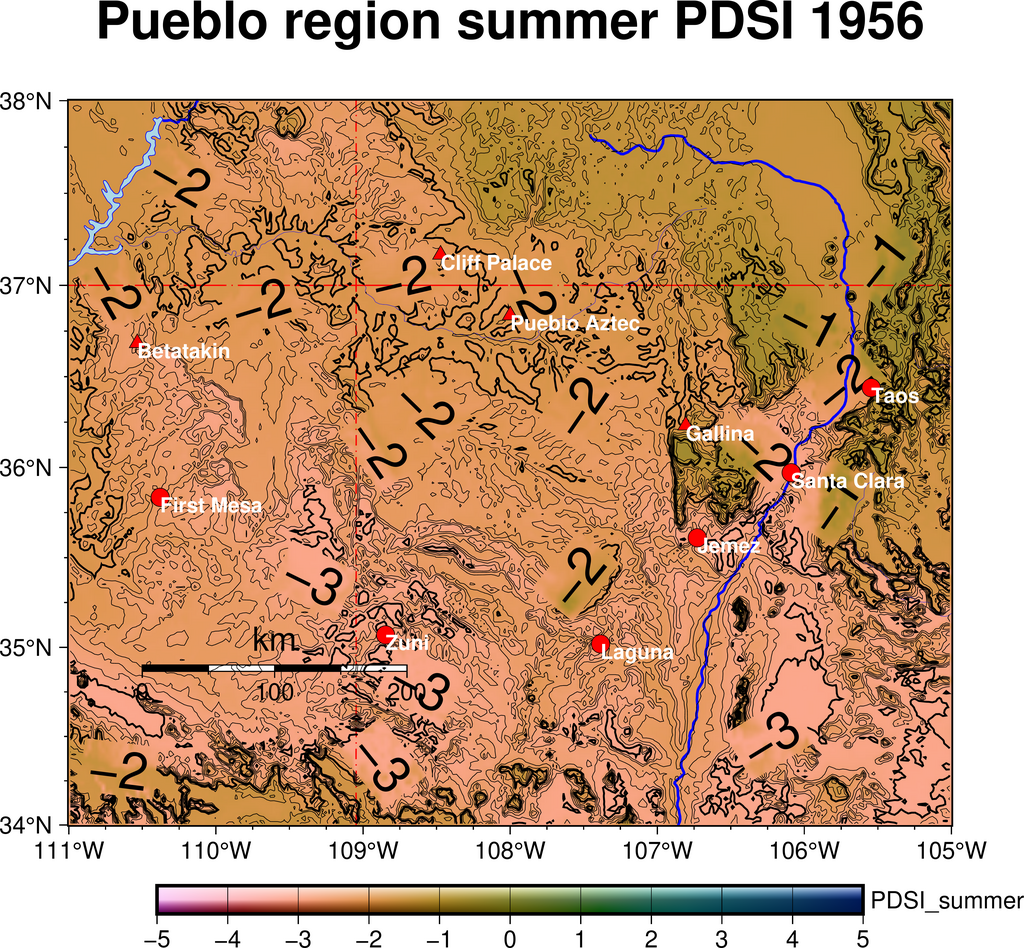
However, this reliance on predictable rainfall also made them vulnerable. Prolonged periods of drought, a common feature of the region's climate, could strain resources and test the limits of their social systems. It was a severe, multi-decade drought in the late 13th century that is believed to be a major factor in the eventual abandonment of the great centers at Chaco Canyon and Mesa Verde.
Trade and Migration
The Ancestral Puebloans were not isolated. They were part of a vast trade network that stretched for hundreds of miles. They traded locally produced goods like distinctive pottery, woven cotton textiles, and turquoise for items from distant lands.
Archaeological evidence shows they acquired seashells from the Pacific coast, copper bells and macaw feathers from Mesoamerica, and buffalo products from the Great Plains. This trade brought not only valuable goods but also new ideas and cultural influences, connecting the Pueblo world to the wider continent.
Faced with environmental pressures like the Great Drought, and possibly social conflict, the Ancestral Puebloans began a gradual migration away from the Four Corners region around 1300 CE. They moved south and east toward more reliable water sources, primarily the Rio Grande and its tributaries in present-day New Mexico. This migration wasn't a single event but a complex process of movement and resettlement over several generations.
They didn't disappear. Instead, they re-established themselves in new communities, forming the foundation of the Pueblo villages that Spanish explorers would later encounter. The core social structures, religious practices, and agricultural knowledge developed over centuries were carried with them, adapted to new landscapes and new challenges.
The societies of Native American peoples before the arrival of Christopher Columbus were diverse and rich in culture, displaying sophisticated social structures, complex trade systems, and deep spiritual practices.
This pre-colonial foundation of resilience and adaptation is crucial for understanding how Pueblo peoples would later navigate the immense challenges of Spanish colonization.
Check your understanding of Ancestral Puebloan society.
What was a primary social consequence of the architectural shift from pithouses to large, multi-story pueblos?
What evidence most strongly suggests that Chaco Canyon was a major regional center with a stratified society?
By the time of European contact, the Pueblo world was a dynamic landscape of independent, agricultural villages bound by shared ancestry, language, and tradition, with governance structures centered on communal well-being and religious observance.