Enantiomers Explained
Introduction to Chirality
Your Hands Are Chiral
Hold up your hands, palms facing you. They look like reflections of each other, right? If you place your left hand in front of a mirror, the reflection you see is a right hand. Now, try to lay your hands on top of each other, palms down. No matter how you twist or turn them, you can't get them to line up perfectly. Your thumbs will point in opposite directions, or one palm will face up while the other faces down.
This property of being non-superimposable on your mirror image is called chirality. Your hands are chiral. Many molecules in chemistry have this same property. A molecule is chiral if its mirror image cannot be perfectly aligned with the original, just like your hands.
Chirality
noun
A geometric property of some molecules and ions. A chiral molecule is non-superimposable on its mirror image.
The two non-superimposable mirror-image forms of a chiral molecule are called enantiomers. They are like a molecule's left and right hands.
The Chiral Center
So what makes a molecule chiral? Most often, it's the presence of a chiral center. In organic chemistry, this is typically a carbon atom that is bonded to four different groups of atoms. This single atom acts as a center of asymmetry for the entire molecule.
Think of a carbon atom with four slots for bonds. If you attach four unique things—say, a bromine atom, a chlorine atom, a fluorine atom, and a hydrogen atom—the resulting molecule will be chiral. Let's look at an example.
On the left, the central carbon in bromochlorofluoromethane is bonded to four different atoms (Br, Cl, F, H). Its mirror image is a distinct molecule that cannot be superimposed on the original. They are enantiomers.
On the right, dichlorofluoromethane has a carbon bonded to two chlorine atoms, one fluorine, and one hydrogen. Since two of the attached groups are identical (the two Cl atoms), the molecule has a plane of symmetry. Its mirror image is identical to the original; you can rotate it and place it perfectly on top of the first molecule. Therefore, it is achiral, meaning not chiral.
To identify a potential chiral center, look for a carbon atom with single bonds to four distinctly different groups.
Why Chirality Matters
Chirality might seem like a subtle geometric detail, but it has profound consequences, especially in biology. Your body is built from chiral molecules. The amino acids that make up your proteins are almost exclusively one type of enantiomer, and the sugars like glucose that power your cells are also just one type.
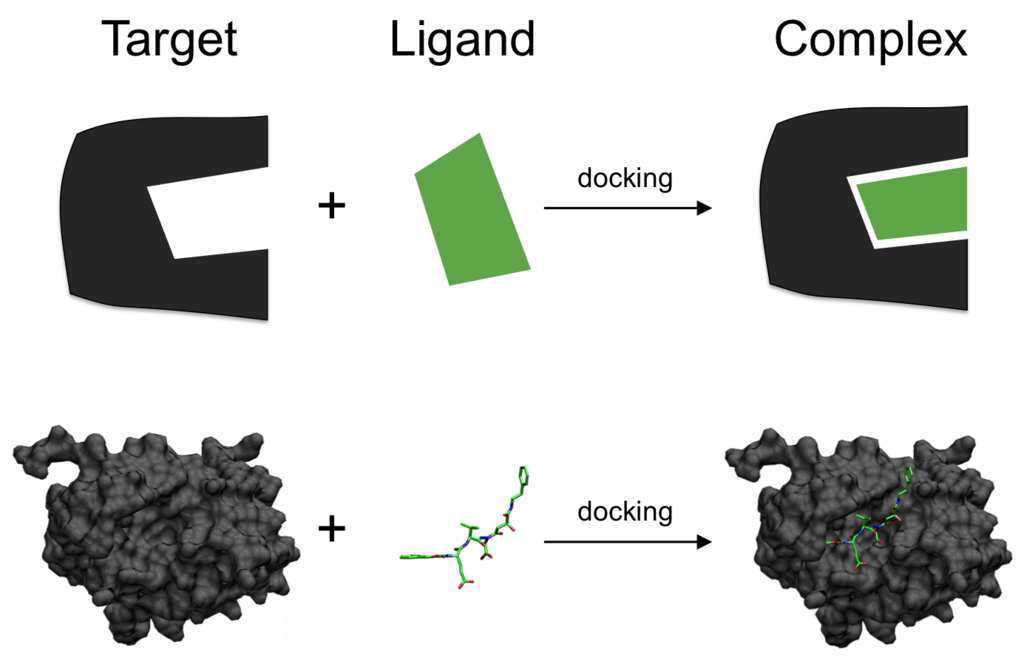
Because the enzymes and receptors in your body are themselves chiral, they can distinguish between the enantiomers of other molecules. It’s like a handshake: your right hand fits perfectly with another person's right hand, but a handshake with their left hand is awkward and doesn't work. Similarly, a drug molecule might fit perfectly into a receptor in your body, while its enantiomer might not fit at all, or it might fit into a completely different receptor and cause an unwanted side effect.
One of the most famous and tragic examples is the drug thalidomide, which was prescribed in the 1950s and 1960s to treat morning sickness. It was sold as a mixture of both of its enantiomers. One enantiomer was an effective sedative, but the other caused devastating birth defects. This case highlighted the critical importance of understanding chirality in medicine and chemistry. The different biological activities of enantiomers are a key principle in drug design today.
Now, let's review the key ideas from this section.
Ready to check your understanding?
What is the defining characteristic of a chiral molecule?
A carbon atom that is bonded to four different groups is called a ______.
Understanding chirality is the first step into the three-dimensional world of molecules, where shape is everything.