Emergency First Aid and CPR C Certification Mastery
Scene Dynamics and CAB
The First 10 Seconds
When you arrive at an emergency, the clock is already ticking. The time from a person's collapse to the start of effective chest compressions is called "no-flow time." Every second without blood flow to the brain causes irreversible cell death. Your first priority is to shrink that interval to almost nothing. This requires a rapid, yet thorough, assessment of the scene and the patient, all within about 10 seconds.
Scene safety is not a one-time check. It's a dynamic process. As you approach, you're looking for immediate threats: traffic, fire, downed power lines, or potential violence. But this assessment continues throughout the rescue. A situation can change in an instant. Your initial goal is to determine if the patient is unresponsive and not breathing normally. This is done by tapping their shoulder and shouting, "Are you okay?" while simultaneously scanning their chest for movement and checking for a carotid pulse.
Why C-A-B, Not A-B-C?
For decades, rescuers were taught A-B-C: Airway, Breathing, Circulation. This changed based on a critical insight into physiology. When an adult suddenly collapses from cardiac arrest, their blood is still rich with oxygen. The immediate problem isn't a lack of oxygen in the lungs; it's the heart's failure to pump that oxygenated blood to the brain and other vital organs. The priority is to restore circulation immediately.
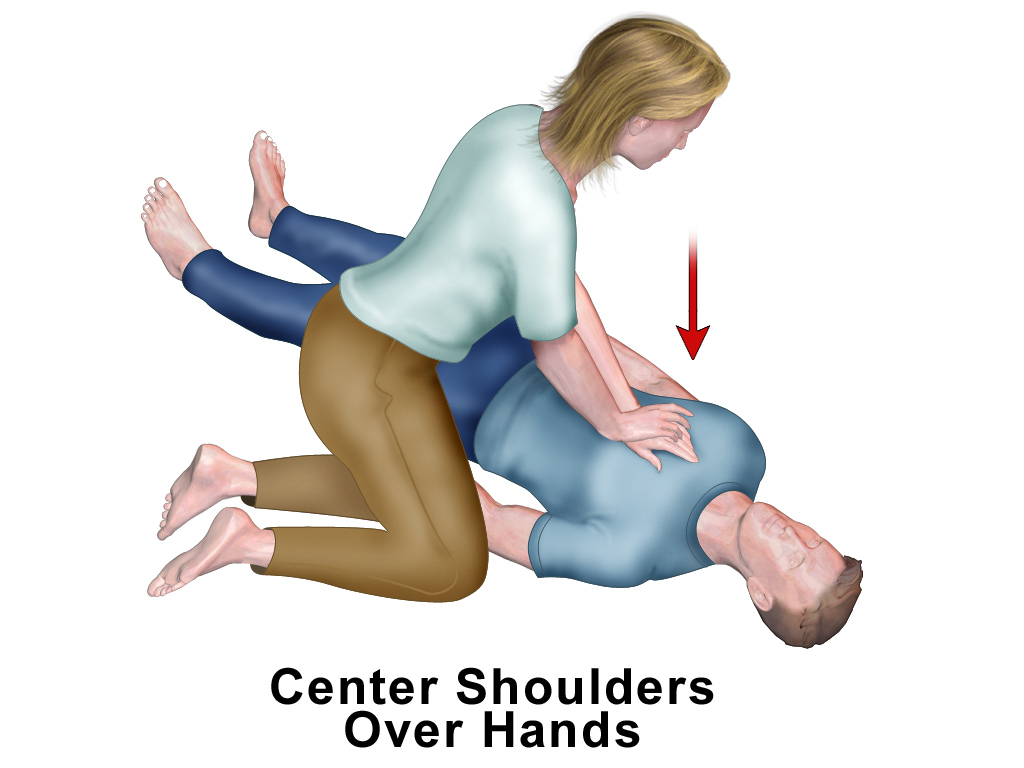
The officially shifted the recommended sequence to C-A-B: Circulation, Airway, Breathing. By starting with hard, fast chest compressions, you manually pump that residual oxygenated blood, maintaining a minimal but critical blood pressure to the brain. Delaying compressions to open the airway and give breaths first wastes precious seconds of flow. The goal is to start compressions as quickly as possible after confirming unresponsiveness and lack of normal breathing.
The components of CPR are C – A – B, which stands for Compressions, Airway, and Breathing.
Aggressive Assessment
Your initial 10-second check must be decisive. It has two parts, performed simultaneously:
- Check for Responsiveness: Tap the patient's shoulder firmly and shout. If there's no response, they are unresponsive.
- Check for Breathing and Pulse: While checking responsiveness, scan the chest for rise and fall. At the same time, locate the carotid artery on the side of the neck to check for a pulse. Do not spend more than 10 seconds on this combined check. If you don't feel a pulse or are unsure, and the patient is not breathing normally, assume cardiac arrest and begin compressions.
A common point of confusion is s. An unresponsive person may appear to be gasping for air. These are not effective breaths. Agonal gasps are a sign of severe oxygen deprivation in the brainstem and are a classic sign of cardiac arrest. They can be sporadic, sound like a snort or a groan, and should be treated as a confirmation to start CPR immediately, not a reason to delay.
| Normal Breathing | Agonal Gasps |
|---|---|
| Regular rhythm and rate | Irregular, sporadic, or infrequent |
| Consistent chest rise and fall | Gulping, snorting, or moaning sounds |
| Quiet or silent | Shallow, ineffective chest movement |
| Indicates life | Indicates cardiac arrest |
With the scene secured and your assessment complete, it's time to test your knowledge.
In the context of emergency response, what does "no-flow time" refer to?
What is the primary physiological reason for the shift from the A-B-C sequence to C-A-B for adult cardiac arrest?
Mastering this rapid, aggressive assessment is the foundation of effective Basic Life Support. It ensures that the most critical intervention, circulation, begins with minimal delay.