Elv Application Systems Explained
Introduction to ELV Systems
The Building's Nervous System
When you walk into a modern office, school, or hospital, you're surrounded by invisible networks. It’s not just the electrical wiring for lights and outlets. There’s a whole other layer of cabling that handles communication, safety, and security. This is the world of Extra Low Voltage, or ELV, systems.
Extra Low Voltage (ELV)
noun
An electrical system operating at a voltage low enough that it poses a minimal risk of electric shock. Typically, this is below 50V AC or 120V DC.
Think of a building's electrical system like the human body. The standard high-voltage wiring is the circulatory system, pumping power to hungry appliances and lights. ELV systems are the nervous system. They don't move a lot of power. Instead, they carry data and signals, telling different parts of the building what to do.
The primary role of ELV is not to deliver raw power, but to manage information and control building functions safely and efficiently.
This low voltage is key. It makes the systems much safer to work with and reduces the risk of dangerous electrical shocks. It also allows for more delicate and complex electronic components to be used. Because of this, ELV has become the backbone for all sorts of smart building technologies.
Types of ELV Systems
Not all ELV systems are the same. They are categorized based on their level of safety and grounding. The main types you'll encounter are SELV, PELV, and FELV. The distinctions are technical, but they essentially define how isolated the system is from the main power grid and from the earth itself.
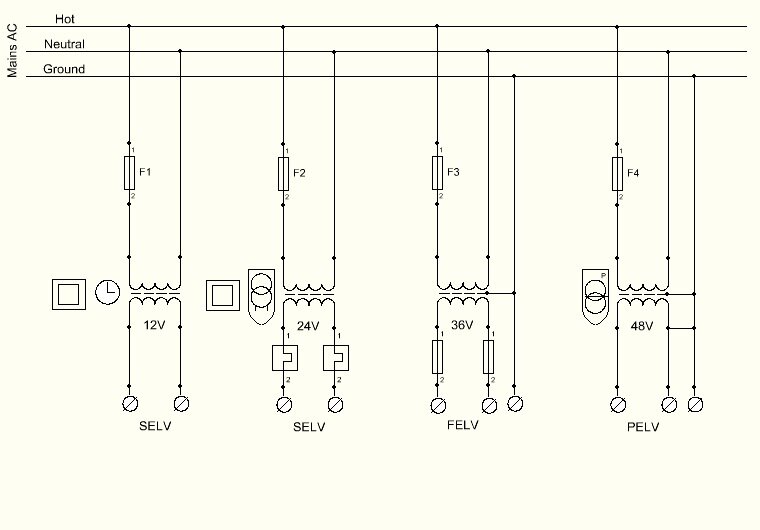
For instance, a Safety Extra-Low Voltage (SELV) system is electrically separated from other circuits and from the ground, providing a high degree of safety. A Protective Extra-Low Voltage (PELV) system is also separated but is connected to the ground for protection. These classifications ensure the right system is used for the right job, prioritizing safety and reliability.
The ELV Toolkit
The term "ELV system" is an umbrella that covers many different applications. You interact with these systems every day, probably without realizing it. They are the essential components that make a building functional, secure, and comfortable.
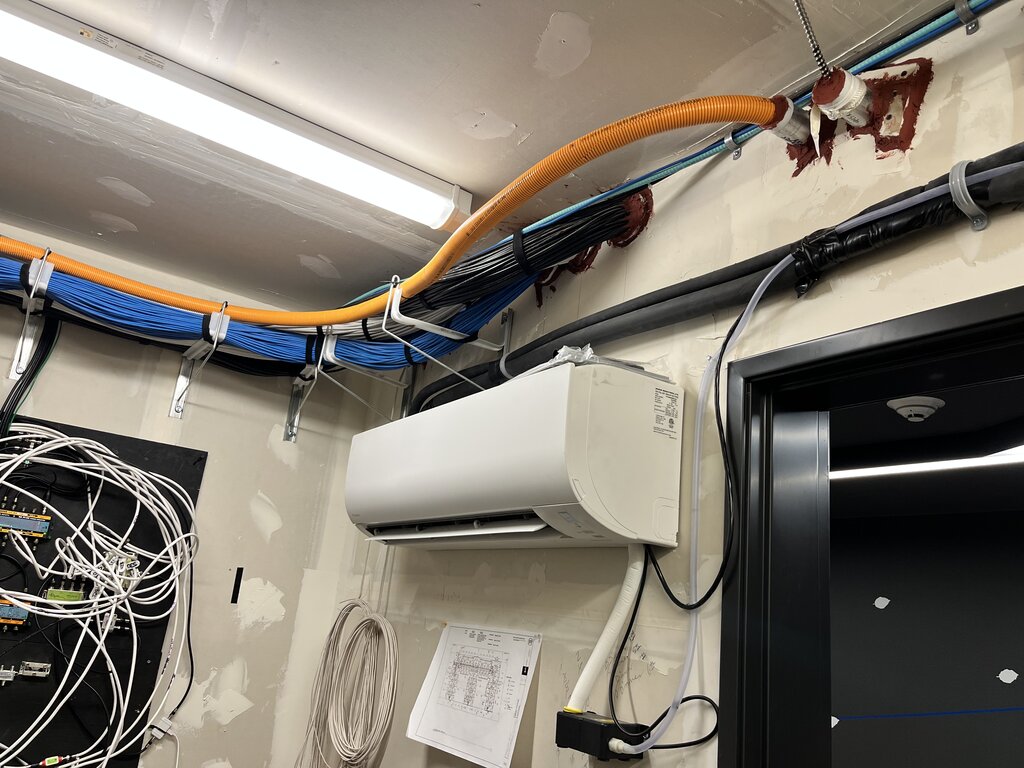
Here are some of the most common ELV systems found in building infrastructure:
| System | Primary Function |
|---|---|
| Security Systems | Surveillance (CCTV), access control (key cards), and intrusion alarms. |
| Fire Alarm Systems | Smoke detectors, heat sensors, and manual alarm call points. |
| Communication Networks | Data networks (Ethernet), telephone systems (VoIP), and public address systems. |
| Building Management System (BMS) | Centralized control of heating, ventilation, and air conditioning (HVAC) and lighting. |
Each of these systems operates on its own low-voltage network, but together they form the integrated intelligence of a modern structure. They keep occupants safe, connected, and comfortable, all by quietly sending signals through a vast web of specialized wiring.
If a building's standard high-voltage wiring is analogous to the circulatory system, what are Extra Low Voltage (ELV) systems analogous to?
What is the primary purpose of ELV systems in a modern building?