Elite Venture Capitalist Mastery
Venture Capital Fundamentals
Fuel for Ambitious Ideas
Startups often have brilliant ideas but lack the cash to turn them into reality. Banks are hesitant to lend to new companies without a track record or physical assets. This is where venture capital comes in. It's a form of private equity financing provided to startups and small businesses with high growth potential.
Venture capital refers to financing given by well-off investors or investment banks to startups and small businesses that the investors believe have big growth potential.
Think of it as rocket fuel. A venture capital (VC) firm doesn't just write a check. It invests money in a young company in exchange for an ownership stake, or equity. The goal isn't just to get the money back with interest. The goal is a massive return on investment when the startup succeeds, either by being bought by a larger company or by going public through an Initial Public Offering (IPO).
The People Behind the Money
A venture capital firm is structured like a partnership. There are two main groups of people involved: Limited Partners and General Partners.
Limited Partner
noun
An individual or institution that commits capital to a venture fund but is not involved in its day-to-day management.
Limited Partners (LPs) are the investors who provide the capital for the fund. These are often large institutions like pension funds, university endowments, insurance companies, or very wealthy individuals. They are “limited” because their liability is limited to the amount of money they invest, and they don't participate in managing the fund.
General Partner
noun
A partner in a venture capital firm who is responsible for the day-to-day management of the fund and its investments.
General Partners (GPs) are the actual venture capitalists. They are the decision-makers who run the firm, find promising startups, conduct due diligence, and manage the fund’s investments. They take an active role in the companies they fund, often taking a board seat and providing strategic guidance. Their job is to use the LPs' money to generate high returns.
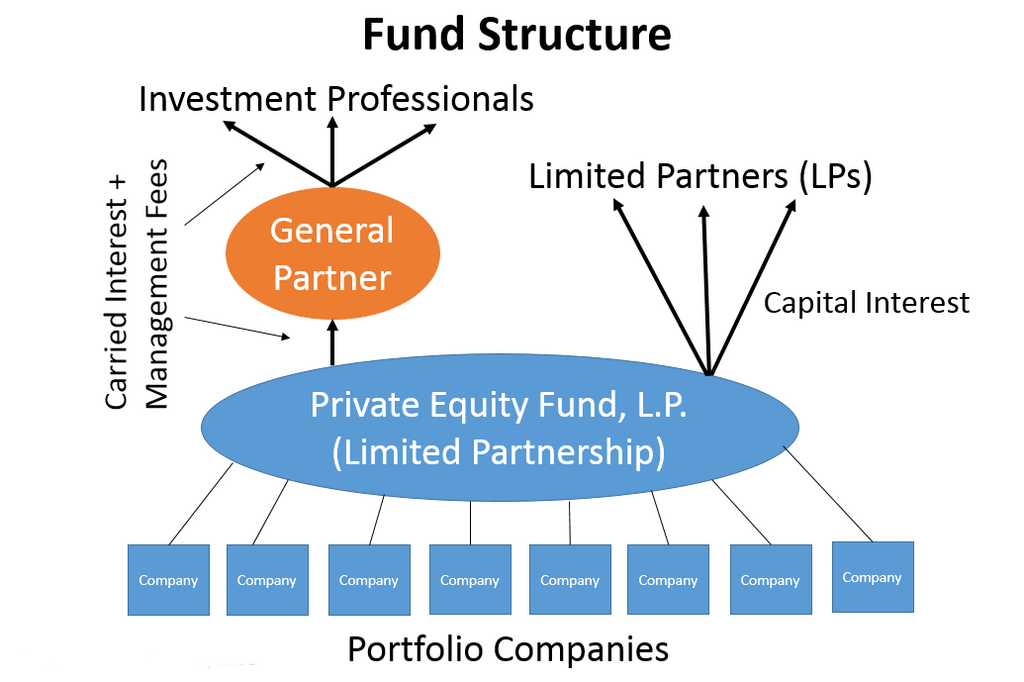
Within the firm, you'll also find other roles like Principals, who are experienced investors on the path to becoming partners, and Associates, who are typically more junior and focus on sourcing deals and performing initial analysis.
From Seed to Scale
Venture capital funding isn't a one-time event. It happens in stages, or rounds, that align with a startup's growth and maturity. Each round comes with more capital but also higher expectations.
Pre-Seed and Seed: This is the earliest stage. The company might just be an idea or a basic prototype. Funding is used for market research, product development, and building the initial team.
Series A: The company now has a product and some early traction, like a growing user base or initial revenue. Series A funding is about optimizing the product and figuring out a repeatable strategy for growth.
Series B: With a solid footing, the startup is ready to expand. Series B funding is used for scaling the business, growing the team, and entering new markets.
Series C and Beyond: At this point, the company is well-established and might be a market leader. Later-stage rounds like Series C are for scaling even further, developing new products, or even acquiring smaller companies. The ultimate goal is often to prepare for an exit.
The Investment Journey
How does a VC firm decide where to invest millions of dollars? It's a rigorous process with several key steps.
| Step | Description |
|---|---|
| Deal Sourcing | VCs actively look for investment opportunities through their networks, industry events, and direct pitches from entrepreneurs. |
| Screening | The firm quickly evaluates if a startup fits its investment thesis—its specific strategy for what kind of companies to fund. |
| Due Diligence | This is a deep dive. VCs scrutinize everything: the team, the market size, the technology, the competition, and the financial projections. |
| Term Sheet | If due diligence goes well, the VC offers a term sheet. This non-binding document outlines the proposed terms of the investment. |
| Closing | After negotiations and legal paperwork, the deal is closed. The VC firm wires the money, and the partnership officially begins. |
| Portfolio Management | The investment doesn't end at the closing. The GP actively works with the startup, providing guidance and support to help it grow and succeed. |
This cycle from sourcing to exit is the core of venture capital. It's a high-stakes process of identifying and nurturing the companies that will shape the future.
What is the primary goal of a venture capital investment in a startup?
In a typical venture capital fund, the _____ provide the capital, while the _____ make the investment decisions.