Elevating Your English Fluency
Advanced Sentence Structure
Building Better Sentences
You already know how to build a basic sentence. Now, let's construct sentences that can carry more complex ideas. The goal is to move beyond simple, choppy statements and toward a more fluid and sophisticated style of communication.
To express nuanced thoughts, you need a sentence structure that can handle multiple layers of information. This is where the compound-complex sentence comes in. It's a powerful tool for linking related ideas together in a single, elegant statement.
Compound-Complex Sentence
noun
A sentence containing at least two independent clauses and at least one dependent clause. It combines the features of both a compound sentence and a complex sentence.
Let's break one down. Consider this sentence:
Although I prefer coffee, I will drink tea if it's the only option, but I won't be happy about it.
This single sentence conveys a preference, a condition, and a reaction. Here’s how it works:
| Clause Type | Clause | Function |
|---|---|---|
| Dependent Clause | "Although I prefer coffee..." | Provides context for the main actions. |
| Independent Clause 1 | "...I will drink tea if it's the only option..." | A complete thought that can stand alone. |
| Independent Clause 2 | "...but I won't be happy about it." | Another complete thought, connected by 'but'. |
Adding Descriptive Depth
Another way to add sophistication is with relative clauses. These clauses act like adjectives, adding essential (or non-essential) information about a noun. They are introduced by relative pronouns like who, whom, whose, which, or that.
Using a relative clause can help you combine two simple sentences into one, more descriptive sentence.
Simple: The man was my coach. He lives next door. Combined: The man who lives next door is my coach.
This small change makes your language more efficient and connected. The clause "who lives next door" directly modifies "the man," giving us a clearer picture in a single stroke.
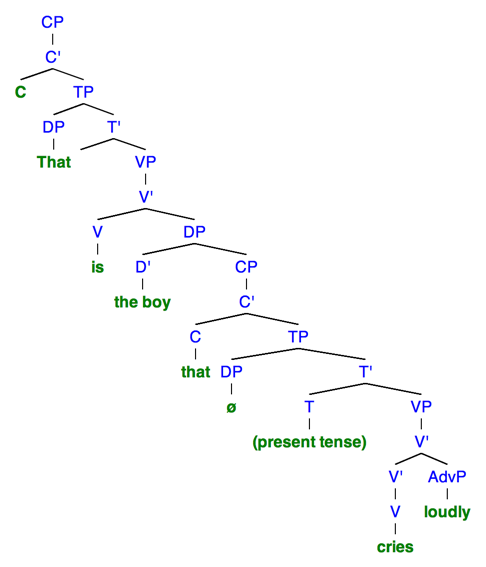
Deciding between that and which can be tricky. Use that for information that is essential to the sentence's meaning (a restrictive clause). Use which, often set off by commas, for extra, non-essential information (a non-restrictive clause).
Essential: The car that is parked outside is mine. (Specifies which car) Non-essential: The car, which is parked outside, is mine. (Adds extra info about the car)
Connecting Ideas Logically
To guide your listener or reader through your thoughts, you need strong transitional words and phrases. While you know basic connectors like 'and' or 'so', advanced connectors signal more specific relationships between ideas.
Words like whereas, notwithstanding, and subsequently add precision. Whereas highlights a direct contrast. introduces a point that exists despite a challenge. Subsequently shows a clear sequence of events. Using them correctly is a sign of advanced proficiency.
| Connector | Function | Example |
|---|---|---|
| Consequently | Shows a result or effect. | The company lost its funding; consequently, all projects were halted. |
| Moreover | Adds another related point. | The plan is risky. Moreover, it's incredibly expensive. |
| In contrast | Highlights differences. | Team A focused on speed. In contrast, Team B prioritized accuracy. |
| Nevertheless | Presents a contrasting idea. | The journey was long; nevertheless, it was worth the effort. |
Creating Rhythm and Impact
Finally, think about the sound and feel of your sentences. Great speakers and writers vary their sentence length to create a that keeps the audience engaged. A long, descriptive sentence can draw the listener in, while a short, simple one can deliver a powerful, memorable point.
Don't just build complex sentences. Mix them. Follow a long, winding sentence with a short, declarative one. This contrast creates emphasis and makes your communication more dynamic and interesting to follow. It's the difference between a monotone and a melody.
Varying Sentence Structure: Using a mix of short, impactful sentences and longer, intricately woven phrases helps us maintain reader interest and add depth to our writing.
Ready to test your understanding? This quiz covers the structures and connectors we've just explored.
Which of the following is a compound-complex sentence?
The musician, ______ is known for her intricate guitar solos, sold out the concert hall.
By mastering these advanced structures, you can express yourself with greater precision and style, moving closer to true conversational fluency.