Elevate Your English Speaking
Understanding English Sounds
The Building Blocks of Sound
When you look at a word, you see letters. But when you say a word, you make sounds. In English, the relationship between letters and sounds can be tricky. The letter 'c' sounds different in 'cat' and 'city'. The letters 'gh' are silent in 'through' but sound like 'f' in 'laugh'.
To really master pronunciation, we need to think in sounds, not letters. Linguists call these basic sounds phonemes. English has 44 of them. While that might seem like a lot, learning them is the key to speaking clearly and understanding others.
Think of the 26 letters as your toolbox, and the 44 phonemes as everything you can build with them.
Vowels and Consonants
The 44 phonemes are split into two groups: vowels and consonants. The difference is all about airflow.
Vowel sounds are made with an open vocal tract. Air flows freely from your lungs, and your vocal cords vibrate to create the sound. The shape of your mouth, lips, and tongue determines which vowel you produce. There are 20 vowel sounds in English.
Consonant sounds are made by partially or completely blocking the airflow somewhere in your mouth. You might use your lips (like for 'p'), your tongue and teeth (like for 'th'), or the back of your tongue (like for 'k'). There are 24 consonant sounds.
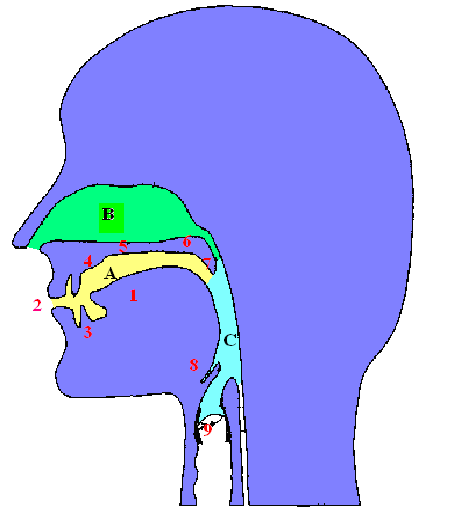
This is why just five written vowels (a, e, i, o, u) can create 20 different sounds. The letter 'a' alone makes very different sounds in the words cat, car, and cake. On the other hand, the two different spellings in to and too make the exact same vowel sound.
Training Your Ear
One of the best ways to improve your hearing and pronunciation is by practicing with minimal pairs. These are pairs of words that are different by only a single sound. They force your brain to focus on the subtle distinctions that can change a word's entire meaning.
For example, telling someone you have a new 'sheep' is very different from saying you have a new 'ship'.
Practicing these pairs helps you tune your ear to the specific sounds of English. Listen to the difference in the vowel sounds in the pairs below.
| Word A | Word B | The Key Sound Difference |
|---|---|---|
| ship | sheep | The short 'i' vs. the long 'ee' sound. |
| hat | had | The voiceless 't' vs. the voiced 'd' sound. |
| pin | pen | The 'i' sound vs. the 'e' sound. |
| fan | van | The voiceless 'f' vs. the voiced 'v' sound. |
| sit | seat | Another short 'i' vs. long 'ee' example. |
Your Pronunciation Toolkit
You don't have to figure this all out on your own. One of the most powerful tools available is an online dictionary, like Merriam-Webster or the Oxford English Dictionary. Almost all of them have a small speaker icon next to the word.

Use this feature constantly. When you learn a new word, don't just read it—listen to it. Say it out loud. Try to match the pronunciation you hear. You can even record yourself and compare your version to the dictionary's. This simple habit will dramatically improve your pronunciation.
Practice minimal pairs (words differing by one sound) such as “ship” vs. “sheep”.
Ready to test your knowledge of these core concepts?
What is the primary difference between how vowel and consonant sounds are produced?
The words 'ship' and 'sheep' are an example of a...
Mastering the 44 sounds of English is a foundational step. By focusing on phonemes instead of letters and practicing with minimal pairs, you're building a strong base for clear, confident communication.