Electropneumatics Cascade and Shift Register Methods
Electropneumatics Basics
Combining Air and Electricity
In the world of automation, sometimes you need the brute force of compressed air and the sharp thinking of electricity. This is where electropneumatics comes in. It's a hybrid technology that uses electrical signals as the brains to control pneumatic systems, which provide the muscle.
Think of it this way: electricity makes the decisions, and compressed air does the heavy lifting.
This combination gives engineers incredible control and power. Pneumatic systems are strong, reliable, and relatively simple. By adding an electrical control layer, we can make them faster, more precise, and easier to integrate into complex automated processes. This is why electropneumatics is a cornerstone of modern industrial automation, from assembly lines to packaging plants.
The Core Components
An electropneumatic system is like a team, with each component playing a specific role. We can group them into three main categories: the parts that do the work (actuators), the parts that sense the environment (sensors), and the parts that direct the flow of air (control valves).
Actuator
noun
A component of a machine that is responsible for moving and controlling a mechanism or system.
Actuators are the muscles of the system. The most common type is the pneumatic cylinder, which is a piston that moves back and forth in a tube when air is applied. They can be used to push, pull, clamp, or lift objects with significant force.
Sensor
noun
A device which detects or measures a physical property and records, indicates, or otherwise responds to it.
Sensors act as the eyes and ears. They provide feedback to the control system. For example, a magnetic sensor on a cylinder can tell the controller when the piston is fully extended or retracted. Other sensors might detect pressure, temperature, or the presence of an object. This feedback allows the system to make intelligent decisions and ensure tasks are completed correctly.
Directing the Flow
The magic of electropneumatics happens at the intersection of electricity and air, and that intersection is the control valve. These valves act like traffic cops for the compressed air, telling it where to go and when.
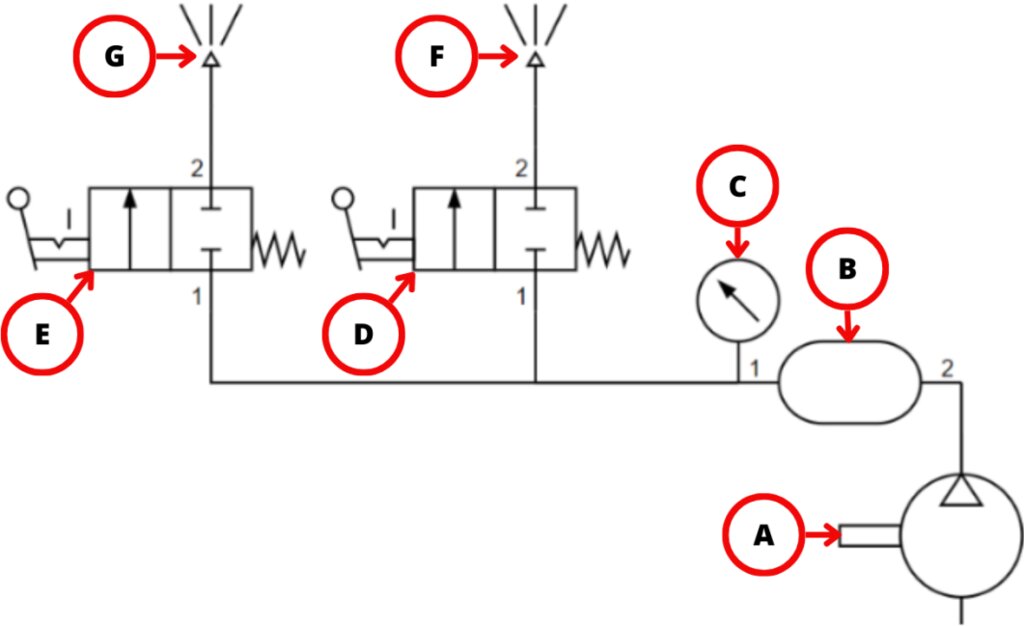
In an electropneumatic system, the most common type of valve is a solenoid valve. A solenoid is a coil of wire that becomes an electromagnet when an electric current passes through it. This magnetic force is used to move a small part inside the valve, called a spool or poppet, which opens or closes pathways for the air to flow through. When the electrical signal stops, a spring usually returns the spool to its original position.
By sending a simple on or off electrical signal to a solenoid valve, we can control the powerful movement of a large pneumatic actuator. This is the key principle of electropneumatics.
Electropneumatics in Action
You can find electropneumatic systems working behind the scenes in countless industries. On a car assembly line, pneumatic actuators controlled by electrical signals might weld parts, tighten bolts, or move heavy components into place. In food packaging, these systems can sort items, fill containers, and seal packages with speed and precision.
Any automated process that requires repetitive, forceful, and controlled motion is a perfect candidate for electropneumatics. It's a robust and efficient technology that forms the backbone of much of the automated world around us.
What is the primary role of the electrical component in an electropneumatic system?
In the context of electropneumatics, which component acts as the 'muscle' to perform physical tasks like pushing or clamping?
That's a brief look at the fundamentals. By understanding how electricity directs the power of compressed air, you're ready to explore more complex control methods.