Electron Transport Chain Explained
Cellular Respiration Overview
Energy for Life
Every living cell is a tiny, bustling city. To power all its activities—from building proteins to sending signals—it needs a constant supply of energy. Cells get this energy by breaking down food molecules through a process called cellular respiration.
Cellular respiration is the process by which our cells break down glucose or other food molecules, with the aim of producing ATP, a useable form of energy for our cells.
Think of it as a power plant for the cell. The primary fuel is a simple sugar called glucose. Cellular respiration dismantles this glucose molecule piece by piece, capturing the energy released from its chemical bonds. This captured energy is stored in a special molecule called adenosine triphosphate, or ATP.
ATP
noun
Adenosine triphosphate, the main energy-carrying molecule used to power cellular work.
ATP is like the currency of the cell. When a cell needs to get something done, it “spends” ATP. The entire goal of cellular respiration is to produce as much of this energy currency as possible from a single molecule of glucose.
A Three-Stage Process
Cellular respiration isn't a single event. It's a metabolic pathway made up of three main stages. Each stage happens in a specific part of the cell and hands off its products to the next stage, like an efficient assembly line.
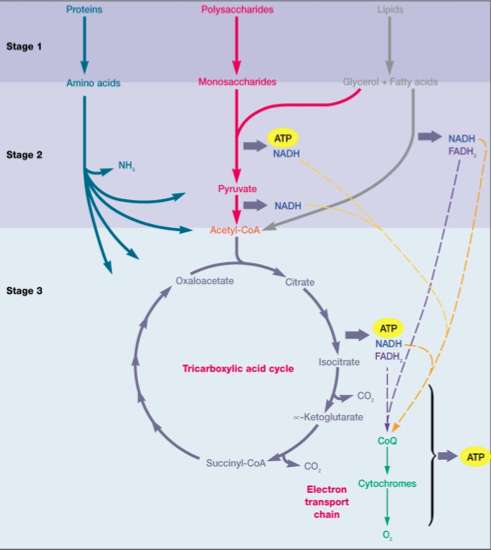
The three stages are:
- Glycolysis: The initial splitting of glucose.
- The Citric Acid Cycle: A series of reactions that extracts more energy.
- Oxidative Phosphorylation: The final stage, where the bulk of ATP is produced.
Let's walk through each one.
Glycolysis: Splitting Sugar
The process begins with glycolysis, which literally means "sugar splitting." This stage takes place in the cell's cytoplasm, the jelly-like substance filling the cell. Here, one six-carbon molecule of glucose is broken in half to form two three-carbon molecules called pyruvate.
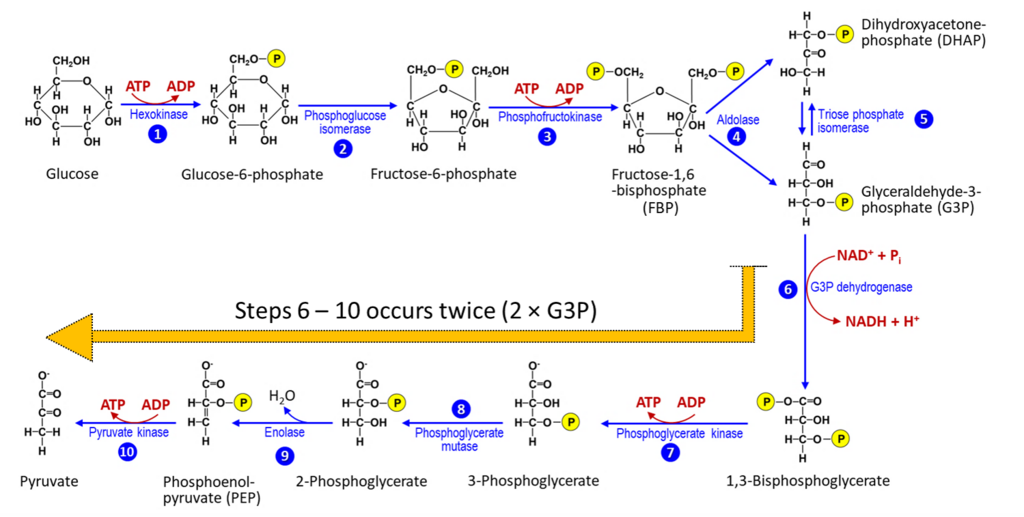
This initial split doesn't require oxygen and it releases a small amount of energy. The cell captures this energy to make a net gain of two ATP molecules. While that's not a huge payout, it's a quick source of energy. Glycolysis also produces a couple of high-energy electron carriers called NADH, which will be important later on.
The key takeaway for glycolysis: one glucose molecule becomes two pyruvate molecules, yielding a small amount of ATP and some energy-carrying NADH molecules.
The Citric Acid Cycle
After glycolysis, the two pyruvate molecules move into the mitochondria, the true powerhouses of the cell. Before entering the next stage, each pyruvate is converted into a molecule called acetyl-CoA, releasing a molecule of carbon dioxide in the process.
This acetyl-CoA then enters the citric acid cycle, also known as the Krebs cycle. This is a closed loop of chemical reactions, meaning the final molecule of the cycle is the same as the starting molecule. As acetyl-CoA goes through the cycle, its carbon atoms are stripped away and released as carbon dioxide—the same CO₂ we exhale.
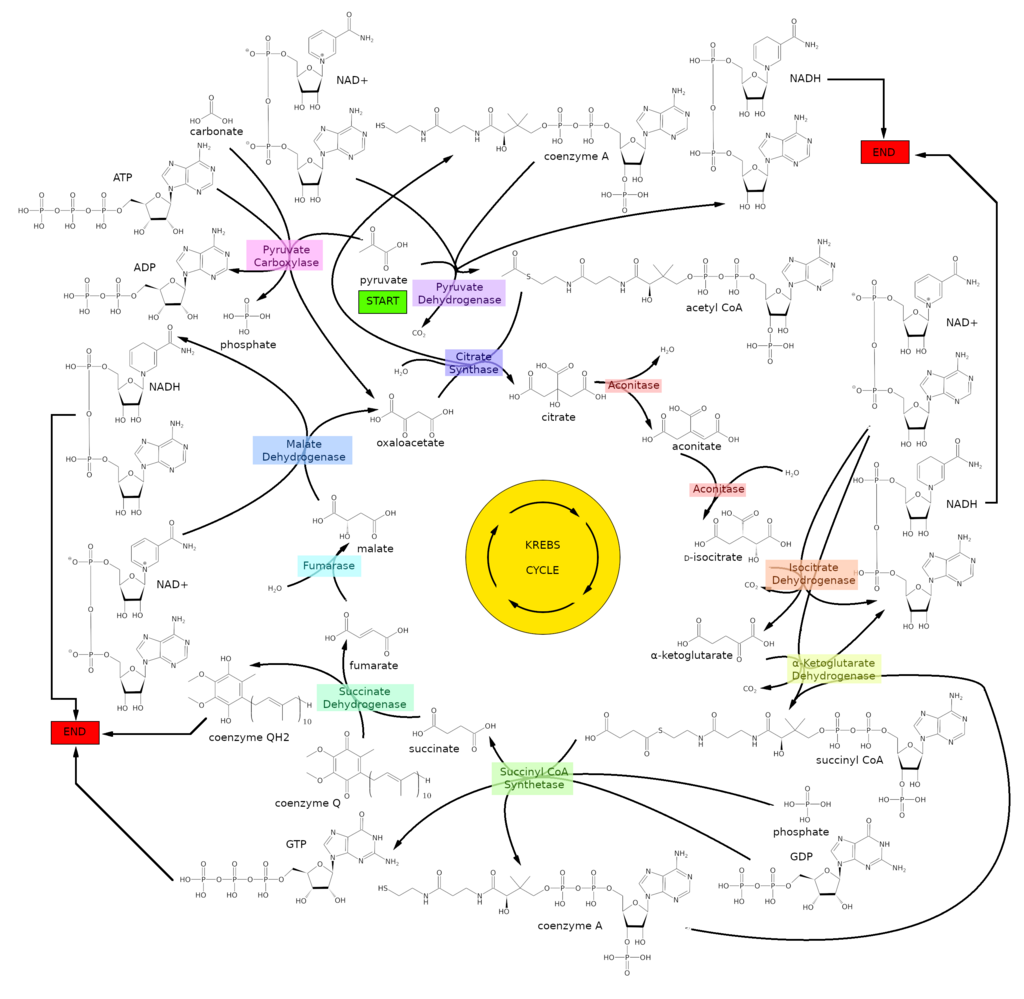
The main purpose of this cycle isn't to make a lot of ATP directly, although it does produce a little bit (one ATP per turn). Its most important job is to load up more electron carriers. For each turn of the cycle, it produces three NADH molecules and one FADH₂, another type of electron carrier. Since one glucose molecule produces two pyruvate molecules, the cycle runs twice, doubling these outputs.
Oxidative Phosphorylation
This is the grand finale, where the real energy payoff happens. Oxidative phosphorylation also takes place in the mitochondria, specifically within the inner membrane. It involves two parts: the electron transport chain and chemiosmosis.
All the energy carriers (NADH and FADH₂) produced during glycolysis and the citric acid cycle travel to the inner mitochondrial membrane. Here, they drop off their high-energy electrons to the electron transport chain, a series of protein complexes.
As the electrons are passed down the chain—like a bucket brigade—they release energy. This energy is used to pump protons across the membrane, creating a steep gradient. Finally, these protons rush back across the membrane through a special protein called ATP synthase, which acts like a tiny turbine. The flow of protons spins the turbine, generating massive amounts of ATP.
This is called oxidative phosphorylation and is where most of the ATP from cellular respiration is from.
At the very end of the chain, oxygen swoops in to accept the now low-energy electrons, combining with protons to form water. This is why we need to breathe oxygen—it’s the final electron acceptor that keeps the entire process running.
From a single molecule of glucose, this final stage can produce around 28-34 ATP molecules, making it by far the most productive stage of cellular respiration.
| Stage | Location | Main Products | ATP Yield (approx.) |
|---|---|---|---|
| Glycolysis | Cytoplasm | 2 Pyruvate, NADH | 2 ATP |
| Citric Acid Cycle | Mitochondria | CO₂, NADH, FADH₂ | 2 ATP |
| Oxidative Phosphorylation | Inner mitochondrial membrane | Water, ATP | 28-34 ATP |
Now that you have an overview of how cells generate energy, let's test your knowledge.
What is the primary purpose of cellular respiration?
In which part of the cell does glycolysis, the first stage of cellular respiration, take place?
Through this intricate, three-stage process, our cells efficiently convert the energy stored in food into a form they can use to power everything that keeps us alive.