Electromagnetism and Induction Explained
Magnetic Fields
The Invisible Force Field
You've probably played with magnets, feeling that strange push or pull as they get close to each other or to certain metal objects. This invisible influence is the magnetic field, a region of space where a magnetic force can be detected. It's created by two main sources: moving electric charges (like the current in a wire) and magnetic materials themselves.
Think of a magnetic field like the heat around a campfire. You don't see the heat, but you can feel it. The closer you get to the fire, the stronger the heat. A magnetic field works in a similar way. The force is strongest near the source and gets weaker as you move away.
Drawing the Invisible
Since we can't see magnetic fields, scientists use a tool called magnetic field lines to visualize them. These lines are like a map that shows the field's direction and strength.
Field lines always point away from a magnet's north pole and toward its south pole. Where the lines are packed closely together, the magnetic field is strong. Where they are spread out, the field is weak.
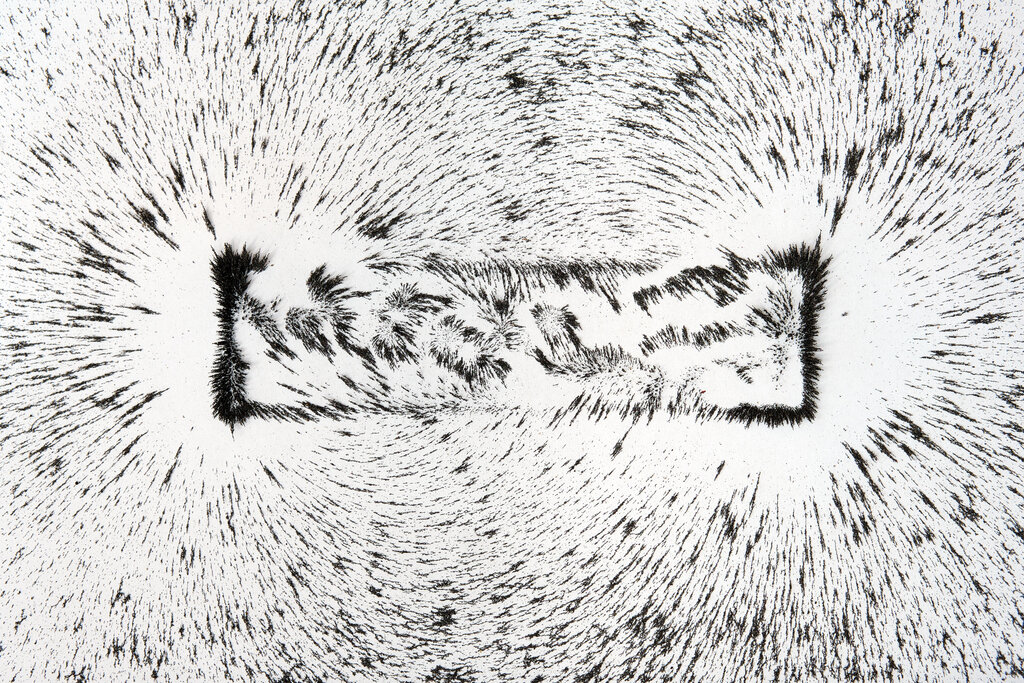
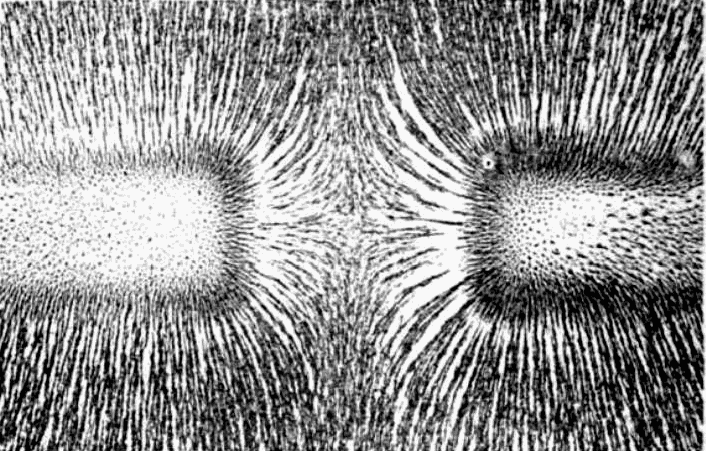
An important rule is that these imaginary lines never cross. Each point in space has only one magnetic field direction, so the lines can't intersect. When you bring two magnets near each other, their fields interact. If you bring two like poles together (north-north or south-south), the field lines bend away from each other, creating a repulsive force.
How Materials Respond
Why are some materials, like iron, strongly attracted to magnets while others, like wood or plastic, aren't? It comes down to how their internal atomic structure responds to a magnetic field. Materials are generally classified into three types based on their magnetic behavior.
ferromagnetism
noun
The mechanism by which certain materials (such as iron) form permanent magnets, or are strongly attracted to magnets.
Ferromagnetic materials are the ones we typically think of as
magnetic. They contain small regions called magnetic domains, where the magnetic fields of atoms are aligned. When you bring a magnet nearby, these domains line up, and the material becomes strongly attracted to the magnet. Iron, nickel, and cobalt are common examples.
| Material Type | Interaction with Magnetic Field | Examples |
|---|---|---|
| Ferromagnetic | Strong attraction | Iron, Nickel, Cobalt |
| Paramagnetic | Weak attraction | Aluminum, Platinum, Oxygen |
| Diamagnetic | Weak repulsion | Water, Wood, Copper |
Paramagnetic materials are only weakly attracted to magnetic fields. Their atoms have a slight magnetic pull, but it's much less dramatic than in ferromagnetic materials. Diamagnetic materials are the opposite; they are weakly repelled by magnetic fields. This effect is usually too faint to notice without sensitive instruments.
Earth, the Giant Magnet
Our entire planet is a giant magnet. Deep within the Earth, the churning of molten iron in the outer core generates a massive magnetic field that extends far out into space. This is known as the geomagnetic field.
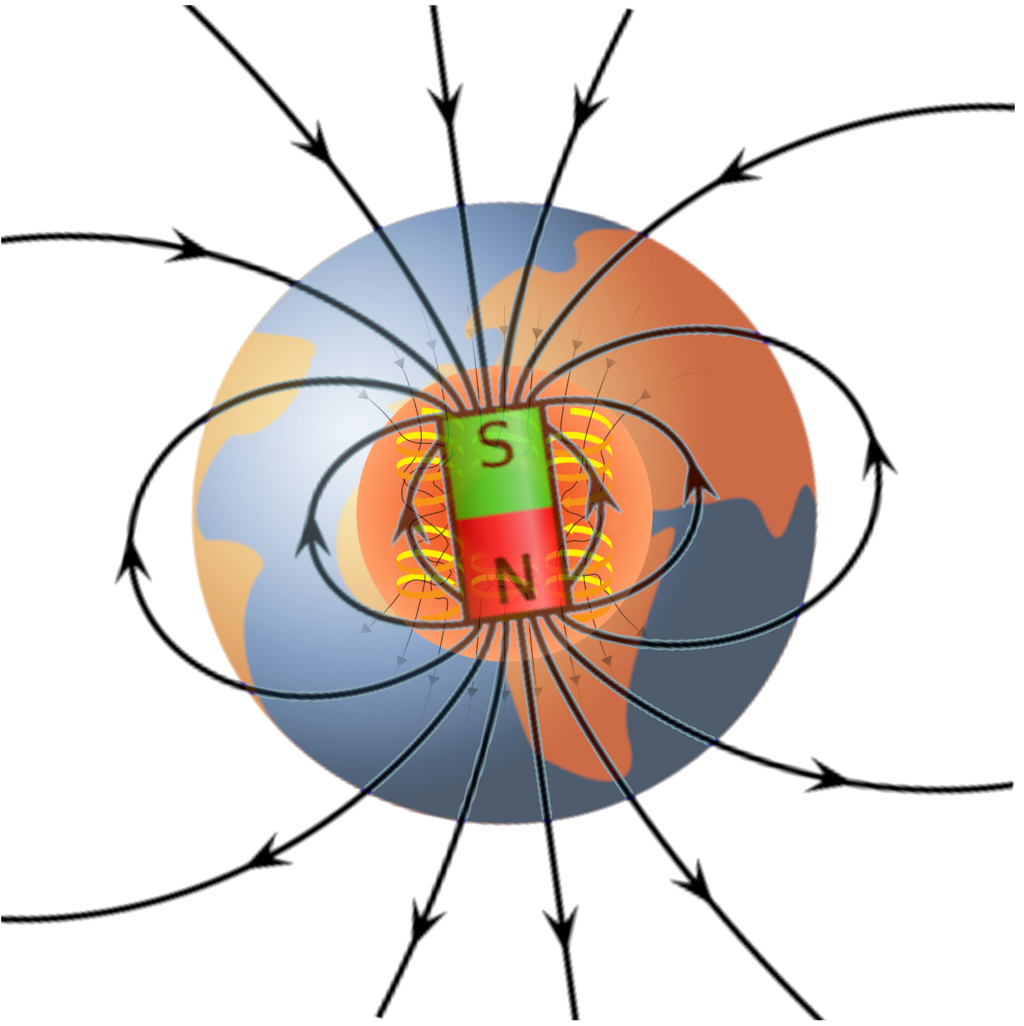
This field is incredibly important. It acts as a protective shield, deflecting most of the charged particles from the sun (the solar wind) that would otherwise strip away our atmosphere. It's also what makes a compass work. The needle of a compass is a small magnet that aligns itself with the Earth's magnetic field lines, always pointing towards the magnetic north pole.
Interestingly, Earth's geographic North Pole is actually near its magnetic south pole. This is why the
north-seeking pole of a compass needle points north.
Now, let's test your understanding of magnetic fields.
What are the two primary sources that create magnetic fields?
Which statement accurately describes a key property of magnetic field lines?
Understanding magnetic fields is the first step toward exploring the deep connection between electricity and magnetism, which powers much of our modern world.