Electromagnetic Induction Explained
Introduction to Electromagnetic Induction
Magnetism Makes Electricity
You already know that an electric current creates a magnetic field around it. It’s a fundamental link between two of nature's forces. But does it work the other way around? Can a magnetic field create an electric current?
The answer is yes, but with a crucial twist. A steady, unchanging magnetic field won't do anything. To generate a current, the magnetic field must be changing. This process is called electromagnetic induction.
Electromagnetic induction is the creation of an electric current in a conductor by exposing it to a changing magnetic field.
Faraday's Breakthrough
In 1831, scientist Michael Faraday was convinced that if electricity could produce magnetism, then magnetism should be able to produce electricity. He set up an experiment with an iron ring and wrapped two separate, insulated coils of wire around it. He connected one coil to a battery and the other to a galvanometer, a device that detects small electric currents.
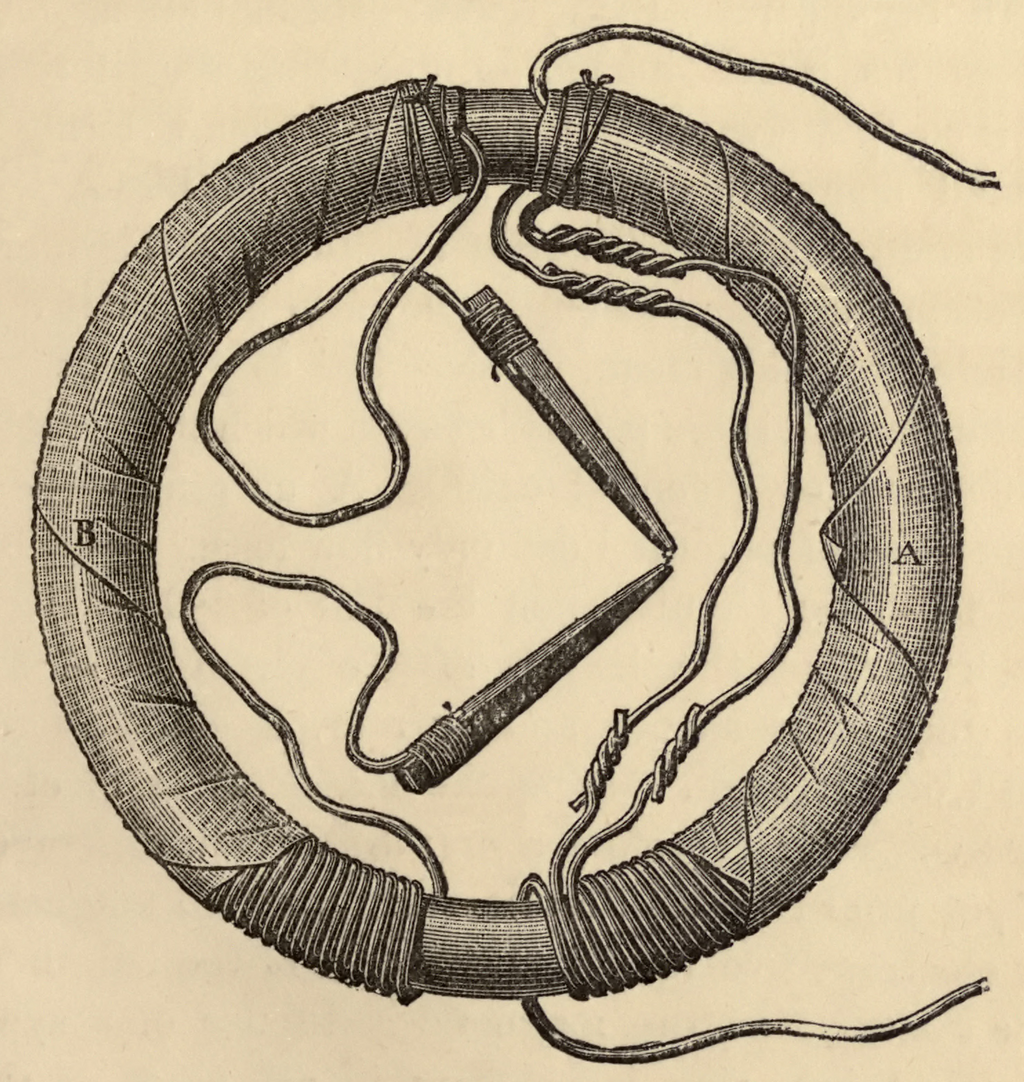
When he connected the first coil to the battery, the galvanometer needle on the second coil jumped, then returned to zero. When he disconnected the battery, the needle jumped again, this time in the opposite direction. Nothing happened while the current was flowing steadily.
The current was induced only during the moments of change: when the magnetic field in the iron ring was first building up, and when it was collapsing. A static magnetic field had no effect.
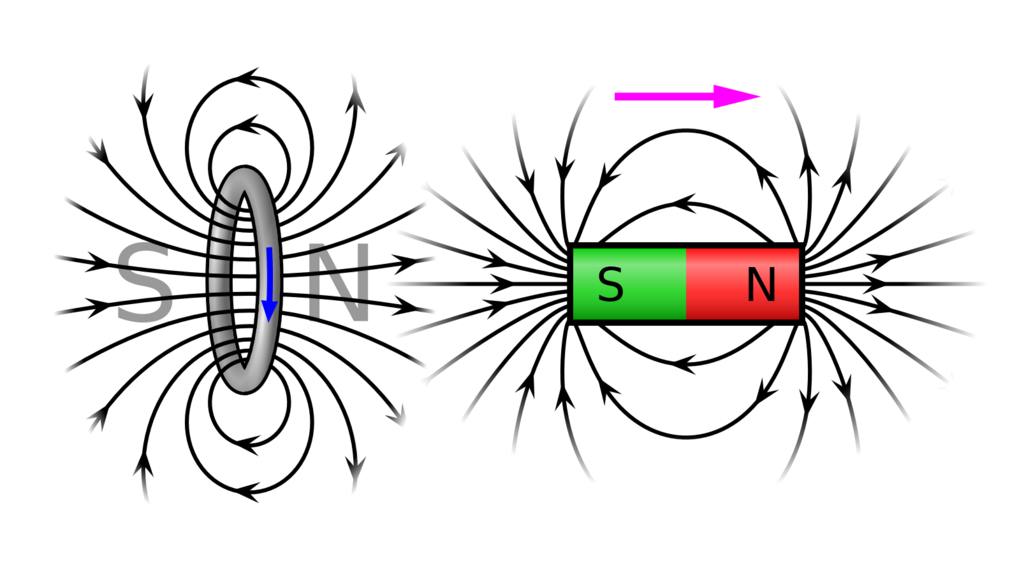
Faraday confirmed this with another simple experiment. He moved a bar magnet into a coil of wire. As the magnet moved, the galvanometer detected a current. When the magnet stopped, the current stopped. When he pulled the magnet out, a current flowed in the opposite direction. The key was relative motion, which caused the magnetic field passing through the coil to change.
The Key Ingredient
The common thread in Faraday's experiments is change. It's not the presence of a magnetic field that matters, but the rate at which that field changes from the perspective of the wire.
To talk about this, physicists use the term magnetic flux. You can think of magnetic flux as a measure of the total amount of magnetic field lines passing through a given area, like the opening of a wire coil. To induce a current, you must change the magnetic flux.
You can change the magnetic flux in two main ways:
- Change the strength of the magnetic field.
- Move the magnet or the coil, changing how much of the coil is exposed to the field.
Induction in Action
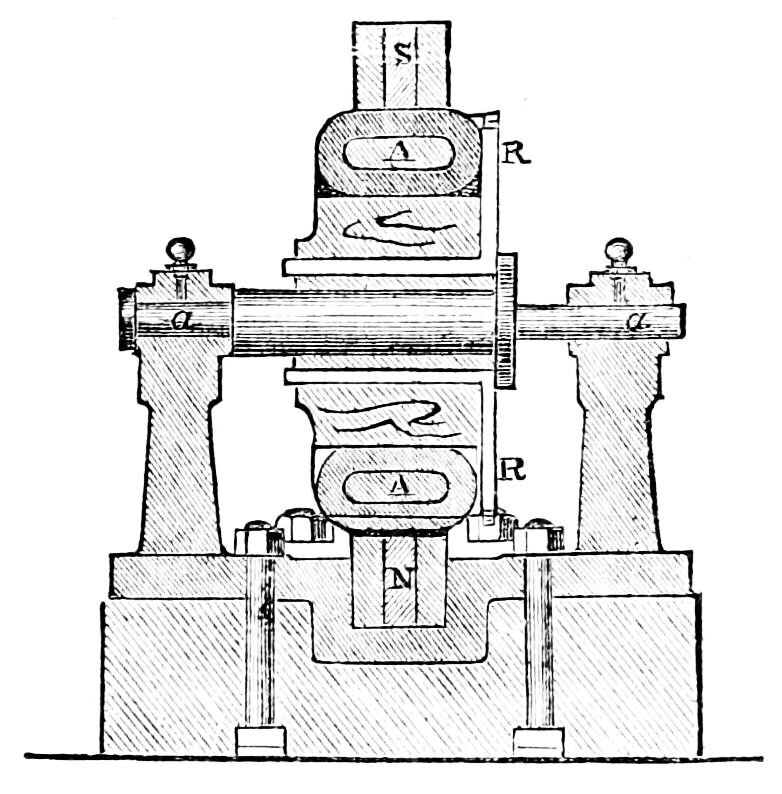
Electromagnetic induction isn't just a laboratory curiosity; it's the principle behind how most of our electricity is generated. Power plants use various energy sources (like steam or flowing water) to spin large turbines. These turbines rotate massive coils of wire within powerful magnetic fields. This constant motion creates a continuously changing magnetic flux, which induces the alternating current (AC) that powers our homes.
Induction is also the key to transformers, devices that efficiently change the voltage of AC electricity. A transformer uses two coils, just like Faraday's ring. The alternating current in the first coil creates a constantly changing magnetic field, which then induces a new current in the second coil. By changing the number of wire turns in each coil, the voltage can be stepped up for long-distance transmission or stepped down for safe use in our devices.
This powerful link between changing magnetic fields and electricity is the foundation for countless technologies. The specific rules that govern the amount of induced voltage and the direction of the current are described by Faraday's Law and Lenz's Law, which build directly on these fundamental observations.
Ready to check your understanding?
What is the essential condition for a magnetic field to induce an electric current in a nearby wire coil?
In Michael Faraday's experiment with the iron ring and two coils, when did the galvanometer detect a current in the second coil?